School of Chemistry researchers awarded prestigious ERC consolidator grants
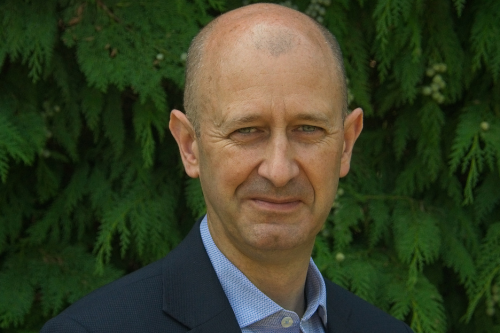
School of Chemistry researchers Professor Basile Curchod and Dr Ben Palmer have both been awarded prestigious European Research Council (ERC) consolidator grants.
New research led by the School of Chemistry's Organic Geochemistry Unit (OGU) shows the musty smell of mummified remains helps unlock important information about the ancient practice.
Dr Ramiz Zulkharnay, Senior Research Associate in the School of Chemistry's Diamond Research Group, has recently been awarded two competitive research grants.
The School of Chemistry's Professor Liam Ball has been awarded the 2026 AstraZeneca UK Prize for Synthetic Chemistry.
Professor Richard Evershed, Dr Melanie Roffet Salque, and Dr Lucy Cramp have been named winners of the American Institute of Archaeology's Pomerance Award for 2026 in recognition of their work at the the School of Chemistry's Organic Geochemistry Unit (OGU).
School of Chemistry researchers Professor Basile Curchod and Dr Ben Palmer have both been awarded prestigious European Research Council (ERC) consolidator grants.
'Did you know', a science outreach project with Professor Dudley Shallcross and the late Tim Harrison among its board members, has won the RSC 2025 Team Prize for Excellence in Primary Education.
School of Chemistry researchers Professor Jonathan Reid and Dr Bryan Bzdek received major recognition at the latest American Association of Aerosol Research (AAAR) annual conference in Buffalo, New York.
Dr Alastair Lennox has been named as the recipient of the Royal Society of Chemistry's Roger Parsons Medal Award for 2025.
Professor Andrew Orr-Ewing FRS, the Leverhulme Chair of Physical Chemistry, has been elected as a Foreign Fellow of the National Academy of Sciences, India (NASI).
Varinder Aggarwal FRS, Alfred Capper Pass Professor of Chemistry, has been elected as a Foreign Fellow of the Indian National Science Academy, the largest and most prestigious national academy in India.
School of Chemistry researchers Dr Kieran Stanley, Dr Maria de los Angeles Garavagno, Professor Andrew Orr-Ewing, Professor Dudley Shallcross, Dr Angelina Wenger and Dr Anwar Khan have been awarded a grant from the Natural Environment Research Council (NERC) to study the environmental fates of a new generation of fluorocarbon gases being used as replacements for hydrofluorocarbons (HFCs) and chlorofluorocarbons (CFCs) in refrigeration, and as propellant and foam-blowing gases.
The School of Chemistry's Professor Anthony Davis has been awarded the prestigious Royal Medal for Applied Sciences by the Royal Society.
The long-running Wilson Baker Symposium returns to the School of Chemistry on Wednesday, 26 November 2025.
A collaborative multidisciplinary project involving researchers at the Universities of Bristol, Oxford and Manchester as well as collaborators at the Rutherford Appleton Laboratory, has demonstrated the synthesis of a new allotrope of carbon, a cyclocarbon that is stable enough at room temperature for spectroscopic characterisation in solution.
The prestigious Stone Symposium returns to the School of Chemistry on Wednesday, 12 November 2025.
A grant of £1m has been awarded to the School of Chemistry's Dr Tom Oliver and his US collaborator Professor Stephen Bradforth (University of Southern California) for a collaborative three-year project entitled "Quantum Coherence and Correlations in Condensed Phase Photochemical Reaction Dynamics".
The School of Chemistry hosted a symposium on June 27 in memory of Dr Chris Adams, who died in 2022.
Researchers from the School of Chemistry have led a study which, for the first time, reports the discovery of a unique way to control and modify a type of compound widely used in medicines, including a drug used to treat breast cancer.
The School of Chemistry's Professor Dek Woolfson will be leading a new global Centre for Protein Design (CPD) following a major Novo Nordisk Foundation grant.
The Royal Society of Chemistry’s 2025 Prize winners include several successes for the School of Chemistry
The School of Chemistry's Professor Andrew Orr-Ewing has been awarded a European Research Council (ERC) Advanced Grant with value of €3.2m over five years to study photochemical reactions in water droplets only a few micrometres in diameter.
The School of Chemistry's Professor Varinder Aggarwal has been awarded the Horst Pracejus Prize for 2025 from the German Chemical Society (GDCh).
A symposium in memory of Dr Chris Adams will be held on Friday 27th June 2025, at the School of Chemistry.
Our very own Professor Dek Woolfson and Professor Jonathan Clayden have been recognised for their substantial contributions to the advancement of science with Fellowship in the Royal Society, the UK’s national academy of sciences. Both of these world-leading scientists contribute to understanding structure and function of molecules at the interface of chemistry and biology.
Dr Rachel Tunnicliffe has won winning the GW4 Open Research Prize in Improving Quality for the OpenGHG project.
School of Chemistry PhD student Olivia Watts helped Bristol's team reach the semi-finals of the current series of the iconic BBC Two student quiz programme University Challenge.
School of Chemistry Emeritus Professor Julian Eastoe is among an international group of scientists who have invented a substitute for synthetic chemicals, called perfluoroalkyl substances (PFAS), which are widely used in everyday products despite being hazardous to health and the environment.
Professor Carmen Galan has been named winner of the 2025 Melville L. Wolfrom Award by the ACS Division of Carbohydrate Chemistry and Chemical Glycobiology.
The annual Timms Symposium returns to the School of Chemistry on Wednesday, 9th July 2025.
Professor Matt Rigby appeared on BBC Radio 4 programme Rare Earth on 14th March to discuss the 40th anniversary of the discovery of a hole in the planet's ozone layer.
Professor Carmen Galan has been named as a joint winner of the Emil Fischer Award for 2025 by the European Carbohydrate Organisation.
A new observatory co-led by the School of Chemistry's Atmospheric Chemistry Research Group and colleagues at the University of Manchester will enhance the UK’s ability to measure greenhouse gases.
School of Chemistry PhD graduates Dr Alicja Dzieciol and Dr Siân Fussell have won Women in Innovation Awards from Innovate UK for their remarkable sustainable technologies.
A publication by Professor Paul May and Dr Ramiz Zulkharnay of the School of Chemistry's Diamond Group has been named by the editors of the journal Functional Diamond as its best paper of 2024.
The School of Chemistry's Professor Dudley Shallcross, Dr Amy McCarthy-Torrens, and Dr Francesca Dennis have had an article published in the Journal of Chemical Education on their collaboration with Learning Science Ltd on Smart Worksheets and their positive impact on the first year quantitative chemistry course since being introduced in 2020.
Professor Varinder Aggarwal has been invited to participate in the 37th annual Richard Lerner Frontiers in Chemistry Symposium, on February 6, 2026, at Scripps Research in La Jolla, California.
Former School of Chemistry PhD student Dr Harry Destecroix has received an MBE (Member of the Order of the British Empire) in the New Year Honours list for services to science.
School of Chemistry researchers Professor Neil Fox and Dr James Smith are among a group of scientists and engineers to have successfully created the world’s first carbon-14 diamond battery, an incredibly long-lasting energy source with the potential to power devices for thousands of years.
Dr Bryan Bzdek, Proleptic Associate Professor in the School of Chemistry and member of Bristol Aerosol Research Centre, was presented the 2024 Kenneth T. Whitby Award at the 42nd American Association for Aerosol Research Conference in Albuquerque, New Mexico.
Professor Dudley Shallcross has been appointed chair of the Curriculum Committee at the the Royal Society of Biology.
Researchers in the School of Chemistry have contributed towards a recent paper in Nature that describes a new type of insulin which responds to the amount of glucose in the blood, becoming more active at high levels when it is needed and less active at low levels.
The School of Chemistry's Professor Varinder Aggarwal has been elected as a Foreign Fellow of the National Academy of Sciences, India.
The School of Chemistry's Professor Dek Woolfson has been announced as one of the winners of the Vincent du Vigneaud Awards for 2025.
The School of Chemistry's Professor Carmen Galan is among a multi-centre group of scientists to have found a way to create artificial sugars that could lead to better ways to diagnose and treat diseases more accurately than ever before.
The University of Bristol has received a £1million grant from the UKRI Arts and Humanities Research Council (AHRC) to establish a new Centre for Chemical Characterisation in Heritage Sciences – an initiative that will span Arts, Chemistry and Earth Sciences.
Dr Alastair Lennox has been awarded an International Science Partnership Fund Collaboration Award of £225,000 to work in collaboration with a team in Minas Gerais, Brazil, to develop new treatments towards Chagas disease.
In August, a group of academic staff from the School of Chemistry presented talks at the Variety in Chemistry Education/ Physics Higher Education Conference (ViCEPHEC) 2024, hosted by the University of Surrey.
School of Chemistry Technical Specialist Dr Rob Harniman has secured landmark funding of over £1m from the Biotechnology and Biological Sciences Research Council (BBSRC) for a cutting-edge Atomic Force Microscopy (bio-AFM) platform at the University of Bristol, to enhance bioscience research in multi-disciplinary programmes across life, health, physical and environmental sciences.
New research has uncovered that factories worldwide are failing to adequately eliminate a highly potent greenhouse gas produced during the manufacturing of fluoropolymers, such as Teflon, and refrigerants.
Bristol Aerosol Research Centre have collaborated on a recent publication entitled 'Relationship between Exhaled Aerosol and Carbon Dioxide Emission Across Respiratory Activities'.