
Suicide and self harm
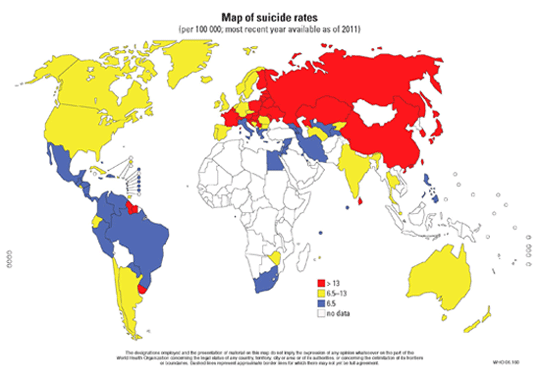
Suicide is a major global health issue, with over 700,000 people dying by suicide each year, with many more engaging in acts of self-harm and being bereaved. Suicide and self-harm are complex behaviours and as a result an interplay of several factors which operate at the individual, community, and societal level. As such research into these behaviours needs to include a range of expertise from several disciplines.
Bristol hosts a vibrant community of quantitative, qualiatative and clinial researchers whose common aim is to better understand the causes of suicide and self-harm so as to inform clinical and population based prevention strategies. Two of the world's largest trials of self-harm prevention were led by Bristol researchers.
We are keen to hear from people interested in suicide and self-harm research, including prospective students, collaborators and those with lived experience.
Follow our research updates on Twitter and on our research website.
Key resources
Key resources for research into suicide and self-harm in Bristol include:
- Repeated measures of self-harm in the ALSPAC cohort (n=13,000 participants)
- Data from a rural Sri Lankan cohort of over 200,000 people collected as part of one of the world’s largest suicide prevention trials.
- Extensive experience interviewing suicidal individuals
- Strong collaborative links with leading suicide researchers in the UK and internationally particularly Sri Lanka, USA, Canada, Belgium, Denmark, Malaysia, Taiwan and Australia
- Excellent working relationships with the World Health Organisation (WHO), and charities such as Samaritans and Self-Injury Support, and the Tellmi young person’s mental health app
- The Bristol Health Partner’s Self-Harm Health Integration Team and strong links with local liaison psychiatry services
- Lancet Commission on Self-Harm - https://doi.org/10.1016/S0140-6736(24)01121-8
Bristol's suicide and self-harm research interest group (SASH) meets monthly with informal presentations on ongoing research projects, invited guest speakers and journal club style presentations. Contact Dee Knipe (Dee.Knipe@bristol.ac.uk) for further details.