
Isotopes in prehistoric cattle teeth suggest a variety of herding strategies were used during the Neolithic
Over the course of the Neolithic period, secondary products from cattle such as milk, manure and animal power became more important.
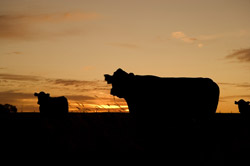
Over the course of the Neolithic period, secondary products from cattle such as milk, manure and animal power became more important.

A Bristol stroke survivor is preparing to tackle a seven day, six-stage, 230km race through the Jungles of Peru, to raise vital funds for the Stroke Association.

Emerging evidence indicates that many currently defined aerosol generating procedures (AGPs) are unlikely to play any significant role in the generation of infectious aerosol that poses a risk to hospital staff. In a comment article published in The Lancet Respiratory Medicine today [6 May] a research team from the University of Bristol discusses AGPs and the transmission of SARS-CoV-2 in a healthcare setting.
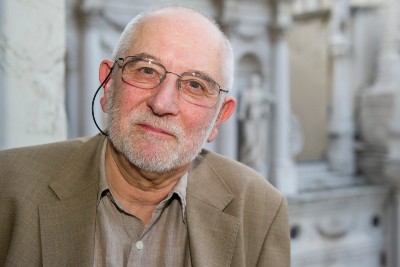
Professor Sir Michael Berry FRS FRSE FRSA, Melville Wills Professor of Physics (Emeritus) at Bristol University, has been admitted as an Honorary Fellow of the Learned Society of Wales (LSW), the UK's newest academy, founded in 2010.

An international team of researchers led by Dr Tom Williams from the University of Bristol’s School of Biological Sciences have found a new way to interpret the evolution of bacteria.
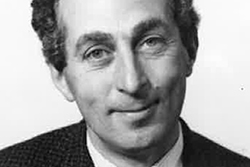
Mr Jack Bones, former Senior Lecturer in the Department of Mechanical Engineering, died on 29 April 2017 at the age of 87. His colleagues offer a remembrance.
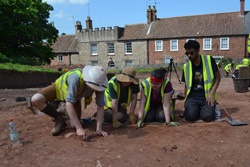
The University of Bristol’s Department of Archaeology and Anthropology will be taking part in the ‘Bristol’s Brilliant Archaeology’ event on Saturday, July 29 at Blaise Castle House Museum in Henbury from 11am to 4pm.

Bristol-based playwright and writer Jon Berry has been named as the second recipient of the annual Kevin Elyot Award by the University of Bristol's Theatre Collection.
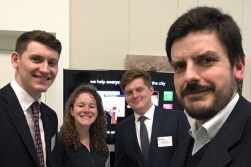
Ten engineering students from the University of Bristol have achieved outstanding success in two Royal Academy of Engineering (RAEng) schemes designed to promote innovation and leadership.
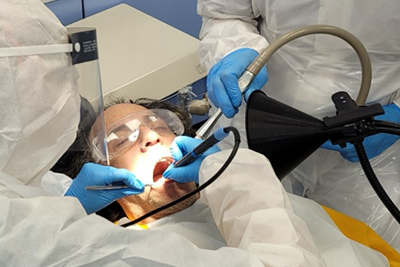
Many of the common procedures carried out by dentists have very low risk of increasing the aerosol spread of COVID-19 and some procedures, such as ultrasonic scaling, were not shown to generate aerosol other than from the clean instrument itself, new research has found.