
Exploring the tangled history of an iconic flower
A new book by Dr Nicholas Saunders of the Department of Archaeology and Anthropology on the history of that ever-enduring icon, the poppy, has been published in paperback this month.

A new book by Dr Nicholas Saunders of the Department of Archaeology and Anthropology on the history of that ever-enduring icon, the poppy, has been published in paperback this month.

Future sea level rise due to the melting of the Greenland and Antarctic ice sheets could be substantially larger than estimated in Climate Change 2007, the Fourth Assessment Report of the IPCC, according to new research from the University of Bristol.

In what ways might memories of television programmes be connected to personal memories? Dr Helen Piper of the University of Bristol is currently working on a project ‘Remembering Television’ that aims to explore the ways in which television became embedded in our personal lives.

Efforts by the UK to prevent torture and protect the human rights of prisoners and other people deprived of their liberty will come under the spotlight at a conference being held in Bristol next week.
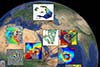
Using satellite imagery to monitor which volcanoes are deforming provides statistical evidence of their eruption potential, according to a new study led by the University of Bristol published today in Nature Communications.
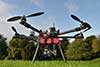
A new and much-needed remote system to safely and accurately assess dangerous nuclear accident sites has been awarded funding from the Royal Academy of Engineering to help it move out of the Bristol science lab where it was developed and turn it into reality.

Meshing social media and broadcasting, supporting dyslexic children with creative resources, and a new assistive technology for people with visual disabilities are just some of the innovative ideas awarded through Round Two of the University’s 2014 New Enterprise Competition (NEC).

The University of Bristol has been awarded a £150,000 grant as part of a multilateral partnership with academic institutions in the US, China and India.

High-tech technology, traditionally usually used to design racing cars and aeroplanes, has helped researchers to understand how plant-eating dinosaurs fed 150 million years ago.

One of the world’s largest population studies, which collects vast amounts of data from 32,000 participants to give new insights into our health, is today celebrating an important landmark in its acclaimed research history.