Faculty of Engineering

Lighter, stronger, faster, better: composite materials and their future uses

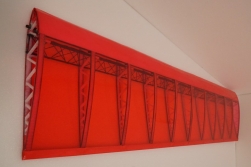
Composite materials are generally described as being made up of a combination of two or more materials. Through clever engineering, materials can work better together than individually because the way they combine produces a composite material with different characteristics. Members of the public will have the opportunity to find out just how useful composites are and how they could be used in the future at a free talk this week [Wednesday 15 November].

New satellite lab and ground station to boost space exploration in Bristol

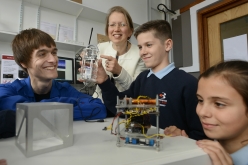
Space exploration in Bristol is to be boosted thanks to the opening of a new satellite laboratory and ground station at the University of Bristol today [10 Nov]. The fully automated ground station, equipped with the latest tracking technology, will allow students and researchers to speak with astronauts in NASA’s International Space Station, download data from current satellites in orbit, and communicate with future University of Bristol-built satellites.

Image analysis addresses harmful algal blooms

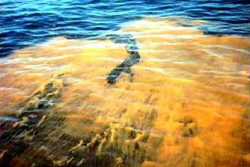
Harmful algal blooms are the rapid and uncontrolled growth of algae in either freshwater or marine environments and can cause significant harm to human health, animals, the environment and economies. A team of researchers from the Bristol Vision Institute (BVI) at the University of Bristol has been awarded a major grant by the British Council to produce monitoring and early warning systems for harmful algal blooms (HABs), also known as red tides.