Quantum satellite mission represents new frontier in space-based encryption technology
A scheme using quantum technology to encrypt messages from space is to be tested on a satellite in a programme involving University of Bristol researchers.
.jpg)
A scheme using quantum technology to encrypt messages from space is to be tested on a satellite in a programme involving University of Bristol researchers.
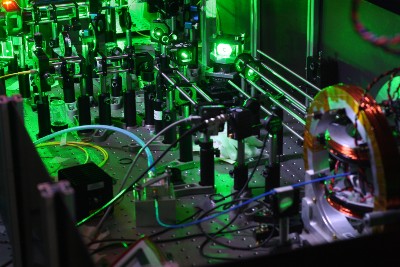
Scientists from the University’s Quantum Engineering Technology Labs (QETLabs) have developed an algorithm that provides valuable insights into the physics underlying quantum systems - paving the way for significant advances in quantum computation and sensing, and potentially turning a new page in scientific investigation.
Quantum scientists and engineers from across the world have been in the city this week for the fourth annual Bristol Quantum Information Technologies Workshop (BQIT).
The University of Bristol has today (Monday, 20 March) launched seven new research institutes reflecting the University’s strength and depth in key specialisms.
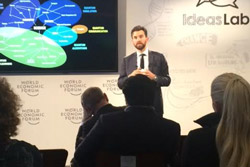
Imagine in 2025 that quantum computers, while relatively expensive, are reliable, hugely powerful and able to circumvent strong encryption up to 256 bits. How should business, government and civil society prepare for such a future?
A professor of physics from the University of Bristol's new Quantum Information Institute has been awarded the prestigious 2016 Cozzarelli Prize for a paper published in the journal, Proceedings of the National Academy of Sciences.
The University will receive €13M for globally significant research into anti-microbial resistance, artificial reproduction, futuristic materials, quantum mechanics, the philosophy of evolution and a truth taskforce to combat misinformation.
.jpg)
A team of researchers from Bristol’s Quantum Engineering and Technology Labs (QETLabs) has shown how to protect qubits from errors using photons in a silicon chip.

A pioneering centre is being launched to take mobile technology to the next level and put the UK at the global forefront of 6G research, innovation, and education.
Reaching net zero carbon dioxide emissions, eliminating hunger and poverty, tackling misinformation and vaccine hesitancy, decolonisation, and overcoming the digital divide are among key topics set to take centre stage at the inaugural University of Bristol Festival of International Research and Partnerships, which starts next week.