
Sandpits and seedcorn funding
BDFI is committed to nurturing innovative research by providing funding and opportunities that help transform early-stage concepts into ambitious, impactful projects.
Every year, BDFI awards small grants that support the development of pilot research projects that align with our core mission: creating just and positive digital futures for all. These early-stage awards play a vital role in helping researchers test ideas, generate evidence, and build credibility for larger external funding applications.
Prior to 2026, BDFI offered this support through it's Seedcorn Funding scheme, awarding grants to research teams to develop early-stage prototypes and pilot studies.
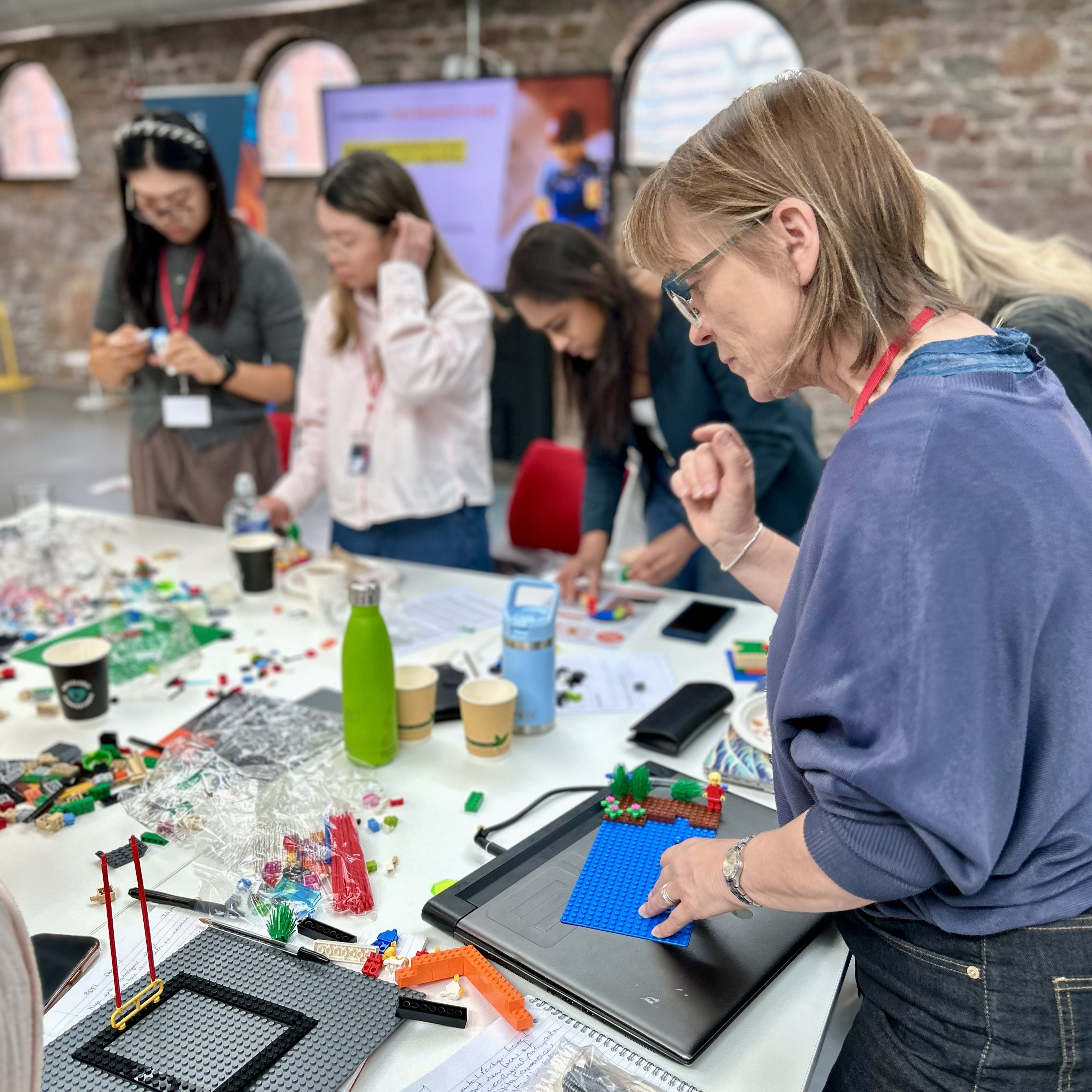
In Spring 2026, BDFI adopted a new approach by hosting its first Research Sandpit. This day-long workshop brought together researchers from across the University to collaborate on pressing socio-technical challenges and form interdisciplinary teams. Following the event, three successful projects were awarded £10,000 each in seed funding to develop pilot initiatives and lay the foundations for larger future research programmes.
BDFI hopes to continue using the Research Sandpit model as its primary mechanism for awarding seed funding, fostering interdisciplinary collaboration and supporting innovative sociotechnical research. Sign up to our newsletter to be the first to hear about plans for 2027's Research Sandpit.
BDFI Research Sandpit 2026
In April 2026, we hosted our first Research Sandpit in The Sheds' Neutral Lab. After a competitive application process, thirty-five UoB researchers from different career stages and disciplines came together to co-create new research proposals to address pressing questions on the future of technology and society.
After familiarising themselves with BDFI’s immersive technologies, including the XR Suite and the Reality Emulator facility, researchers formed interdisciplinary teams based on shared interests in BDFI’s key research pillars (Digital Health, Creative Industries, Sustainability, AI) and started to develop applications for the three available seed-project grants of £10,000.
Awardees
A selection of unsuccessful teams were encouraged to apply for BDFI's Small Grant Awards. These included:
- A project exploring whether immersive storytelling technologies can shift how policymakers understand
and prioritise suicide prevention. - A project which sought to bring a significant historical landmark to life through the creation of an immersive environment which allows visitors to visualise and interact with the venues cultural history through time.
- A project developing a cardiac digital twin (virtual heart) for use in patient-informed public engagement.
Seedcorn projects
Prior to BDFI's Research Sandpit, the institute awarded pilot project grants through a scheme called 'Seedcorn'. Explore the previous awardees below.
- Aerial robots for sample collection in forests
Canopy gradient of trees is a crucial but elusive part of forest ecosystems. How can we use aerial robots to help us monitor the ecosystem of the Amazon rainforest? - Inclusive digital innovation through community technology in underserved communities
Can VR and XR technology, when deployed as a digital design method, enhance current Community Technology practices to further the inclusive and innovative design of safe online digital spaces for women from underserved communities? - Measuring exercise more effectively (MEME): Using wearable devices to measure exercise
Depressive and anxiety disorders are the two most prevalent types of mental health condition and the leading cause of global disability. How can wearable devices help us understand how exercise helps to improve mental health? - Think before you B (AI), structured decision-making for AI public buyers
Public authorities are quickly deploying AI and forms of automation, procuring it from tech providers and consulting companies. This happens under fragmented and insufficient regulation, limited guidance, and a significant digital skills gap in the public sector. How can we help local authorities to make informed and correct decisions? - Designing audience-centric VR
How can we make virtual reality experiences as safe, inclusive and comfortable as possible for the widest range of audiences? Through our collective practice-led research, this project will focus on shaping responsible and thought-provoking digital futures and digital innovation.
- Exploring digital futures through play
How can we harness the power of play to imagine futures in more inclusive, accessible and collaborative ways? - Profiling the energy consumption of video streaming over 5G
As the streaming of video content only continues to increase, how can we make sure we’re trying to meet sustainability targets whilst using ever more digital online services? This project will look at the video streaming services pipeline and specific objectives around their carbon footprint. - Cognition - making mixed reality experiences accessible
How can we make virtual reality more accessible and inclusive for people with disabilities or impairments? - Wearable robots for enhancing embodied communication
Could wearable robotic technology help enhance communication, especially for those with complex communication difficulties? - Against digital fatalism: resisting technology hype through hopeful artful interventions
How can we see through the hype around emerging technologies and increase the hope about the future?
- Striving for a fairer digital playing field in Brazil
There’s been lots of positive effort to address digital inequality in Brazil, but not all of its output gets shared as widely as it might. This project is using technology to overcome social polarisation and reconnect societies in the country. - Caring for fragile infrastructures to enhance urban sustainability
A pilot project that aims to discover how immersive meetings can help stakeholders (re)engage with urban environments. - Helping to boost kids’ confidence with maths
Adult numeracy in the UK appears to be in decline, and maths anxiety widespread. Using digital technology, this project is linking maths and play, building positive attitudes to learning maths among primary school children. - Heroic verse: a poetic push for maths and tech
Poetry is humanity’s oldest linguistic art form – and surprisingly well-suited to improving the accuracy of cutting-edge digital technology. - Sketching new perspectives on energy systems
Could you draw a digital future? This project aims to promote better understanding of technological innovation by doing exactly that.