Newton themes, Overseas development assistance, Global challenges and Sustainable Development Goals
Policy context
- Strengthening global peace, security and governance
- Strengthening resilience and response to crises
- Promoting global prosperity
- Tackling extreme poverty and helping the world’s most vulnerable
Further details can be found in the policy paper, UK aid: tackling global challenges in the national interest. In some instances it may be relevant to refer back to the strategy within development-focused proposals.
- BEIS presentation on Research and Innovation strategy for Official Development Assistance (March 2017)
- Department of Health presentation on Global Health Research (March 2017)
- DFID presentation on health research funding (March 2017)
Newton Fund themes
The table below summarises the thematic areas covered so far under the Newton Fund. This is representative of the high level priorities specified by the funders and partner countries. Many of individual calls have focused themes addressing specific development issues.
To get more detailed overview of the partner country themes and the interests of the UK funders, within the Newton Fund, please look at our information sheet Newton Fund - guidance on themes.
You can also visit the Newton Fund programme partner country pages. If you have any questions about partner country priorities do feel free to contact the in-country Newton Fund Programme Managers listed there.
Agriculture |
Environmental challenges |
Agri-technology |
Food security |
Biodiversity |
Governance, society and conflict |
Climate Change |
Health |
Cultural Heritage |
Resilience to natural disasters |
Digital innovation and creativity |
Resilient and connected communities |
Economic development, welfare, inequality |
Urbanisation & smart cities |
Education |
Water management & security |
Energy |
|
Overseas Development Assistance
Guidance documents
On our Newton Fund landing page there are several documents that provide guidance on preparing ODA applications. The British Council advice on framing an ODA proposal is particularly worth reading as is the RCUK guidance on ODA parameters. The guidance on developing international development projects and collaborations will be useful to read through when thinking through the building of long-term sustainable partnerships.
Feel free to contact us if you are considering submitting a proposal and are not sure if it meets ODA requirements. We would also advise you opening a dialogue with funders and in-country agencies when you have specific call-related questions.
The following presentation by the Director of ODA at DFID provides a background to ODA as well including some case studies that highlight issues with framing an ODA proposal.
Is my project ODA? Some questions to ask yourself
When trying to decide whether an activity is ODA eligible, it is important to focus on the questions which would typically be asked for by the OECD. Questions you may wish to consider regarding your project’s ODA eligibility include:
- Is the project addressing the economic development and welfare of the country in question?
- Are the countries involved on the DAC List of ODA Recipients (the Development Assistant Committee of the OECD)
- Is there a development need that my project or activity is addressing?
- Is this credible or is there evidence of the need?
- How would this project or activity be applied in the country?
- What would the impact of my project or activity be, and who would benefit?
- How does my project or activity contribute to sustainable development?
- Would this lead to a reduction in poverty in a developing country?
- What would success for this activity look like?
- How would success or impact be measured?
ODA and the Newton Fund
The Newton Fund forms part of the UK’s Official Development Assistance (ODA) commitment which is monitored by the Organisation for Economic Cooperation and Development (OECD). ODA funded activity focuses on outcomes that promote the long-term sustainable growth of countries on the OECD Development Assistance Committee list.
All the Newton Fund countries fall within the OECD's list of countries that are eligible for Overseas Development Assistance (ODA). Rather than matching DFID's priority list, "these countries have developed beyond the need for permanent aid programmes. Instead, the Newton Fund will use our joint strengths in scientific research to promote development across the world and build long-term collaborations with countries that will produce leading innovations in the future" (DBIS statement, 2014).
Arts and Humanities
Collaborative research with the Newton Fund - two case studies from the AHRC.
Global Challenges Research Fund (GCRF)
The GCRF is a parallel and complimentary programme that also forms part of the UK's Official Development Assistance (ODA) commitment. It is largely, but not exclusively, adminstered by RCUK through the individual Research Councils. It is particularly focused on challenge-led disciplinary and interdisciplinary research.
Whilst collaboration with partner countries on the OECD's DAC List (those for whom ODA activity is intended) is not a requirement for GCRF propsoals, clearly such links can offer a convincing pathway for delivering ODA impacts. Therefore there is opportunity to consider both the Newton Fund and the GCRF together when thinking about ODA relevant research.
To find out more about the GCRF visit the RED GCRF webpage.
Read this short blog by a GCRF Panel Member on How to write a fundable proposal for the Global Challenges Research Fund.
Funders who have recently supported Foundation Awards through the Global Challenges Research Fund have produced a set of general observations as a Guide to support applicants in preparing future GCRF proposals
Sustainable Development Goals (SDGs)
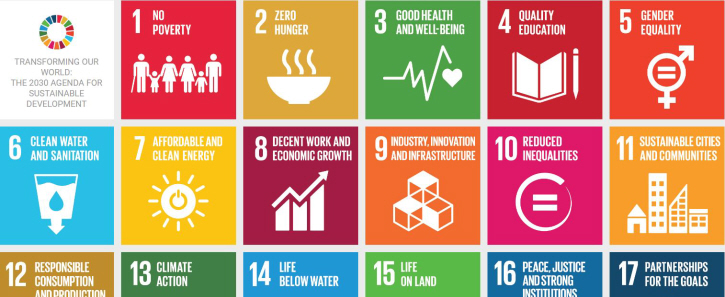
The UN's Sustainable Development Goals consist of 17 goals and 169 targets, addressing the UN's 2030 Agenda for Sustainable Development. Whilst they seek to build on the Millennium Development Goals the SDGs apply to all nations, not just "developing countries". As such all nations have a responsibility to implement them with respect to themselves as well as with international partners. Within the UK, the UK Stakeholders for Sustainable Development (UKSSD) is an open platform that supports public, private and voluntary organisations working towards sustainable development in the UK. The UK government's aid strategy (see above) and investments in development-focused research (e.g. Newton, GCRF etc) are framed by the global context of the SDGs. As well as the goals themselves, there are also cross-cutting Sustainable Development Topics that mesh with the SDGs.
UK Collaborative on Development Sciences & UKSSD
UK Collaborative on Development Sciences organisation (UKCDS) has webpages dedicated to the rise of development related funding opportunities (i.e. Newton, GCRF, Ross Fund etc.). The webpages include a hub of all funding opportunities in this area, impact case studies as well as other tips and tools helpful for navigating the global development research opportunities landscape.
The following presentation by Director of UKCDS provides further information on their role and services.
UK Stakeholders for Sustainable Development (UKSSD) is an open platform that supports public, private and voluntary organisations working towards sustainable development in the UK. UKSSD runs a programme of events and initiatives to support its partners’ work on sustainable development.