
New book sheds light on the hidden history of pre-NHS healthcare
A new book by a University of Bristol academic explores the history of healthcare in the days before the NHS.
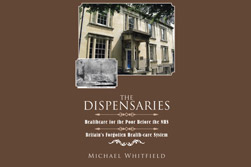
A new book by a University of Bristol academic explores the history of healthcare in the days before the NHS.
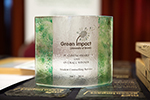
The University of Bristol celebrated its latest environmental achievements at the 2016 Green Impact Awards ceremony on 23 June. Awards were given to both individuals and teams who have reduced their environmental impact or encouraged sustainable behaviours through practical projects and initiatives.
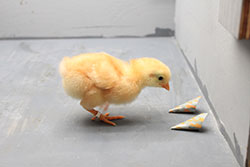
Chickens can find the correct colour in redder lighting conditions, researchers from Lund University and the University of Bristol have found. Their study indicates that – like us – chickens have colour constancy (a feature of the colour perception system which ensures that the perceived colour of objects remains relatively constant under varying illumination conditions).

The University of Bristol recognises that leaving the European Union will create significant uncertainty for all UK universities, particularly around the mobility of staff and students, the funding of research and our international partnerships.
Three students from the University of Bristol are among 50 who have been awarded fellowships from the Arts and Humanities Research Council's International Placement Scheme (IPS).
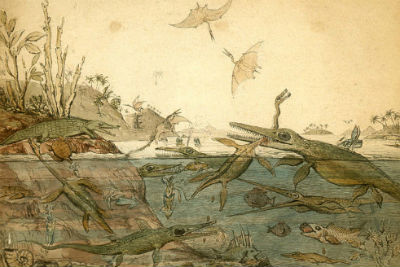
While dinosaurs ruled the land in the Mesozoic, the oceans were filled by predators such as crocodiles and giant lizards, but also entirely extinct groups such as ichthyosaurs and plesiosaurs.
In years to come, personal memories of the COVID-19 pandemic are likely to be etched in our minds with precision and clarity, distinct from other memories of 2020. The process which makes this possible has eluded scientists for many decades, but research led by the University of Bristol has made a breakthrough in understanding how memories can be so distinct and long-lasting without getting muddled up.

Researchers from the University of Bristol have contributed to the development of a radical new approach to supporting parents with learning disabilities.
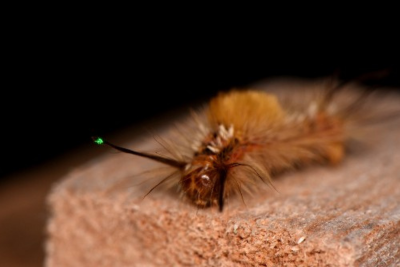
The renowned academic scientific journal PNAS has named a University of Bristol research paper providing insight into a fascinating method used by caterpillars to detect predators as one of the best it published in 2024.
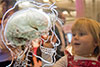
At-Bristol Science Centre, in collaboration with the University of Bristol, has been awarded a grant from the Wellcome Trust, in a UK first to lead an innovative and immersive series of workshops, using real human brain tissue to stimulate discussion about the social, ethical and legal issues around neuroscience and neuroscience research.