
Global migration experts come to Bristol
Experts from the UN and other global organisations are meeting in Bristol this week to discuss how to improve the coverage, quality, analysis and reporting of migration data.

Experts from the UN and other global organisations are meeting in Bristol this week to discuss how to improve the coverage, quality, analysis and reporting of migration data.

Why has the Leaning Tower of Pisa survived the strong earthquakes that have hit the region since the middle ages? This is a long-standing question a research group of 16 engineers has investigated, including a leading expert in earthquake engineering and soil-structure interaction from the University of Bristol.
Digital signal processors (DSPs) are crucial to the technology we use every day. Smartphones, digital TVs and biometric fitness trackers all use DSPs to synthesise high volumes of data. Dr Naim Dahnoun’s new book teaches readers how to apply this exciting technology.

Unlike Derek Zoolander, ants don't have any difficulty turning left. New research from the University of Bristol has now found rock ants often have one eye slightly better than the other, which could help explain why most of them prefer to turn left, given the choice.

Jonathan Rossiter, Professor of Robotics at the University of Bristol has been appointed as one of the Royal Academy of Engineering Chairs in Emerging Technologies to help ensure that the UK is a driving force for global technological innovation.

In August 2017, peace activists from Peru and Colombia gathered in Cartagena de Indias, Colombia, to discuss the ways in which they had used art and creativity to tell stories about the history of conflict in their countries.

A cathedral trained stone carver, illustrator and stained glass artist are just some of the local artisans who have been paired with Bristol researchers to create a stunning array of science-inspired art works as part of Creative Reactions Bristol [11 to 22 May].

The aerodynamic capabilities of spiders have intrigued scientists for hundreds of years. Charles Darwin himself mused over how hundreds of the creatures managed to alight on the Beagle on a calm day out at sea and later take-off from the ship with great speeds on windless day.
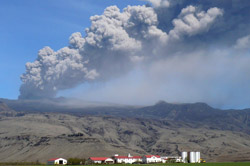
New research, led by the University of Bristol, has provided fresh insight into how huge volcanic ash plumes, which can critically disrupt aviation and cause major impact on the ground, are transported in the atmosphere.
Seven million people die each year from smoking related diseases, according to the World Health Organisation, with the annual death toll expected to rise to eight million by 2030.