
Bristol’s home movies hit the big screen
Bristol will be marking International Home Movie Day this Saturday [18 October] with the opportunity to share your home movies and videos.

Bristol will be marking International Home Movie Day this Saturday [18 October] with the opportunity to share your home movies and videos.
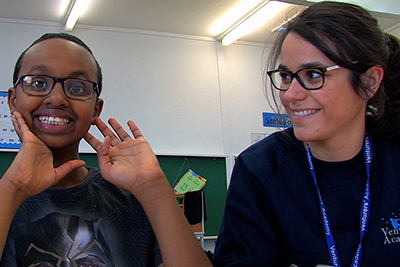
World Autism Awareness Day (WAAD) is an internationally recognised day on 2 April every year to raise awareness of the hurdles that people with autism – and others living with autism – face every day. Following research by the University of Bristol, the National Institute for Health Research (NIHR) and Autism Independence, a film that tells the stories of Bristol-based Somali families affected by autism and the professionals who support them will be premiered tomorrow [Wednesday 3 April].

City leaders gathered today [29 March] with academics, businesses, community groups, students and others from the public and private sector to lay foundations for solving some of the city’s most pressing challenges.

Scientists at the Universities of Birmingham, Bristol and Colorado, Boulder have moved a step closer to developing the next generation of data storage and processing devices, using an emerging science called skyrmionics.

A high-tech science hub dedicated to training world leaders in catalysis has opened its doors to students from the Universities of Bristol and Bath.

Researchers from the University of Bristol have shed new light on the process of quantum measurement, one of the defining, and most quantum features of quantum mechanics.

The link between volcanism and the formation of copper ore has been discovered by researchers from the University of Bristol. Their findings, published today in Nature Geoscience, could have far-reaching implications for the search for new copper deposits.

Tom Barber, a postgraduate in the Department of Mechanical Engineering, has been awarded an Industrial Fellowship by the Royal Commission for the Exhibition of 1851.

Dolphin survival and reproductive rates suffered a significant decline following a 2011 marine heatwave affecting around 1,000km of Western Australia’s coastline. The findings, published in Current Biology and representing an international collaboration of researchers and universities, including Zurich and Bristol, have important implications for marine conservation and mitigating the effects of climate change.
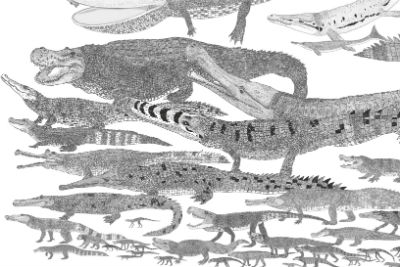
Ancient aquatic crocodiles fed on softer and smaller prey than their modern counterparts and the evolution of skull shape and function allowed them to spread into new habitats, reveal paleobiology researchers from the University of Bristol and UCL.