
Bristol chemist chosen for Humboldt Award
Professor Varinder Aggarwal in the School of Chemistry has been elected to receive a Humboldt Research Award.
Professor Varinder Aggarwal in the School of Chemistry has been elected to receive a Humboldt Research Award.

3D printing techniques have quickly become some of the most widely used tools to rapidly design and build new components. A team of engineers at the University of Bristol has developed a new type of 3D printing that can print composite materials, which are used in many high performance products such as tennis rackets, golf clubs and aeroplanes. This technology will soon enable a much greater range of things to be 3D printed at home and at low-cost.

A truly ground-breaking approach to cardiovascular health involving wearable technology and sensors in the home, expanding on pioneering University of Bristol research, has been shortlisted for the British Heart Foundation (BHF) Big Beat Challenge £30 million award.

Balancing improvements in health against the cost of such improvements in primary care is vital to achieve a cost-effective and efficient healthcare system, finds a new report by University of Bristol researchers and published in the BMJ.

Combination therapies, particularly varenicline and nicotine replacement therapy (NRT) combined, are the most effective tobacco cessation pharmacotherapies, the largest review to examine the effectiveness and safety of electronic cigarettes (e-cigarettes) and medicines that people use to quit tobacco has found.

A multi-disciplinary team of academics, led by the University of Bristol, is investigating the long-term environmental and social impact of conflict in dryland environments.
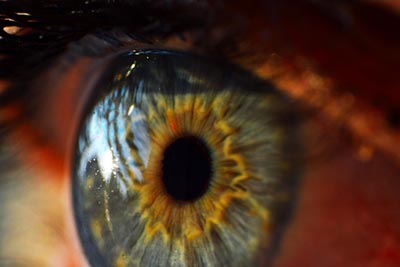
Researchers from the University of Bristol and University Hospital Southampton have found that a drug used widely to treat a common eye condition has “no benefit” and should no longer be used. Eplerenone, which is primarily used to treat heart failure, is currently offered widely by ophthalmologists as a treatment for central serous chorioretinopathy (CSCR) based on limited clinical data.

A breakthrough in the transformation of human cells by an international team led by researchers at the University of Bristol could open the door to a new range of treatments for a variety of medical conditions. Their paper, published today in Nature Genetics, demonstrates the creation of a system that predicts how to create any human cell type from another cell type directly, without the need for experimental trial and error.
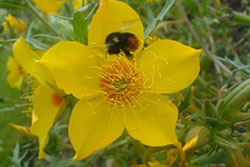
Flowers’ iridescent petals, which may look plain to human eyes, are perfectly tailored to a bee’s-eye-view so that these pollinators can find and recognise them more easily, research from the University of Bristol and the University of Cambridge has found.
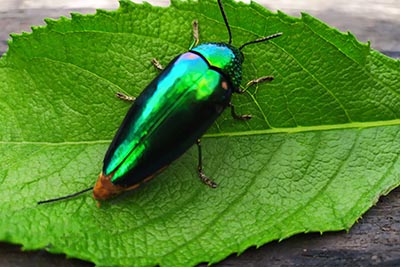
A new study shows for the first time that the striking iridescent colours seen in some animals increase their chances of survival against predators by acting as a means of camouflage. Rather than reveal it seems these dynamically changing shades are used to conceal, according to the University of Bristol study published today [23 January] in Current Biology.