
Childhood behaviour linked to taking paracetamol during pregnancy
A new study by the University of Bristol adds to evidence that links potential adverse effects of taking paracetamol during pregnancy.

A new study by the University of Bristol adds to evidence that links potential adverse effects of taking paracetamol during pregnancy.
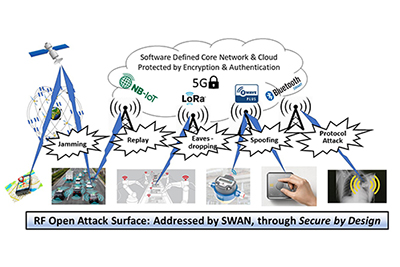
Cyber security and wireless experts from academia and industry will join forces to tackle the growing threat posed to wireless networks by cyber-attacks, thanks to a £6.1 million funding boost from UK Research and Innovation (UKRI) and industry.

From helping schools improve earthquake mitigation plans, to enabling farmers to detect fish stocks and seasonal droughts, researchers are collaborating with regional partners in a bid to deliver strategic responses to prescient challenges.

World-leading vaccine scientists from the University of Bristol are working with one of Vietnam's major vaccine manufacturers, Vabiotech, to share cutting-edge knowledge that could help prevent future global outbreaks of avian flu and rabies.

Two postgraduate students at the University of Bristol have been offered fellowships under the Arts and Humanities Research Council’s (AHRC) International Placement Scheme (IPS). The Fellowships will be based at the Library of Congress in Washington DC, USA.
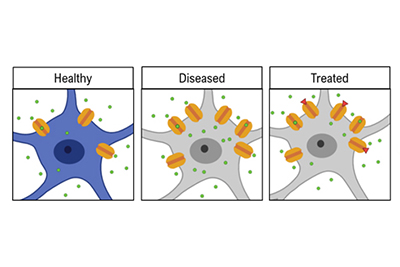
Alzheimer's disease (AD) is the most common cause of dementia but the changes in brain cell function underlying memory loss remains poorly understood. Researchers at the University of Bristol have identified that calcium channel blockers may be effective in treating memory loss.

The amount of physiotherapy available following hip and knee replacements comes down to a 'postcode lottery' according to new research led by the University of East Anglia in collaboration with the universities of Bristol and Oxford.

A national university business incubator, with offices in Bristol’s Engine Shed, has been named as the best in the world for the third time for its outstanding contribution to developing the next generation of UK tech entrepreneurs.
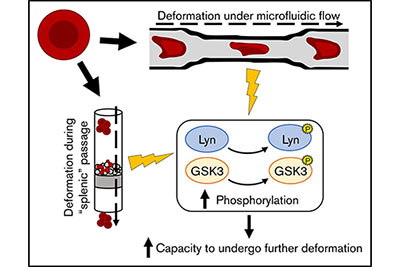
For the first time, researchers at the University of Bristol’s Blood and Transplant Research Unit, and the French National Institute for Blood Transfusion, have captured the moment a red blood cell is ‘squeezed’ while recording the changes that allow it to deform and subsequently recover its shape.

New tests and therapies to improve the treatment of people with coronary heart disease requiring bypass surgery are being developed at the University of Bristol thanks to new research funding from the British Heart Foundation (BHF). The charity has announced grants of £2 million as part of the appointment of Costanza Emanueli as BHF Professor of Cardiovascular Science.