
Study shows people ‘right size’ portions of high-calorie foods
New research has revealed that humans moderate the size of energy-rich meals they consume, suggesting people are smarter eaters than previously thought.

New research has revealed that humans moderate the size of energy-rich meals they consume, suggesting people are smarter eaters than previously thought.

The University of Bristol's Smart Internet Lab welcomes the Future Telecoms Infrastructure Review, published this week, and particularly the new spectrum policy that will focus on securing a diverse set of innovative 5G services.
The University of Bristol has been ranked 8th in the UK and 74th in the world, according to the Academic Ranking of World Universities (ARWU) published today.
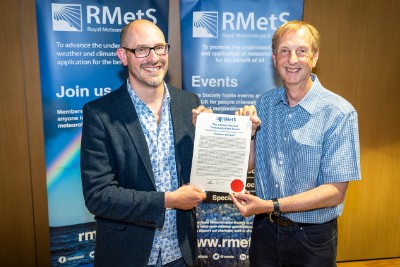
A University of Bristol climate scientist has won a major global award from The Royal Meteorological Society (RMetS).
A University of Bristol MSc student who is also a zoo vet carried out a rare procedure with the help of keepers to save the life of a critically endangered new-born lemur at Wild Place Project in Bristol.
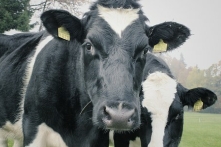
Researchers from the Bristol Veterinary School at the University of Bristol are leading the way with farmers to combat and change antimicrobial (AM) use on farms. Antimicrobial resistance - or AMR - is a global threat, with an estimated 700,000 people dying from resistant infections every year.
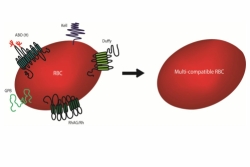
Synthetic biologists at the University of Bristol have succeeded in generating laboratory-made red blood cells with rare blood group types that could one day be used to help patients who cannot be matched with donor blood.
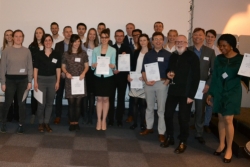
Vitamica, Imophoron and Exom Biotechnologies were all awarded a share of £10,000 in prizes during the BrisSynBio Connect event, which was the finale of the 4-Day MBA to develop new synthetic biology business ideas.
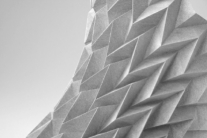
The creation of a new discipline will bring shape-changing abilities much more quickly to objects such as our mobile phones according to research published by the University of Bristol today [Saturday 21 April].
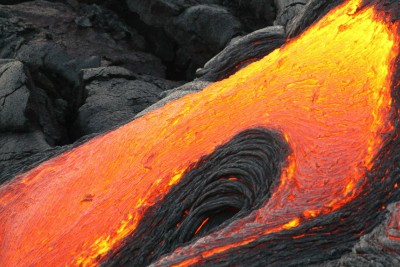
Unlike the classic Jules Verne science fiction novel Journey to the Center of the Earth or movie The Core, humans cannot venture into the Earth’s interior beyond a few kilometres of its surface. But thanks to latest advances in computer modelling, an international team of researchers led by the University of Bristol has shed new light on the properties and behaviour of magma found several hundreds of kilometres deep within the Earth.