
Bristol first to host series of workshops focusing on 6G research in the UK
The Minister for Digital Infrastructure has launched a series of events based on 6G research in the UK, the first hosted by the University of Bristol.

The Minister for Digital Infrastructure has launched a series of events based on 6G research in the UK, the first hosted by the University of Bristol.

As the COVID-19 pandemic hit the world, academics from across the University of Bristol joined together to understand the virus and the impact of the pandemic. Today [23 March] is a year since the first UK lockdown and their research is continuing to play a key role in global efforts to overcome the disease.

A £2.3 million research partnership between the Offshore Renewable Energy Catapult and the University of Bristol could help unlock larger and more powerful wind turbines than ever before.

With increased demands for better quality and more immersive and interactive visual services, video has become the primary driver of the internet. A team of researchers from the Bristol Vision Institute (BVI) at the University of Bristol has received funding under Google's Research Awards program to deliver the next generation of video compression technology.
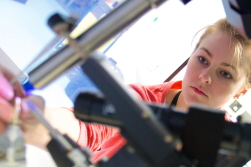
Female engineers from the University of Bristol's Faculty of Engineering are on a mission to inspire women to pursue science, technology, engineering and maths (STEM) subjects this Friday [23 June] when 90 local secondary school girls, aged 11- to 15-years old, celebrate International Women in Engineering Day.
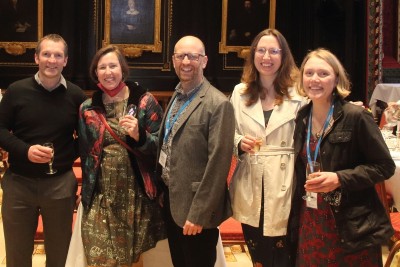
University of Bristol academics, Drs Ellen Brooks Pollock OBE, Leon Danon, Robert Challen, Amy Thomas and Emily Nixon have been recognised for their epidemiological modelling work supporting the UK government’s response to the coronavirus pandemic.
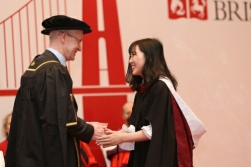
Almost 400 new alumni of the University of Bristol celebrated their graduation at a British style ceremony in Beijing with a distinctly Bristol flavour.

A team of students and staff from the University of Bristol are designing a volcano monitoring satellite as part of the University's satellite programme. The group of 17 students and academics have been given unique access to the Concurrent Design Facility at the Science and Technology Facilities Council's (STFC) RAL Space, to design the University's first CubeSat.
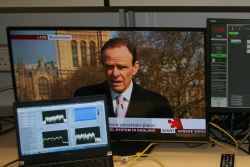
When a digital TV system operates with excess transmit power there is no benefit for either the user or broadcaster. New research has found that by deploying a spatially adaptive broadcast system, broadcast powers can be reduced by up to 35 per cent, reducing carbon emissions and saving money.

A blue plaque to commemorate the life and work of a great interdisciplinary thinker, whose interest was in visual illusion and what these revealed about human perception, will be unveiled tomorrow [Wednesday 10 May]. Bristol Vision Institute (BVI) at the University of Bristol will unveil the plaque to honour Professor Richard Gregory, a leading Bristol academic and psychologist.