
How quantum mechanics is working to protect security online
Scrambled and indecipherable messages are the back bone of the internet as we know it.
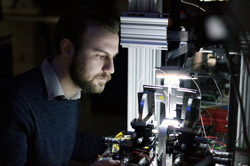
Scrambled and indecipherable messages are the back bone of the internet as we know it.
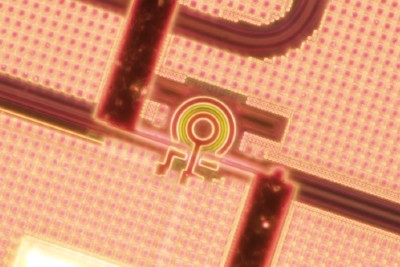
A Bristol-led team of physicists has found a way to operate mass manufacturable photonic sensors at the quantum limit. This breakthrough paves the way for practical applications such as monitoring greenhouse gases and cancer detection.

How engineering is helping track cyclists reach for gold, harnessing the power of quantum computers and the hidden world of engineering safety testing are three research projects University of Bristol academics will be showcasing at a free festival to celebrate the most exciting cutting-edge science and technology in the UK.
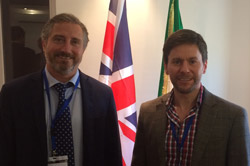
A delegation representing UK research in quantum technologies headed out to Capri last week for a bilateral high level research meeting with Italian counterparts.
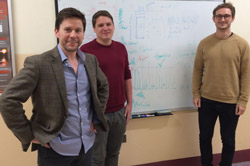
Researchers from the University of Bristol have discovered that super-powerful quantum computers, which scientists and engineers across the world are racing to build, need to be even more powerful than previously thought before they can beat today’s ordinary PCs.

Artists and scientists from the University of Bristol and the Royal College of Art have joined forces to blend two very different disciplines and create the beautiful fusion that is quantum computer art.
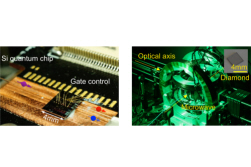
Quantum computing will soon enter a revolutionary new age of quantum supremacy, in which quantum computers are expected to outperform the computational power of the classical ones, unlocking new applications and technologies such as designing new drugs and processing big data.

The University of Bristol has announced plans to establish the world’s first open access Quantum Technologies Innovation Centre, focusing on taking quantum research from the lab and into the commercial world and positioning the UK as a global leader in the field.

Four University of Bristol academics have achieved the rare distinction of being elected Fellows of the world’s most eminent and oldest scientific academy in continuous existence, the Royal Society.
In collaboration with artist/historian Milica Prokic, the team at the University of Bristol’s Quantum Engineering Technology Labs (QET Labs) is engaging in a conversation about quantum research, its implications, and its impact on our world.