
Alumni profiles
Previous students of the School of Earth Sciences describe their careers since graduating and share their experiences of Bristol.
Sara Attfield, MSci Environmental Geoscience
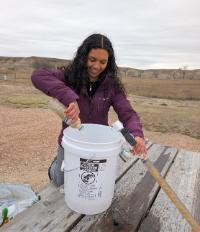
Describe your current role and responsibilities
I’m a PhD student and Graduate Teaching Assistant in the Environmental Mineralogy Group at the University of Bristol, supervised by Dr James Byrne. My research focuses on using biogenic minerals to remove uranium and arsenic from drinking water and it involves s a mixture fieldwork, lab work, and data analysis. I help support undergraduates in learning activities and fieldtrips for my teaching role.
Summarise your career since graduating:
My MSci research project explored the use of bacteria to remove toxic metalloids from groundwater wells in Native American communities. This gave me the great opportunity to collect samples in South Dakota, USA. After completing my degree, I was encouraged to continue my research as a PhD student, which I was delighted to do. Since then, I’ve had the chance to return to South Dakota to work with the local community, travel to Germany to learn new techniques for growing bacteria and biominerals and present my work at several conferences.
How would you describe your experience at Bristol?
I loved studying in Bristol and being part of such a vibrant city. The Environmental Geoscience course gave me a broad range of skills, including fieldwork, geochemical laboratory techniques, data analysis, modelling, and scientific writing. Fieldwork was one of my favourite parts of the course, it’s a great way to learn and make long lasting friendships. I also enjoyed being involved with the Bristol University Geology and Geoscience Society (BUGGS), particularly the annual balls.
Do you have any advice for someone considering studying Earth Sciences at Bristol?
I would highly recommend the School of Earth Sciences. It’s a friendly, close-knit department with a lot to offer, including international field trips, well-equipped laboratories, and a great sense of community. If you’re considering Environmental Geoscience, be aware that the first few years involve a fair amount of maths, chemistry, physics, and hardcore geology. As someone who didn’t take maths, chemistry, or physics at A-level, I can say there’s plenty of support available, and the teaching staff are always happy to help. In the later years of the course, you also have more flexibility to choose the topics that interest you most.
Courtney Jiskoot, MSci Geology with Study Abroad
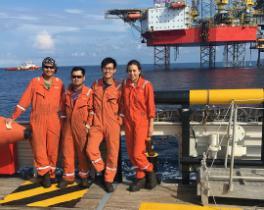
Describe your current role and responsibilities
I work as a Wireline Field Engineer in the oil and gas sector, which involves constant movement and changing scenarios (I'm choppered to 4 rigs every month on average), fast problem-solving, and adapting to new cultures and work processes. I've travelled all over the world, living in Malaysia, Myanmar and currently Norway, with stints in UAE and Italy. I'm never working with a group of people with a single nationality.
How would you describe your experience at Bristol?
What I strongly recall during my first year in Bristol was the surprise and jealousy from all my friends in halls: they didn't understand how I had so many friends in my department. This of course was due to the fact that we spent so much time together during field trips and practicals which allowed us all to integrate and bond.
How did your qualification help you in your career?
The course was a fantastic mix of theoretical - with technical problems and research projects - and practicals, that allowed us to directly apply our knowledge and not be enclosed by a screen. Professors encouraged an inquisitive attitude and designed a range of field trips. During my time at Bristol I managed to go to several countries for these: Spain, Greece and Chile.
All these factors I strongly believe contributed to my current career. Bristol encouraged me to be outgoing, and studying Geology made me realise I was never going to be comfortable with a standard desk job.
Edward Cox, BSc Geology
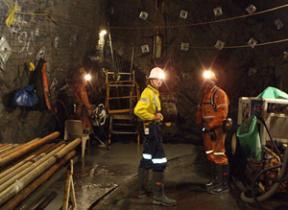
Describe your current role and responsibilities
I plan and design drilling programmes and log the resulting drillholes. I provide geological input into grade control and mining underground and geologically map mined areas.
Summarise your career since leaving
In my six months at Alacer Gold I have so far learned the core aspects of my job such as core logging, underground mapping and sampling and using the companies chosen mining software package 'Vulcan'.
How would you describe your experience at Bristol?
My experience at Bristol was very rewarding socially and academically. Bristol has some of the most challenging Earth science degrees and as a result I felt I was a step ahead of other graduates when applying for my first job.
How did your qualification help you in your career?
My qualification is related directly to my chosen career. I use almost all the skills I learnt completing my degree in my field of work.
Do you have any advice for someone considering studying Earth Sciences at Bristol?
Make sure you are interested in your chosen degree, research it thoroughly and talk to current students. I couldn't imagine doing a degree I didn't enjoy.
Michael Cassidy, MSci Geology
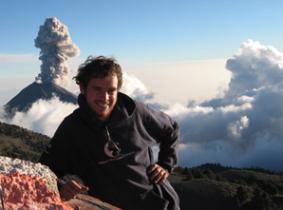
Describe your current role and responsibilities
I am a PhD student at the National Oceanography Centre in Southampton. I focus on the volcanology and geochemistry of Montserrat, a volcanic island in the Caribbean, but I also work on other volcanoes in Iceland and Tenerife.
Summarise your career since leaving
Whilst at Bristol I came across an opportunity to research volcanoes in Mexico, so after finishing by Geology degree, I spent for four months there as a volunteer research assistant, it was a thrilling experience.
Following this I completed an MSc in Volcanology and Geological Hazards at Lancaster University, I knew at that stage that I wanted to continue studying volcanology.
I decided to do a PhD at the University of Southampton, which concentrated on volcanism on Montserrat, West Indies. I still enjoy scientific research and it has taken me to some fantastic places, from the Caribbean, Iceland to South America with fieldwork and conferences.
How would you describe your experience at Bristol?
Bristol was a great place to study and live, after moving around the country a lot in recent years, Bristol still remains one of my favourite cities.
How did your qualification help you in your career?
The good grounding in geology I received from Bristol's renowned Earth Sciences department certainly helped my academic progression. I was taught by some of the most respected names in the field, this is something my employers definitely took into consideration.
Do you have any advice for someone considering studying Earth Sciences at Bristol?
The University of Bristol has a great reputation and is set in a cultured and vibrant city, the science departments are internationally recognised, few places in the UK match these attributes.