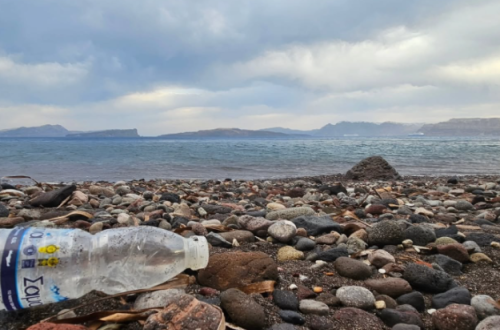
Pumice and plastics: Techniques in volcanology applied to assessing the distribution of oceanic microplastics
How can we more efficiently track microplastics in the ocean?
We are providing the evidence base and solutions to protect lives and livelihoods from natural hazards around the world.
How can we more efficiently track microplastics in the ocean?
Sea-level rise and more frequent and intense storms are impacting coastal communities, with coastal flooding, erosion and damage to infrastructure. Novel breakwater designs have the potential to increase the resilience of UK coastlines to these climate change related events.
Strengthening and broadening partnerships in East Africa around seismic risk, natural hazards, and resilience in the region.
We are improving the understanding and mitigation of frequently occurring natural hazards which cause a significant impact on livelihoods and wellbeing.
We are improving modelling of risks from changes in the cryosphere in the Hindu Kush Himalaya and helping to build the resilience of mountain communities.
Making more accurate projections of the changing nature of UK flood risk in order to make the correct decisions within climate change mitigation and adaptation, development control, design of resilient infrastructure and flood management.
We are becoming more vulnerable to natural hazards. Since 1950, the ongoing trend shows increasing losses from global catastrophes, but why is this?
Improving our knowledge and understanding of the global radiological hazard associated with the world’s worst nuclear accident through an enhanced monitoring provision.
It’s taking tens of millions of years, but the African continent is splitting apart. As populations grow, the threat of major earthquakes rises too.
Recent disastrous hurricane activity in the Caribbean highlights the urgent need to prepare appropriately for extreme changes in climate.
The East Asian monsoon fuels energy, industry and agriculture for over 1.5 billion people. How will it cope with rising CO2?
Hurricanes can savage small island states: the Caribbean has been battered by 264 of them since 1960. Will our changing climate alter their frequency or intensity?
Unlike its neighbours, Bhutan hasn’t experienced a major earthquake for some while. But is the clock ticking?
South Asia has experienced many large earthquakes in the past hundred years. What can they teach us about disaster risk reduction?
A new statistical tool to help target resources following deadly natural disasters has been created, allowing governments to prioritise getting aid to the most vulnerable people.
Road networks are fundamental for keeping the country running safely and efficiently. Bridges are crucial elements of these networks, since they cross over otherwise impassable obstacles.
Natural hazards have led to disasters throughout history. But with increasing populations and risk, what can historians and cultural scholars do to improve resilience around the world?
It’s taking tens of millions of years, but the African continent is splitting in two. As plates slowly shift, the threat of major earthquakes rises too.
We are developing sensor pods that can be delivered to a volcano by drone, transmitting data wirelessly, enabling the monitoring of inaccessible volcanoes.
The damaging effects of localised ‘everyday’ hazards affect the most marginalised and critically limit development. But they often escape the wider world’s gaze.
The devastation caused by the 2015 earthquake was immense: 9,000 lives lost, 3.5 million people left homeless, and entire neighbourhoods flattened. How do we stop that happening again?
Of the area expected to be urbanised by 2030, 60% is yet to be built. That gives us a golden opportunity to design hazard-resilient cities for our future – if we act now.
What can be done to better understand nuclear fall-out and associated risk? And how can this information be used to repopulate affected areas?





 500x330.jpg)