
Butterfly brains reveal the tweaks required for cognitive innovation
A species of tropical butterfly with unusually expanded brain structures display a fascinating mosaic pattern of neural expansion linked to a cognitive innovation.
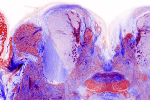
A species of tropical butterfly with unusually expanded brain structures display a fascinating mosaic pattern of neural expansion linked to a cognitive innovation.
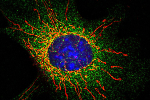
A key molecular step required for the division of damaged mitochondria - essential for cell health - has been identified by a University of Bristol-led study. The finding has the potential to establish how mitochondrial dysfunction goes wrong in common neurodegenerative diseases, such as Parkinson's and Alzheimer's.
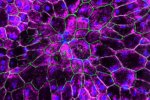
Increasing the levels of a key protein in the cells at the back of the eye could help protect against the leading cause of vision loss among older adults, finds a new discovery made by researchers from the UK, US, Germany and Australia. The University of Bristol-led findings are published today [5 June] in Science Translational Medicine and featured on the front cover.
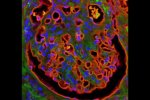
Researchers at the University of Bristol have uncovered a mechanism by which a hormone can protect the blood vessels in the kidneys from the damage caused by diabetes. In doing so, the team has identified a potential early treatment strategy to prevent or slow progression of kidney disease in people with diabetes. The study, part-funded by Kidney Research UK, is published in Diabetes.

David Stephens, Emeritus Professor of Cell Biology in the School of Biochemistry, has been awarded the Royal Microscopical Society (RMS) Scientific Achievement Award for his work on cell biology.

Tiny external structures in the wax coating of blueberries give them their blue colour, researchers at the University of Bristol can reveal.
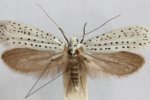
The workings of the ultrasonic warning sounds produced by the wings of a species of moth have been revealed by researchers at the University of Bristol.
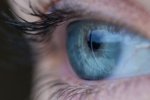
New research has shown a new type of inhibitor drug could prevent microvascular diabetic complications, such as diabetic eye and kidney disease. The University of Bristol-led research is published in Cardiovascular Diabetology.
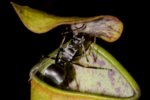
A scientific study of pitcher plants species that use the same complex ‘springboard’ mechanism for insect capture has revealed an explanation for how complex traits requiring multiple components may evolve.
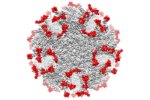
New research has demonstrated the potential for the ADDomer ™ platform to produce thermostable vaccines and reagents to tackle viral infections The study led by the University of Bristol and Imophoron, a biopharmaceutical company developing thermostable nanoparticle vaccines using its ADDomer platform, is published in Antibody Therapeutics today [29 November].