Abstract
Highly Reflective Molecular Crystals in Animal Vision and Coloration
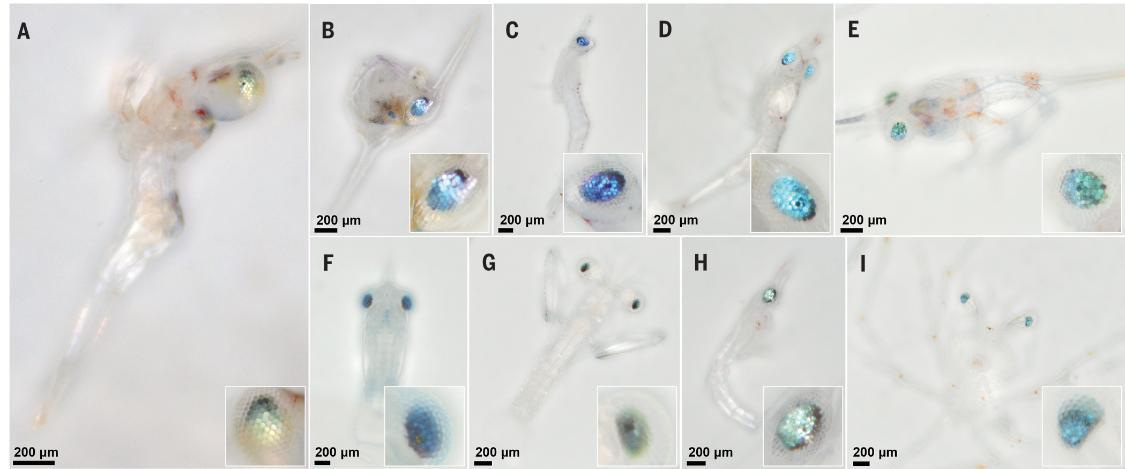
High refractive index molecular crystals are used to produce many spectacular optical phenomena in animal coloration and vision. By regulating the morphologies and assemblies of these crystals, organisms exquisitely tune the optical response of the system, but little is known about how this is achieved. Here, we present recent findings on the formation and optical functions of biogenic organic crystals, focusing on guanine, the most widespread molecular crystal in biology (Pinsk et. al., JACS 2022, Indri et. al., JACS 2025). By following guanine formation in developing model animals, we report a crystallization mechanism for guanine (Wagner et. al., Adv. Mater., 2022) and show how crystal nucleation and growth are directed by macromolecular templates inside crystal-forming ‘iridosome’ organelles (Wagner et. al., Nat. Commun., 2023). Secondly, we explore the optical properties of biogenic isoxanthopterin crystals which possess an extreme refractive index (n=1.96). The isoxanthopterin crystals are arranged in nanoparticles, constructed from a shell of plate-like isoxanthopterin crystals arranged in concentric lamellae around an aqueous core. We show how the size, ordering and molecular orientation of these particles are controlled to enhance the optical properties of camouflage (Shavit et. al., Science, 2023) and signaling (Lemcoff et. al., Nat. Photonics, 2023) reflectors in decapod crustaceans. Finally, we present recent work which harnesses biological cells as factories for producing biological and bio-inspired molecular crystals (Wagner et. al., Nat. Biotech., 2026).