Imagine hiking in the trailless wilderness of northern Sweden. Leaving your tent, most humans would be utterly lost within an hour of undirected travel. Yet, some animals, like bees and ants, can easily return to their nests, even after navigating unknown, featureless terrain. I will talk about my research investigating how arthropods overcome these navigational challenges.
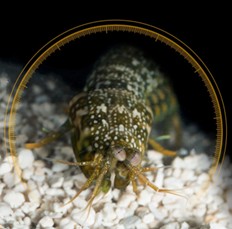
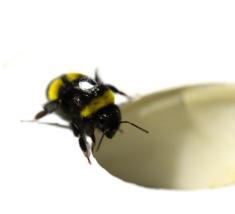
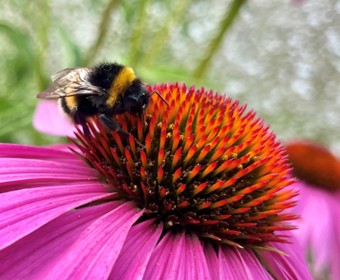
I will first talk about how mantis shrimp navigate their underwater environments, using spatial vectors and landmarks to return to their burrows after foraging excursions. I will then discuss my research understanding the neural basis of similar behaviors in bumblebees, using a novel lab-based behavioral assay, detailed neuroanatomy, and electrophysiology. Using what we found, I will discuss how arthropods might use spatial vectors to construct a flexible spatial representation to allow them to perform complex navigation behaviors, including making direct paths between locations of interest.
Finally, I will touch on work looking at how mantis shrimp might perform vector navigation operations by comparing the detailed neuroarchitecture of the putative navigation center of their brains with that of insects, animals separated by over half a billion years of evolution.