
Veterinary education
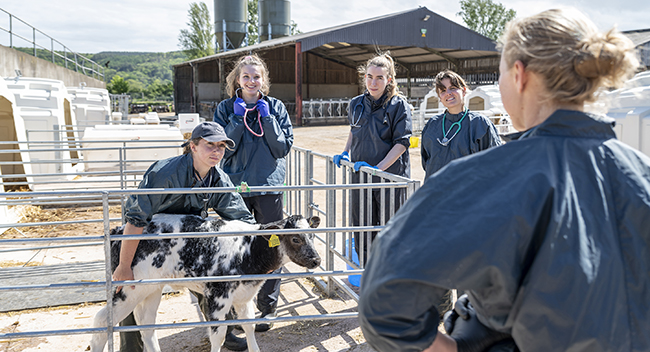 Research in veterinary education is a rapidly growing field at Bristol’s Veterinary School. This group aims to promote evidence-based teaching and assessment methods within a nurturing and supportive environment.
The group’s vision is to improve outcomes for students, educators, animals and society through undertaking and disseminating high quality research. Our mission is to undertake innovative and collaborative veterinary educational research, designed to enhance curricula and support students and educators to flourish as curious problem-solvers, adaptable team-members, and resilient lifelong learners.
The group collaborates with other veterinary educators nationally and internationally, and shares ideas and resources with other universities. This improves the experience of all vet students, preparing new graduates for their professional lives.
Currently, the veterinary education research groups focusses on the following themes:
- Clinical skills: our clinical skills theme focuses on development and evaluation of models and other resources for the teaching of veterinary skills. The team, comprising technical and academic colleagues, has published numerous articles on clinical skills models and have also published the Clinical Skills Lab’s booklets under Creative Commons licence: Clinical Skills Booklets | Bristol Veterinary School | University of Bristol.
- Case-based Learning (CBL): the Bristol veterinary curricula integrate a range of approaches to case-based learning. Our research, often funded by the Bristol Institute for Learning and Teaching, explores students and staff experiences of CBL in different formats, as we constantly evolve our approach to CBL pedagogy. Many of the CBL projects have also involved students contributing as co-researchers.
- Preparing for Practice: Our Preparing for Practice theme includes a range of projects focusing on workplace-based training and assessment for both veterinary and nursing students, and Spectrum of Care (SoC; also known as Contextualised Care).
Some of the group’s interests and achievements include:
- Over 160 publications and conference contributions in the last eight years
- The implementation of a case-based learning curriculum for our BVSc programmes, supporting students to develop skills in teamwork and lifelong learning
- Innovations in workplace-based assessment and clinical teaching, through extensive work with partner practices for both veterinary nurse and veterinary surgeon training
- Innovations in anatomy teaching for example using hologram technology
- Embedding Spectrum of Care principles to ensure students are well prepared to deliver contextualised care following graduation
- An internationally-recognised Clinical Skills Lab with progressive development of models and simulators for students to practise clinical procedures in a relaxed and friendly setting
- Leading an international team to develop and evaluate an online resource to train veterinary professionals in Evidence-Based Veterinary Medicine EBVM learning
- Co-authoring The Veterinary Educational Researcher's Handbook and A Guide to Assessment in Veterinary Medical Education: 3rd Edition
- Research into the uses of generative AI amongst veterinary students and academics to ensure students are equipped for new technology