
Design Engineering
Design engineering applies skills from across engineering, including aerospace, mechanical, civil and electrical, to solve real-world problems. At Bristol, you'll combine sustainability, technical rigour and creative design to meet user needs.
Ranked 2nd in the UK
Bristol is ranked 2nd in the UK for General Engineering (Complete University Guide 2027).
Design Engineering for real-world impact
Our courses prepare design engineers to solve real challenges in sustainable design, AI-driven engineering and next-generation cyber-physical systems.
Learn alongside real industry partners
Our design project units are supported by top engineering and tech companies, design consultancies and SMEs around Bristol, helping you to build industry connections from the start of your course through to your final year.
Design Engineering courses for 2027
Design Engineering at Bristol
Design Engineering is a multidisciplinary field that encompasses the broad spectrum of design. It combines engineering science, mathematics, and systems thinking with creative problem-solving to develop physical and digital products, processes, and cyber-physical systems that address complex societal challenges.
How does Design Engineering compare to similar disciplines?
Design Engineering is broader than a single engineering discipline and more technical than a product design degree. Rather than specialising in one area from the start, you’ll draw on aerospace, mechanical, civil and electrical engineering to develop products, processes and systems, combining engineering science and maths with creative design, systems thinking and teamwork.
How will I be taught on this course?
Our Design Engineering courses evolved from our former Engineering Design programme, with an updated curriculum designed to develop innovative design engineers with exceptional knowledge and skills. You will learn from academics with expertise in design engineering methodology and research, as well as specialists across different engineering disciplines. You will work in teams on authentic design engineering projects with support from industry.
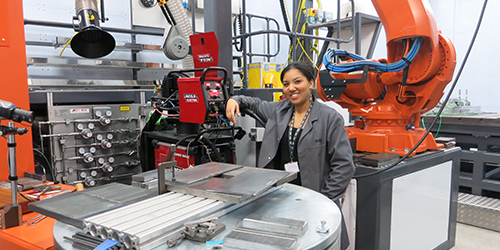
I spent my third year on placement in San Francisco with Johnson & Johnson. I worked on the design of a novel surgical robot, a fantastic engineering opportunity. Over the course of the year, I became more confident in my technical abilities, but also in navigating professional environments, communicating across teams and taking initiative.
Esther
MEng Engineering Design with Study in Industry
Career prospects
What can you do with a Design Engineering degree?
You will emerge as a versatile engineer, equipped with excellent design and technical knowledge, along with strong collaboration and leadership skills. This opens doors to diverse career paths in rapidly emerging sectors such as:
- robotics and machine learning
- renewable energy and sustainable technology
- advanced materials and manufacturing
- new product development and innovation.
The variety of optional units in the final years of the course will help you to develop a unique set of advanced skills to bring into industry.
Graduates are well-suited for careers across a range of sectors, from global engineering companies to small-to-medium enterprises and high-tech start-ups. Recent examples of graduate employers include:
- Arup
- Crux Product Design
- Bentley Motors
- PwC
- Zenobe Energy
- ITV
- DNV GL
Our career service provides support to help ambitious students start up their own businesses and develop their entrepreneurial skills.
What industry placement opportunities are available?
All students benefit from strong industry engagement throughout the course, working on industry-led design projects and receiving support from an assigned industrial mentor, alongside optional industry talks and workshops. If you choose to do a year in industry in your third year, you'll also gain a full year of assessed industrial experience before you graduate.
The Industrial Liaison Office manages our links with world-class engineering and tech companies, ensuring you engage with industry throughout your study. In your first year, you will be assigned an industrial mentor to support your personal employability skills development and can take advantage of talks from industry insiders.
Students interested in summer internships can access advice and job opportunities through the University's Careers Service. Internship opportunities span a range of sectors, including:
- building services and transport
- product design
- renewable energy
- manufacturing
- aerospace.
Course structures
How is the Design Engineering degree structured?
Throughout your degree, we'll introduce you to new skills and engineering knowledge that will support you through your studies and into your career. You’ll also develop your design skills through authentic, industry-led group design projects.
Engineering Maths in your first year is designed to help students from a range of educational backgrounds develop a common foundation in the mathematical skills used throughout the degree.
After a broad, common first year, you can start to explore design methodology and professional practice in more depth. Core units include:
- Engineering science
- Engineering maths
- Design principles and practice
If you choose a year in industry in your third year, you'll put your skills and knowledge to use in a professional context.
In the final year of the BEng courses, or third and final years of the MEng courses, you can choose from a range of advanced technical units across engineering disciplines to develop specialist knowledge in areas that interest you and align with your career ambitions.
What is the difference between the BEng and MEng Design Engineering courses?
Our three-year BEng gives you a strong foundation across the discipline, while the four-year MEng builds on the same first three years before you choose one of four specialist streams (Materials, Energy, Infrastructure or Innovation) in your final year. All your units and your individual research project will relate to your chosen stream, giving you the chance to specialise more deeply before you graduate.
Engineering industry and placements in South West England
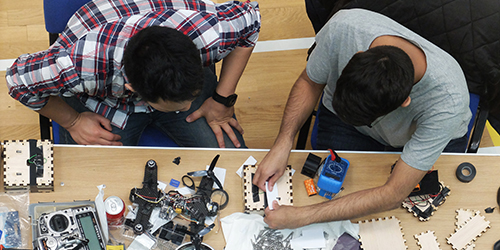
The South West of England is home to a diverse range of innovative industries, from university spinouts to global engineering consultancies, in aerospace, built environment, robotics, product design, renewable energy.
Engineering students at the University of Bristol have had placement experience at companies like:
- Rolls Royce
- Arup
- GKN Additive Manufacturing
- Crux Product Design
- Ensera
- Dyson
Innovative start-up companies such as LettUsGrow, Huxlo, Swytch and Lightbug were founded by University of Bristol alumni.
Perhaps you will be part of the growing development of agri-tech solutions to support sustainable farming, or advancing the world of healthcare with medical cyber-physical systems or new digital products. It is an incredibly exciting time to join this course and become the new generation of design engineers needed for the 21st century.
Design Engineering in practice
Discover how Bristol students apply their learning through design projects, industry experiences and hands-on engineering challenges.