Connected Bristol - 150 years of communications
This historical timeline was created to celebrate the University of Bristol’s 150th anniversary. It explores the city’s pioneering role in communications, from early telephones to the cutting-edge research of the University of Bristol’s Smart Internet Lab.
On this page:
Connecting People
Every generation has found new ways to make distance matter less.
Long before the internet, Bristol was developing new ways to share ideas, exchange information and bring communities closer together. Each breakthrough made communication faster, easier and more accessible, laying the foundations for today’s connected world.
The story begins with Bristol’s clocks being brought into line with Greenwich Mean Time, allowing people across the city and eventually, the country to keep the same time.
Telephone exchanges later transformed conversations, while new broadcasting technologies brought news and entertainment into people’s homes. Bristol also became an early pioneer of cable television through The Bristol Channel, whose name played on the city’s famous waterway.
These developments changed more than technology. They transformed how people lived, worked and related to one another, creating new opportunities for businesses, families and communities to stay connected.
1880 | Keeping Time Together
For centuries, every town kept its own local time, based on the position of the sun. Bristol Time differed from London by around ten minutes. As railways expanded, however, a shared national standard became essential. When Greenwich Mean Time became Britain’s legal standard in 1880, Bristol’s public clocks became symbols of a world growing increasingly connected.
1958 | Britain’s First Direct Dialling City
Bristol became the first British city where every telephone subscriber could make long-distance calls without an operator. Known as Subscriber Trunk Dialling, or STD, the new system transformed the telephone from a locally managed service into the foundation of a truly national communications network.
Learn more
Marconi's first radio broadcast across the Bristol Channel
A local TV pioneer: The Bristol Channel
Broadcasts delivered straight to homes
Listen here
Connecting Knowledge
The biggest breakthroughs begin with a question.
Every advance in connectivity begins with curiosity. By asking questions, testing ideas and challenging accepted thinking, discoveries made in Bristol can eventually become part of everyday life.
A defining moment came with the creation of the Centre for Communications Research. Bringing together expertise in wireless communications, signal processing and digital technologies, it established Bristol as an international centre for innovation in telecommunications.
The Centre's legacy continues today through the Smart Internet Lab, where researchers are exploring the next generation of communications technologies and helping shape how the world will connect in the future.
1985 | The Power of Parallel Thinking
Professor David May played a leading role in developing the revolutionary Transputer, a new kind of computer designed to solve complex problems by working in parallel. His work helped establish Bristol's reputation for advanced computing and contributed to the growth of Silicon Gorge, the region's internationally recognised cluster of technology companies.
1987 | Connecting the Wireless World
Professor Joe McGeehan helped transform wireless communications through pioneering research that influenced generations of mobile technologies. His work established Bristol as a leading centre for wireless research and demonstrated how university discoveries can have a global impact.
Learn more
The making of Silicon Gorge
IMOS, XMOS and the Transputer
Centre for Communications Research
Listen here
Connecting Places
What if an entire city became a testbed for innovation?
Ideas become most valuable when they are tested in the real world. Bristol has repeatedly used the city itself as a testbed, bringing together universities, businesses, public services and communities to explore how new technologies can improve everyday life.
From HP Labs’ Mobile Bristol to Bristol Is Open, researchers have transformed the city into a place where new ideas can be tested at scale. This spirit of collaboration has helped pioneer new approaches to communications, digital media and urban innovation, delivering benefits far beyond the laboratory.
2004 | Mobile Bristol
Mobile Bristol brought together HP Labs, the University of Bristol and the Bristol-based Appliance Studio. Its co-founder, Bill Sharpe, later known for pioneering the Three Horizons approach to thinking about change, helped connect technological innovation with people’s everyday lives. Working with Watershed and other creative partners, Mobile Bristol explored how digital experiences could respond to particular places. One experiment used location-aware media to bring the story of Bristol’s 1831 Queen Square riots to life as people walked through the square.
2015 | Bristol Is Open
Launched in 2015, Bristol Is Open created a city-scale programmable network that allowed researchers, businesses and public organisations to test new digital technologies in real-world environments. It demonstrated the value of open collaboration and helped establish Bristol as an internationally recognised testbed for smart city innovation.
Learn more
Re-living the Bristol Riots in Queen Square
Bristol is Open Data Dome
Listen here
Connecting Communities
Technology is most powerful when it brings people together.
Innovation is not simply about creating new technologies. It begins with understanding the people who will use them. Across Bristol, artists, researchers, community organisations and residents have worked together to explore how digital technologies can strengthen communities, encourage creativity and improve everyday life.
Rather than treating people as passive users, these projects invite them to become collaborators, shaping ideas, testing prototypes and influencing how technologies are designed and applied. This creates solutions that are more inclusive, imaginative and responsive to the places where people live.
By combining creativity, technology and lived experience, Bristol has shown that innovation flourishes when diverse voices are involved from the beginning.
2008 | Creativity Meets Technology
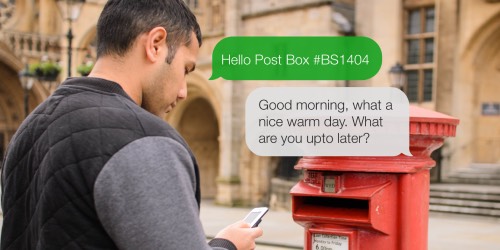
Watershed’s Pervasive Media Studio brings together artists, technologists and researchers to create new kinds of digital experiences. Projects including Playable City and Hello Lamp Post have gained international recognition, showing how technology can transform everyday streets into places of creativity, conversation and play.
2013 | Communities as Innovators
Knowle West Media Centre’s Bristol Living Lab places residents at the heart of designing, testing and refining new technologies. Its work demonstrates that successful innovation grows as much from local knowledge and lived experience as from technical expertise.
Learn more
Listen here
Connecting Intelligence
What happens when the network itself becomes intelligent?
Connectivity is no longer simply about connecting people. Networks are beginning to sense, learn and adapt, allowing people, machines, infrastructure and services to work together in new ways. As artificial intelligence, robotics and advanced communications converge, connectivity is becoming an active partner in solving complex problems.
Building on decades of expertise, the Smart Internet Lab is exploring the next generation of intelligent networks. These systems could support autonomous vehicles, connected healthcare, advanced manufacturing and immersive digital experiences. Rather than simply making connections faster, researchers aim to make them smarter, adaptive and multisensory.
Intelligent networks could help address some of society’s greatest challenges—provided they are designed to benefit everyone.
1985 | Artificial Intelligence Comes to Bristol
Professor Jim Baldwin was appointed to one of the UK’s earliest professorships in Artificial Intelligence, establishing Bristol as a pioneer in the field. Bristol’s Robot Snooker Player later combined robotics, artificial intelligence and machine vision, capturing the public imagination. Today, this legacy continues at Bristol Robotics Laboratory, where intelligent systems are being developed for healthcare, manufacturing and environmental monitoring.
2015 | Networks That Think
Under Professor Dimitra Simeonidou’s leadership, the Smart Internet Lab is helping define the next generation of communications. It is developing networks that can sense, learn and adapt, laying the foundations for future 6G technologies in which people, devices and infrastructure work seamlessly together.
Learn more
Listen here
Connecting Futures
What kind of connected future do we want to create?
Every generation builds on the discoveries of the past. But the future of connectivity will not be created by one university, business or government alone. It will depend on combining different kinds of knowledge, expertise and experience—and creating the spaces and infrastructure where collaboration can flourish.
At the University’s new Temple Quarter Enterprise Campus, the Sloane Robinson Building will bring researchers, students, businesses and communities together to address shared challenges.
At its heart, Bristol Innovations Zone will provide a gateway between the University and industry. Through shared workspaces, specialist laboratories, skills and support, it will connect businesses with research, talent and facilities—helping turn deep-tech ideas into practical solutions with lasting social and economic value.
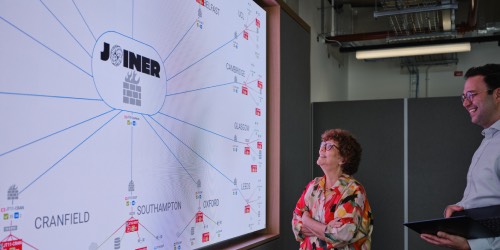
This collaborative approach extends beyond Bristol. Through JOINER, the Smart Internet Lab is enabling organisations to test future communications technologies at a scale no single institution could achieve alone.
2025 | Global Connections
From its new home in the Sloane Robinson Building, the Smart Internet Lab leads JOINER—the UK’s only open, international-scale experimentation platform for future networks. Connecting more than 15 universities and laboratories, it combines terrestrial and non-terrestrial networks, spectrum capabilities, cloud and edge systems, and AI-ready computing.
2026 | Bristol Innovations Zone
Bristol Innovations Zone will connect researchers and students with businesses, entrepreneurs and investors. By 2031, it aims to involve 33 organisations, provide specialist laboratory access, support 500 people, including 250 students with skills and training, and deliver 250 events.
Learn more
Explore JOINER Platform
Find out about the Smart Internet Lab
Take a tour of the Bristol Innovations Zone