
SINATRA
Successive Interference Cancellation for Dynamic Spectrum Access
Funded by the HASC Federated Hub SINATRA proposes to enrich the research remit of the Hub in All Spectrum Connectivity in the application of dynamic spectrum access.
| Research area | RF wireless communications |
|---|---|
| Dates | 1st September 2025 – 30th September 2026 |
| Funder | EPSRC Hub for All Spectrum Connectivity |
| Contact person | Andrew Austin |
Wireless, or Radio Frequency (RF) technology is essential in enabling our highly automated and interconnected digital world, empowering the efficient operation of industries and on-line services, enriching our lives and well-being. The GMSA has estimated that by 2030 the contribution to the global economy made by wireless is expected to reach ~$11 trillion, or 8.4% of global GDP. Thus, many governments, including the UK are demanding enhanced performance from future or advanced communication networks, further highlighting the value of the RF spectrum and the need for technology enhancements to aid operation in congested or contested spectrum. Spectrum congestion limits capacity through poor receiver sensitivity and interference handling, profoundly impacting systems employing advanced 5G and beyond technologies. Techniques including spectrum sharing, favoured by regulators as a means to increase spectrum utilisation, potentially compounds this problem, highlighting a strategic need for receivers with enhanced interference tolerance.
The use of Successive Interference Cancellation for Dynamic Spectrum Access (SINATRA) is an emerging technique to enhance spectrum utilisation, with a world-leading team from Bristol, Sheffield and Strathclyde Universities embarking on a proof-of-concept evaluation. The experimental demonstration of spectrum sharing technologies is well aligned with UK wireless strategy to build a “sharing by design” philosophy into future equipment standards. By showing the applicability of SIC at the PHY Layer using SDR platforms, the results from the project can be shared through HASC to demonstrate to UK spectrum policy stakeholders that operational enhancements at the PHY layer can bring benefit to spectrum sharing, particularly in future environments where interference from other (known) users may require to be managed.
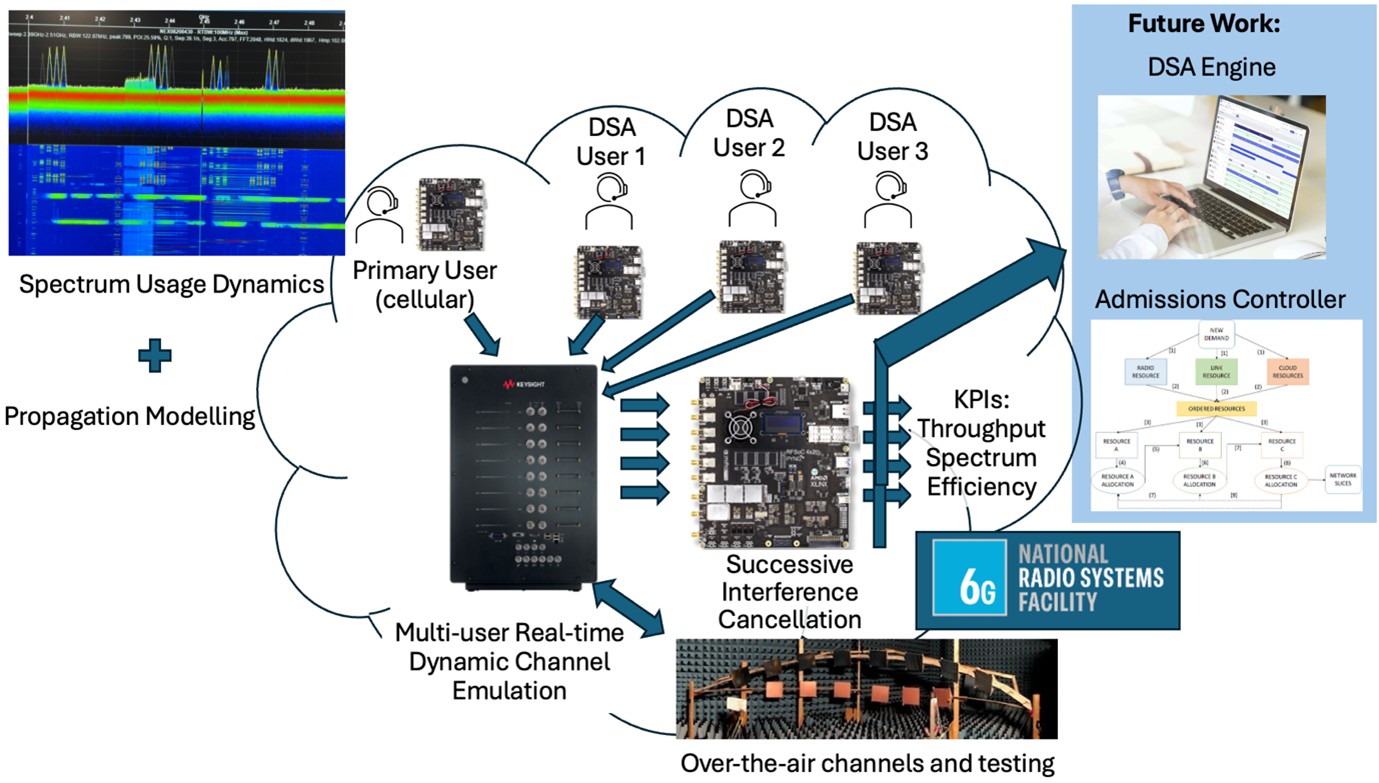
Figure 1: High-level overview of SINATRA, combining spectrum usage data and models with over-the-air measurements to enable spectrum sharing and dynamic spectrum access.
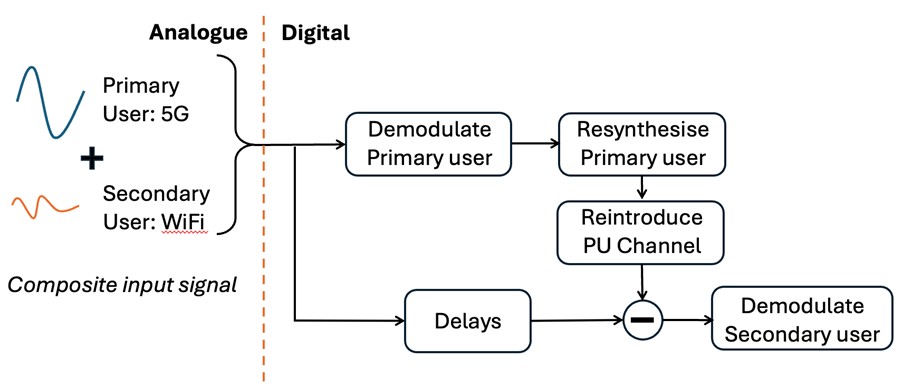
Figure 2: Block diagram of successive interference cancellation applied to allow spectrum to be shared between a 5G primary user and a WiFi secondary user