
Eco-labels on menu options prompt diners to make more sustainable choices, new research finds
A first-of-its-kind study has shown adding eco-friendly ratings on menu items results in diners making choices which are kinder to the environment.

A first-of-its-kind study has shown adding eco-friendly ratings on menu items results in diners making choices which are kinder to the environment.

A new examination of the role of children's genomes in their education progress reveals their impact on both school league tables and how teacher performance is assessed.

The University of Bristol has announced the appointment of Lucinda Parr as its new Registrar, responsible for leading its professional, educational, research, student and governance services.

Two new exhibitions open in Bristol next week celebrating the romance and imagination of one of the 20th century’s brightest theatrical stars, Oliver Messel.

A study analysing millions of Tweets has revealed that Republican members of the US Congress are increasingly circulating news from dubious sources, compared to their European counterparts.

Bristol academic Dr Nina Snaith is to receive a Suffrage Science Award, alongside fellow leading female mathematicians and computer scientists, at the second Suffrage Science Awards for Mathematics and Computing today [8 October].

The question whether the rise in usage of digital media is contributing to the erosion of democracy is a source of popular debate, with tech companies arguing findings are inconclusive.
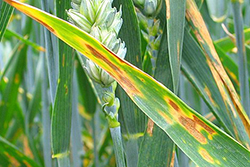
Scientists from the Universities of Bristol and Hannover studying a naturally-produced compound that inspired the biggest selling family of commercial agricultural fungicides have, for the first time, discovered how this important class of compound is synthesised in nature. The findings could potentially be used in the future to enable a ‘pick and mix’ approach with combinations of enzymes to make designer biosynthetic pathways for new compounds that could help to control crop diseases.
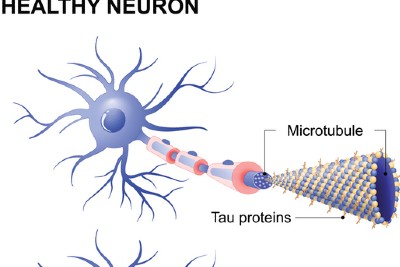
Early cognitive decline may result from a shift in the ratio of a protein sub-type in our brain cells triggering cell-loss. This new study, published in Scientific Reports, shows how this might be caused. The discovery provides a new therapeutic target to prevent the onset of neurodegenerative diseases including dementia and Alzheimer’s.

Injecting drug use, through the sharing of needles, syringes and other injecting equipment, is a primary route of transmission for both HIV and hepatitis C virus (HCV), blood-borne infections that cause considerable morbidity and mortality worldwide. New research led by the University of Bristol has found among people who inject drugs, that recent incarceration was associated with an 81 per cent and 62 per cent increase in HIV and HCV acquisition risk, respectively.