
Workplace menopause study finds ‘women feel they need to cope alone’
A call for more menopause-friendly workplaces is made in a new Government report prepared by a team from the Universities of Bristol and Leicester.

A call for more menopause-friendly workplaces is made in a new Government report prepared by a team from the Universities of Bristol and Leicester.

Travel 226 million miles in a day as a stunningly accurate recreation of the planet Mars comes to Bristol.

The University of Bristol has achieved some significant successes in the 2017 National Student Survey (NSS), scoring highly in many subject areas.

Electroplating, or electrodeposition, is one of the most important processes in chemistry, in which a metal cation in solution can be reduced to its elemental form by applying an electrical potential to an electrode.

Forty Black students are preparing to take up places at the University of Bristol as a new scholarship gets underway.

A new report released today (Monday, 11 September) and co-edited by Bristol academic Ann Singleton has highlighted the global scale of deaths and disappearances of people lost during migration.
A team of University of Bristol experts on a wide range of hot topics spanning climate change, environmental justice, emissions, sustainable energy, green finance and the economy are poised to join the 2021 United Nations Climate Change Conference, better known as COP26.

The GW4 Alliance [made up of four leading research-intensive universities: Bath, Bristol, Cardiff and Exeter] has been shortlisted under the category of Technological Innovation of the Year at this year’s Times Higher Education [THE] Awards for its world-first supercomputer, Isambard.

An undergraduate History student from the University of Bristol has uncovered previously unknown details about one of the worst-named, but possibly most successful, quarantine hospitals in English history: Bristol’s ‘Forlorn Hope Pesthouse’.
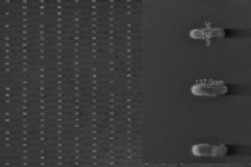
Researchers from the Universities of Bristol and Bedfordshire, in collaboration with multinational company ABB, have designed and tested a series of plasmonic nanoantenna arrays that could lead to the development of a new generation of ultrasensitive and low-cost fluorescence sensors that could be used to monitor water quality.