
Fossilised snake shows its true colours
A study of a ten-million-year-old fossilised snake has shown for the first time that mineralised tissues can preserve evidence of colour, shedding new light on how ancient organisms would have looked.
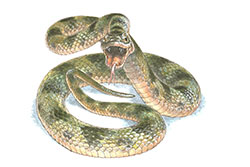
A study of a ten-million-year-old fossilised snake has shown for the first time that mineralised tissues can preserve evidence of colour, shedding new light on how ancient organisms would have looked.
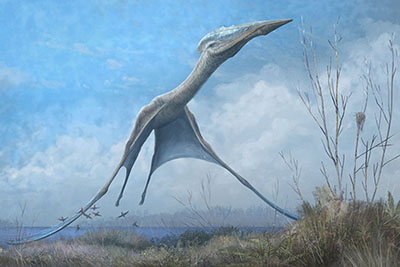
Pterosaurs were the largest animals ever to fly. They soared the skies for 160 million years - much longer than any species of modern bird. However, until now, these ancient flyers have largely been overlooked in the pursuit of bio-inspired flight technologies.
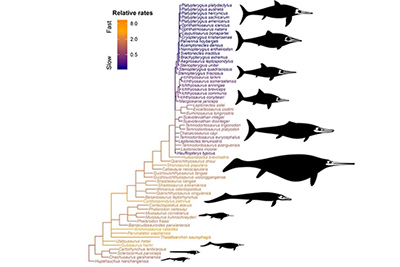
A new study by scientists from the University of Bristol's School of Earth Sciences, shows a well-known group of extinct marine reptiles had an early burst in their diversity and evolution - but that a failure to adapt in the long-run may have led to their extinction.
Many of the courses taught at the University of Bristol are among the best in the world, according to an international league table.
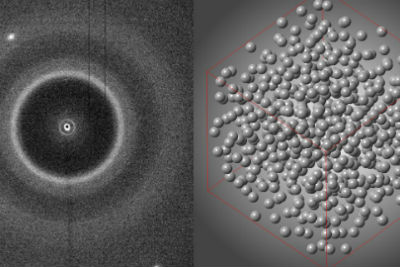
Liquid metals and alloys have exceptional properties that make them suitable for electrical energy storage and generation applications.
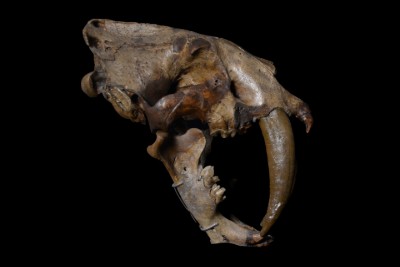
Sabre-toothed predators – best know from the infamous Smilodon – evolved multiple times across different mammal groups. A new study, published today in Current Biology reveals why: these teeth were ‘functionally optimal’ and highly effective at biting into prey.
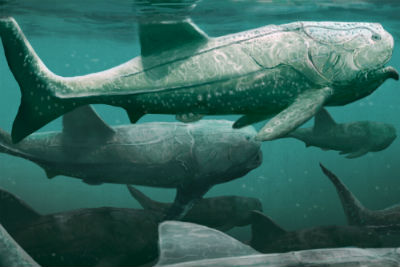
Scientists from the University of Bristol and the University of Zurich have shown that the Titanichthys – a giant armoured fish that lived in the seas and oceans of the late Devonian period 380-million-years ago – fed in a similar manner to modern day basking sharks.
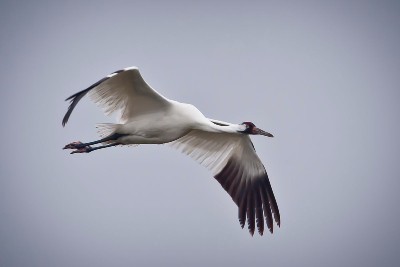
Bird wings adapted for long-distance flight are linked to their environment and behaviour, according to new research on an extensive database of wing measurements, led by the University of Bristol.

Geoffrey Eglinton FRS, member of the School of Chemistry from 1968 to 1993 and Emeritus Professor and Senior Research Fellow in Earth Sciences at Bristol, sadly passed away on Friday 11 March.
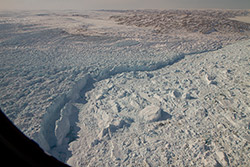
An ancient basin hidden beneath the Greenland ice sheet, discovered by researchers at the University of Bristol, may help explain the location, size and velocity of Jakobshavn Isbræ, Greenland's fastest flowing outlet glacier.