
Highlighting the effectiveness of the COVID-19 vaccines could hold key to converting doubters
Informing people about how well the new COVID-19 vaccines work could boost uptake among doubters substantially, according to new research.
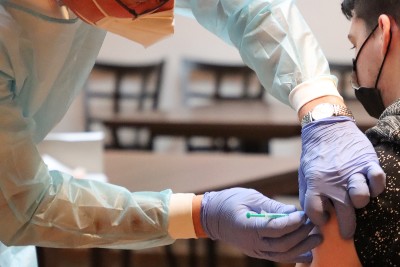
Informing people about how well the new COVID-19 vaccines work could boost uptake among doubters substantially, according to new research.

A collaboration between computer scientists at the University of Bristol and nine major media companies, including ITV and BBC, will help the media industry understand and manage the significant carbon impacts of digital content.
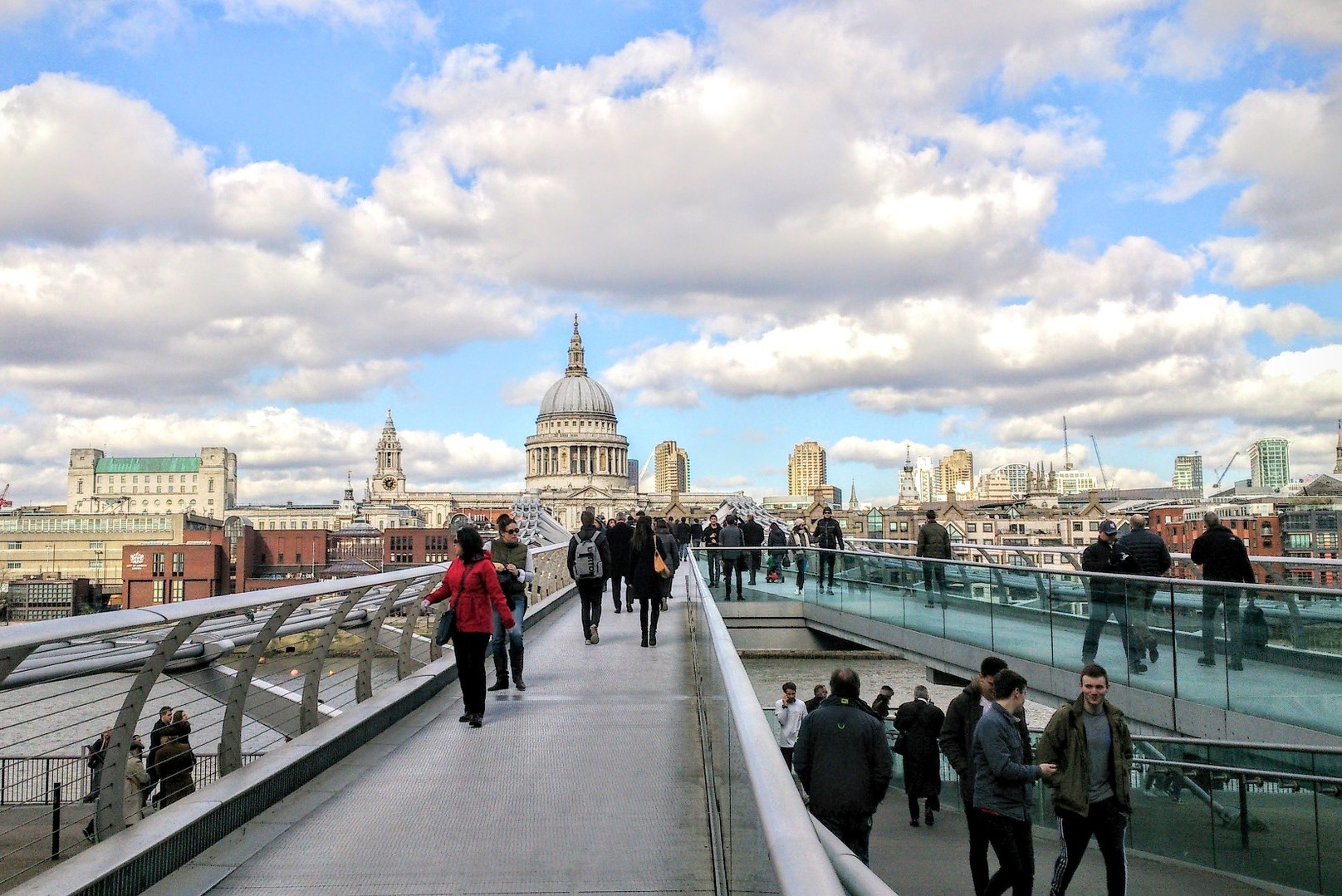
An international team of engineers and mathematicians, led by Georgia State University in the United States and the University of Bristol, has dispelled previous theories around why London’s Millennium Bridge moves from side-to-side when being crossed by large numbers of pedestrians.

A virtual assistant and diabetes management solution has won the University of Bristol’s answer to Dragons’ Den and a share of over £40,000 of prize money.
 (1).jpg)
Bristol residents will have the chance to hand back their pesticides as part of a city-wide amnesty - the first of its kind in England.

A live 5G-based proof of concept designed to test and validate smart urban applications over next-generation mobile networks will be deployed in Bristol city centre as part of a joint research programme between the University of Bristol, BT and Nokia, it was announced today [Monday 27 November].

Scientists from the Universities of Bristol and Cambridge have unlocked the secrets of shape in the most ancient of land plants using time-lapse imaging, growth analysis and computer modelling.

A new report out today finds the financial outlook is poor for more than eight in 10 (83%) of UK households who receive Universal Credit – around 3.4 million in total.

Two very different teams of scientists have worked together to reveal important insights into how we sense texture by looking at the whiskers of a rat.
New research led by the University of Bristol, has shown the drug losartan, normally used to treat high blood pressure (hypertension), is not effective in slowing down the progression of Alzheimer’s disease (AD) in people with mild-to-moderate disease after 12 months of treatment. However, the drug could still be of benefit if prescribed for longer and if given to people with very early disease. The findings are from the phase 2 multi-centre clinical trial known as RADAR ((Reducing pathology in Alzheimer’s Disease through Angiotensin taRgeting).