
University alliance awarded £2m to train a new generation of freshwater leaders
Bristol researchers are part of the UK’s first doctoral training programme in freshwater bioscience.
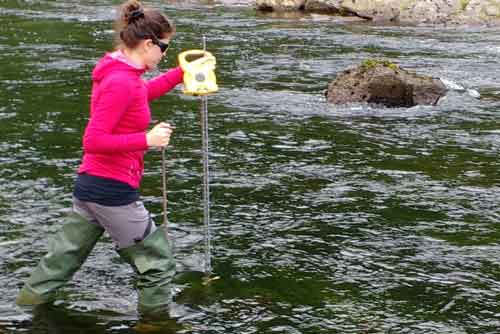
Bristol researchers are part of the UK’s first doctoral training programme in freshwater bioscience.

A new study is the first to explore the effect of misinformation on Twitter about e-cigarette harms.

Scientists have known for over a decade that the West Antarctic Ice Sheet has been losing mass and contributing to sea level rise.

Are there better ways to diagnose animals in need of antibiotics on livestock farms? How will farmers and veterinarians use novel diagnostics in the fight against animal disease? These are some questions a consortium of seven academics – including two veterinarians from the University of Bristol's School of Veterinary Sciences - will address thanks to a £1.75 million grant to understand how better diagnostics can encourage responsible antibiotic use in animals.

An estimated one in five pregnant women around the world carry Group B Streptococcus (GBS) bacteria which is a major, yet preventable, cause of maternal and infant ill health globally.

Natural measures to manage flooding from rivers can play a valuable role in flood prevention, but a lack of monitoring means their true potential remains unclear, researchers say.

Estimates suggest that 40 per cent of eczema flares are treated with topical antibiotics, but findings from a study involving academics from the University of Bristol’s Centre for Academic Primary Care, suggest there is no meaningful benefit from the use of either oral or topical antibiotics for milder clinically infected eczema in children.
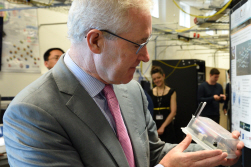
Three sites in the UK will be linked up via 5G test beds for the first time thanks to £16m investment from the Government. The funding, announced by Minister for Digital Matt Hancock today, will bring three leading universities together for the development of the world's first trials of end-to-end 5G system.
A new consortium to accelerate the discovery of novel drugs to treat kidney diseases is announced today [Monday 6 November]. The NEPLEX (nephron on a chip with cellular and extracellular matrix complexity) consortium, comprising leading academic institutions including the Universities of Bristol and Cambridge, and Evotec AG, will combine key technologies to develop and build a novel drug discovery device ("Nephron-on-a-Chip").
In collaboration with artist/historian Milica Prokic, the team at the University of Bristol’s Quantum Engineering Technology Labs (QET Labs) is engaging in a conversation about quantum research, its implications, and its impact on our world.