
Beermats to boost conversations in pubs and tackle loneliness in older men
Specially-designed beermats have been created to highlight the important role traditional pubs have to play in tackling loneliness in older men.

Specially-designed beermats have been created to highlight the important role traditional pubs have to play in tackling loneliness in older men.
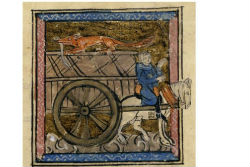
Most of us remember the Disney adaptation of Robin Hood, portrayed in the cartoon as a sly trickster fox. But did you ever wonder why the Prince of Thieves was animated as a fox in the first place?

The amount of carbon stored by microscopic plankton will increase in the coming century, predict researchers at the University of Bristol and the National Oceanography Centre (NOC).

One in six UK households (4.4 million) are now in ‘serious financial difficulties’, compared to one in ten (2.8 million) in October 2021 – an additional 1.6 million households, according to a survey analysed by academics at Bristol’s Personal Finance Research Centre.
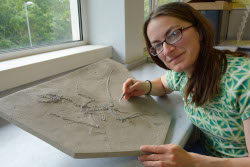
Palaeontologists from University College Cork (UCC) in Ireland have discovered 125 million-year-old dandruff preserved amongst the plumage of feathered dinosaurs and early birds, revealing the first evidence of how dinosaurs shed their skin.
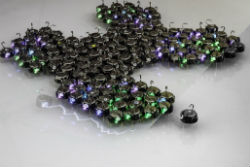
Hundreds of small robots can work in a team to create biology-inspired shapes – without an underlying master plan, purely based on local communication and movement. This is what researchers from Barcelona working with the Bristol Robotics Laboratory found when they introduced the biological principles of self-organisation to swarm robotics.

The Rt Hon Lord Henley, Parliamentary Under Secretary of State at the Department for Business, Energy and Industrial Strategy (BEIS), visited the University’s Bristol BioDesign Institute today, along with a visit to science incubator, Unit DX [25 Oct].

Researchers from the University of Bristol have found significant ongoing emissions of a potent ozone-depleting substance from eastern China.

Scientists at the University of Bristol have discovered that the vast anatomical variety of fungi stems from evolutionary increases in multicellular complexity.
Dr Chris Clements of Bristol’s School of Biological Sciences has received the prestigious Founders’ Prize which commemorates the enthusiasm and vision of the Society’s founders.