
Planning the future of education in Rwanda
The University’s Graduate School of Education has successfully led a bid for funding from the Department for International Development to develop a ‘hub for innovation’ in the Rwandan education system.

The University’s Graduate School of Education has successfully led a bid for funding from the Department for International Development to develop a ‘hub for innovation’ in the Rwandan education system.

Bristol took a bold step today towards becoming the world’s first Open Programmable City with the launch of Bristol Is Open, a joint venture set up between the University of Bristol and Bristol City Council. The Mayor of Bristol George Ferguson and Professor Sir Eric Thomas, Vice Chancellor of the University of Bristol welcomed the partners at a launch event on Tuesday 10 March for the joint venture.
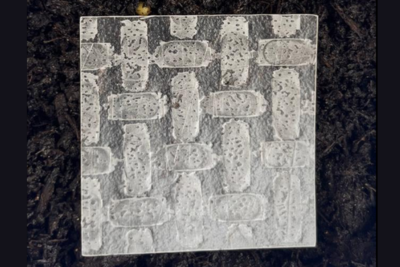
Scientists at the University of Bristol have created soft robots from rice paper which biodegrades safely within 32 days.

Why is caring for young shared unequally between the sexes in so many animal species? Research from the University of Bristol suggests that small initial differences which predispose one sex to care more are exaggerated once the ability to care evolves. As a result, one sex evolves attributes – such as mammary glands in female mammals or increased brain size in some fish – that enhance the ability to care, and so this sex does most or all of the care.

Archaeologists from the University of Bristol have teamed up with school children, veterans of modern conflict and other volunteers to uncover the history of Britain’s real-life war horses.

People’s feelings about their own financial situation had the greatest influence on them voting to leave the EU, according to new research which challenges the widely-held belief that it was the old and unhappy who swung the Brexit vote.

A new study has revealed for the first time that ancient carbon, stored in landscapes for thousands of years or more, can find its way back to the atmosphere as CO₂ released from the surfaces of rivers.
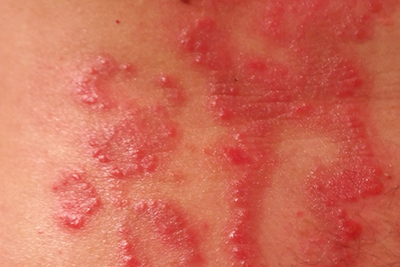
The lives of patients affected by atopic dermatitis and psoriasis could be improved thanks to the start of an EU-funded research project BIOMAP (Biomarkers in Atopic Dermatitis and Psoriasis). The five-year project will address key unmet needs in treating these common inflammatory skin conditions by analysing data from more than 50 000 patients to improve disease understanding, patient care and future therapies.

Over the last decade, repeated public concern has been expressed about the persistence of a low rate of conviction for rape relative to rising levels of reporting. Police attitudes and conduct towards such crimes have come under the public microscope as mounting evidence suggests that how the police handle and investigate rape complaints may be part of the problem rather than a solution. These important issues will be addressed at a free public inaugural lecture [19 Feb] given by Joanne Conaghan, Professor of Law and Head of School at the University of Bristol.

The School of Experimental Psychology has launched a series of four films, games and factsheets on working memory which explore recent work on working memory and classroom learning and behaviour.