
Big babies, little mothers: tsetse flies show extreme mothering
The tsetse fly is an exception to the almost universal law of nature that babies are born smaller than their mothers.
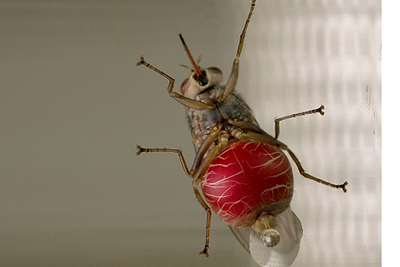
The tsetse fly is an exception to the almost universal law of nature that babies are born smaller than their mothers.
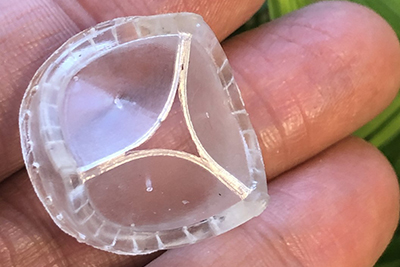
A new polymeric heart valve with a life span potentially longer than current artificial valves that would also prevent the need for the millions of patients with diseased heart valves to require life-long blood thinning tablets has been developed by scientists at the universities of Bristol and Cambridge. The team's latest in-vitro results, published in Biomaterials Science, suggest that the PoliValve could last for up to 25 years.

Chemists, biochemists and physicists at Bristol, Exeter and Sheffield have teamed up in a £7.25 million five-year project that could drive down the cost of energy production and help in the government’s net zero carbon ambitions
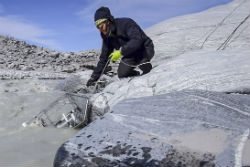
The Greenland Ice Sheet emits tons of methane according to a new study, showing that subglacial biological activity impacts the atmosphere far more than previously thought.
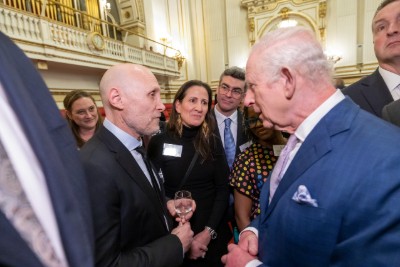
Two University of Bristol researchers joined WaterAid UK for a Water and Climate Reception hosted by His Majesty The King to highlight the increasing risks to drought and flooding in major cities across the world.

More than 100 school shirts emblazoned with compelling messages capturing children and young people’s feelings about knife crime are set to be publicly exhibited to mark the start of national Knife Crime Awareness Week.
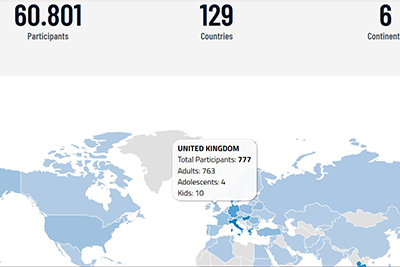
The COH-FIT project is currently the largest survey worldwide on the health impact of COVID-19 and is endorsed by the World Psychiatric Association. The study aims to identify risk and protective factors for physical and mental health problems and to guide strategies for remedying these problems. The COH-FIT project involves 200 researchers from 35 countries, including Bristol, aims to help scientists understand how different countries have been affected by the pandemic.
A team of engineers has developed a new acousto-optic device that can shape and steer beams of light at speeds never before achieved. The new technology will enable better optical devices to be made, such as holographs that can move rapidly in real time.
Embryonic stem cells (ESCs) and reprogrammed cells promise to be the key for regenerative medicine in the coming years. New research has demonstrated an important regulation between two genes, Nanog and β-catenin, in mouse embryonic stem cells (ESCs).
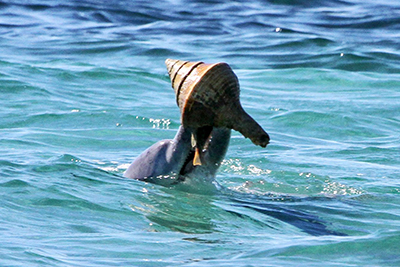
A new study demonstrates for the first time that dolphins can learn foraging techniques outside the mother-calf bond – showing that they have a similar cultural nature to great apes. The findings, led by an international research team including academics at the University of Bristol, are published in Current Biology.