
A very British celebration for Bristol graduates in Beijing
Almost 400 new alumni of the University of Bristol celebrated their graduation at a British style ceremony in Beijing with a distinctly Bristol flavour.

Almost 400 new alumni of the University of Bristol celebrated their graduation at a British style ceremony in Beijing with a distinctly Bristol flavour.

New research shows concentrations of the toxic element mercury in rivers and fjords connected to the Greenland Ice Sheet are comparable to rivers in industrial China, an unexpected finding raising questions about the effects of glacial melting in an area that is a major exporter of seafood.
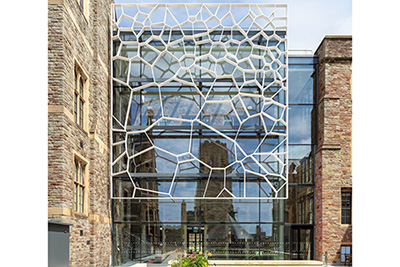
A £20 million investment to champion innovation and nurture the greatest minds in mathematical sciences across the UK has been awarded today to the Heilbronn Institute for Mathematical Research (HIMR).

A team of students and staff from the University of Bristol are designing a volcano monitoring satellite as part of the University's satellite programme. The group of 17 students and academics have been given unique access to the Concurrent Design Facility at the Science and Technology Facilities Council's (STFC) RAL Space, to design the University's first CubeSat.
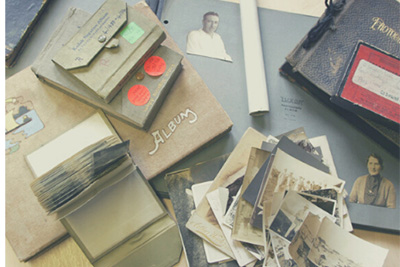
Treasures collected by the University of Bristol, including Brunel documents, historic maps and rare film, will be made public thanks to a major investment in digitisation equipment.
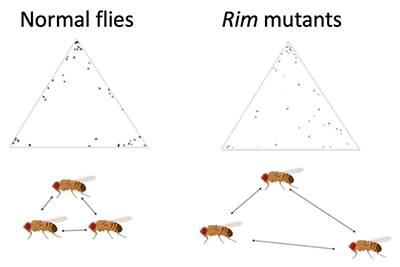
Scientists at Bristol have successfully treated flies displaying behavioural problems linked to newly discovered schizophrenia-associated genes in humans, using common anti-psychotics.
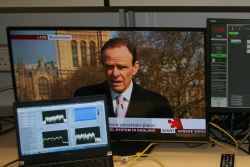
When a digital TV system operates with excess transmit power there is no benefit for either the user or broadcaster. New research has found that by deploying a spatially adaptive broadcast system, broadcast powers can be reduced by up to 35 per cent, reducing carbon emissions and saving money.
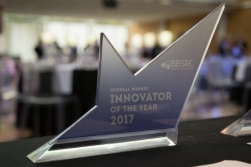
Dr Shelby Temple, from the University of Bristol’s School of Biological Sciences, has been named Innovator of the Year 2017 for his ground-breaking work into polarisation and macular degeneration.
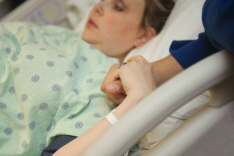
The UK National Institute of Health Research (NIHR) has awarded a collaboration led by Liverpool, Bristol and Sunderland £1.8m to run a large study into the drug treatment of bleeding after childbirth (also called postpartum haemorrhage or PPH).
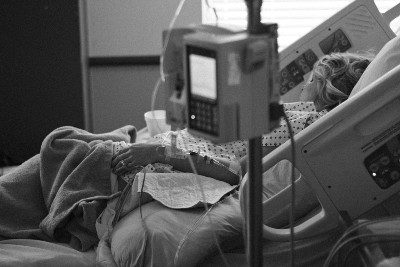
New research published in Anaesthesia, a journal of the Association of Anaesthetists, shows the huge pressure anaesthesia and critical care staff in the UK have been under throughout the winter wave of COVID-19, as the number of newly admitted infected patients surged and most planned surgeries, including a substantial number of critical cancer operations, were cancelled.