
Bristol partners with Grenoble Institute of Technology on nuclear science
The University has formalised an agreement to collaborate with the Institut National de Physique de Grenoble (INP) on research and education in nuclear science.
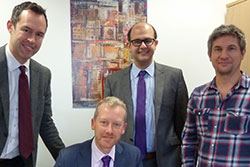
The University has formalised an agreement to collaborate with the Institut National de Physique de Grenoble (INP) on research and education in nuclear science.
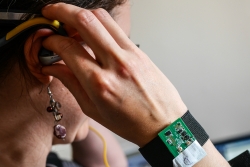
Three interdisciplinary research consortia, including the University of Bristol's SPHERE project, have been allocated more than £11 million to continue healthcare sensing systems research that is revolutionising how we identify and respond to outbreaks of infectious diseases, diagnose and manage lung diseases, and recognise and solve emerging health and wellbeing issues in the home environment.

Dr Gordon Reece from the Department of Engineering Mathematics passed away recently. Monica Berry and Alan Champneys share this remembrance.
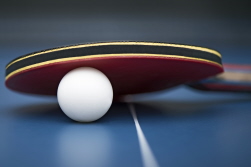
Engineers from the University of Bristol are getting ready to don their red noses and ping pong in aid of Comic Relief.

In the largest study of its kind, researchers from the University of Bristol have analysed mood indicators in text from 800 million anonymous messages posted on Twitter. These tweets were found to reflect strong patterns of positive and negative moods over the 24-hour day.

Professor Nathan Lepora and his team were celebrating last night after their landmark robotic finger-tip which makes human-like ‘nerve’ signals was recognised at the Elektra Awards 2002.

The University of Bristol will host the fifth annual Chevening Conference in April 2018, welcoming future global leaders from around the world.
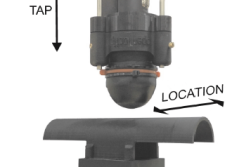
An open-source 3D-printed fingertip that can ‘feel’ in a similar way to the human sense of touch has won Harvard University's international Soft Robotics competition for its contribution to soft robotics research.
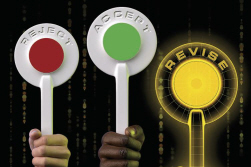
Peer review is a cornerstone of the scientific publishing process but could artificial intelligence help with the process? Computer scientists from the University of Bristol have reviewed how state-of-the-art tools from machine learning and artificial intelligence are already helping to automate parts of the academic peer-review process.
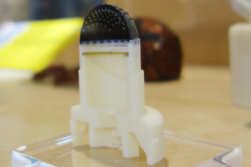
A team of researchers is to develop a biomimetic forebrain for controlling 3D-printed robot hands with a sense of touch. They aim to create a biomimetic forebrain based on computer modelling of a mammal’s neural system that communicates touch in humans and animals, and use this to perform general manipulation tasks in robots.