Collaborate on Mendelian randomization
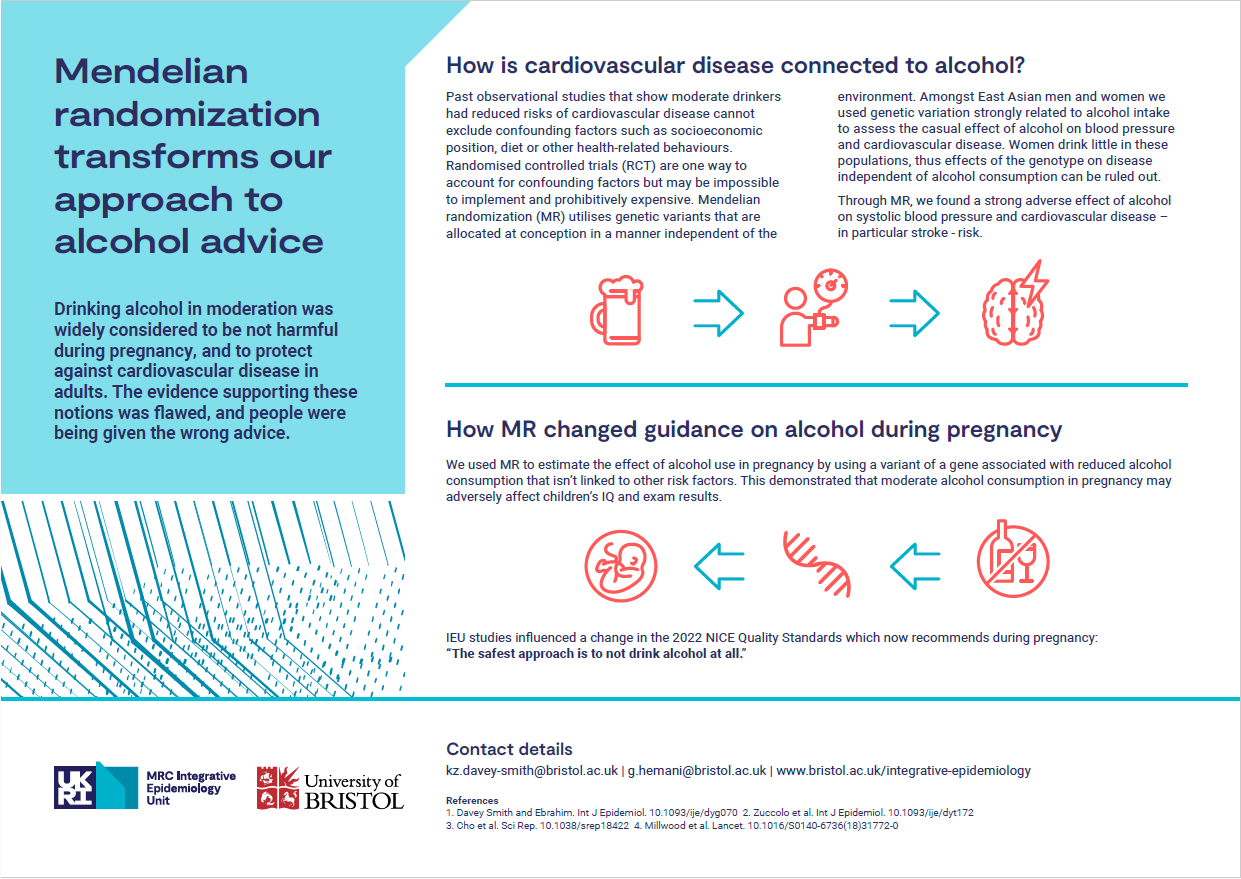
Mendelian randomization uses genetic variants robustly associated with modifiable exposures to generate evidence for potential interventions which could produce health benefits. The IEU has expertise in developing and applying Mendelian randomization with many of our collaborative partners across the globe.
Studies on DNA methylation and epigenetic aging in children have used large-scale genetic data to explore how inherited variants, prenatal environment and childhood exposures can shape long-term health. We have also applied Mendelian randomization to further our understanding of how sociodemographic, clinical, genetic and molecular data can influence cognition, cardiovascular disease, cancer, Alzheimer’s disease, Parkinson’s disease and alcohol flushing. Mendelian randomization can also be used to investigate biases arising from selection and assortative mating.
See About Mendelian randomization for more information.
Recent highlights of Mendelian randomization applications
Drug-target Mendelian randomization
Drug-target mendelian randomization (MR) can be used to aid in the assessment of drug targets for treatment of diseases prior to running clinical trials. This can result in significant cost savings.
Read how the SELECT trial could have potentially saved 114 million dollars here. The SELECT trial investigated if selenium could be used as treatment for prostate cancer. This trial was stopped in 2008, costing approximately 114 million dollars. In the study, we show that drug target MR can be used to assess the utility of a known compound for drug repurposing, before a decision is made to proceed with the trial.
For more information about drug-target MR, see: