Collaborate with us on immunopschiatry and mental health
The Immunopsychiatry group, led by Professor Golam Khandaker, aims to investigate the role of inflammation in psychiatric disorders, neurodevelopment, cognition, and in physical and psychiatric multimorbidity across the life course. We have deep expertise using population data, genetics, and designing early-phase clinical trials.
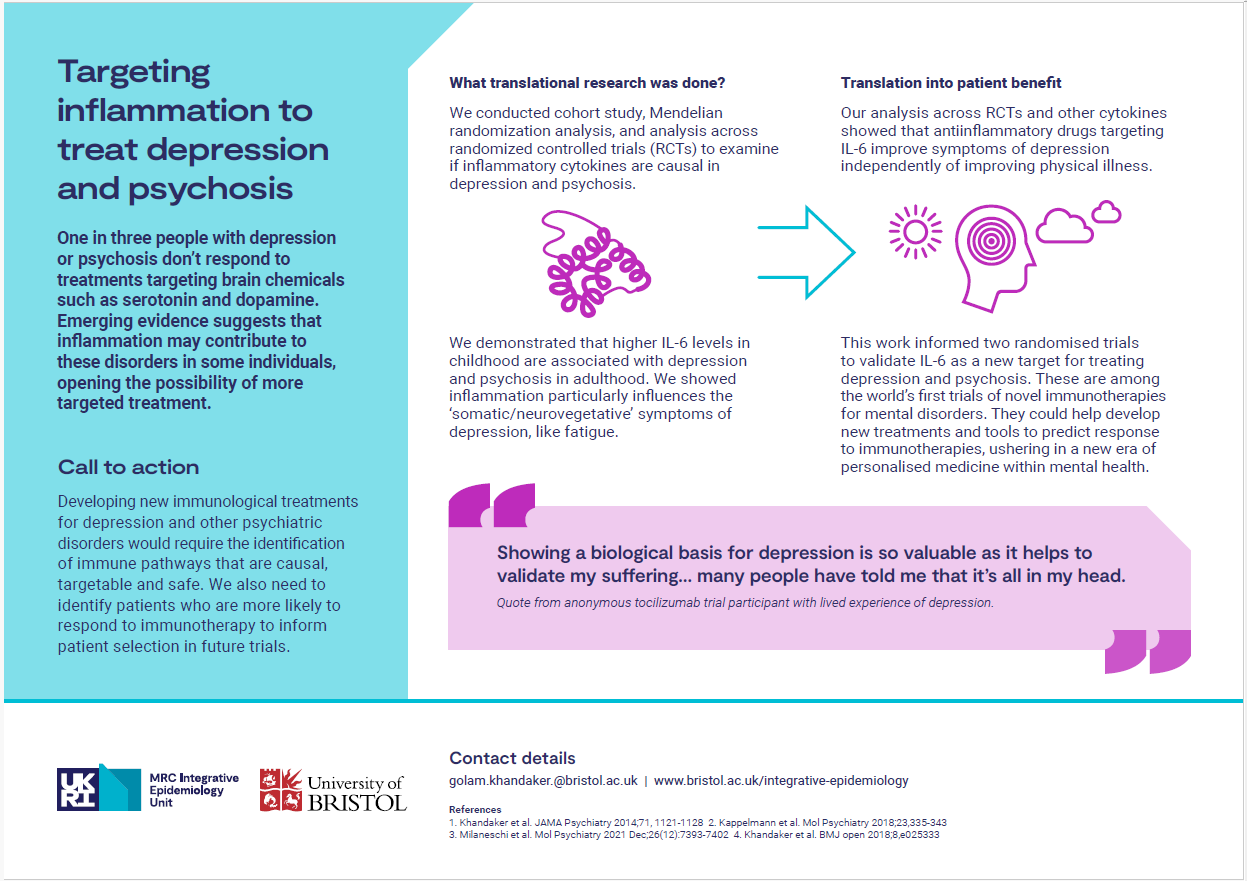
We have used Mendelian randomization (MR) to provide evidence for a causal link between inflammation and neuropsychiatric conditions. In particular, the group have identified that elevated levels of more than 20 inflammatory markers (with therapeutic targets) are associated with increased risks for depression, schizophrenia and other related mental health disorders. To test the potential for targeted therapy, we designed early-phase randomised clinical trials (RCTs) to evaluate the novel use of anti-inflammatory drugs (e.g., targeting interleukin-6) to treat depression and psychosis.
We have also used multi-omics approaches to help understand and dissect depression heterogeneity distinct subtypes in patients. This asks the question if we can treat patients better using biological profiles rather than symptoms. In parallel, we conduct research in immunobiology to understand if there are better biomarkers of chronic inflammation which could be potential targets for treatment.
Recent applications of Mendelian randomisation and other methods to immunopsychiatry and mental health