Biomarkers for lung cancer screening
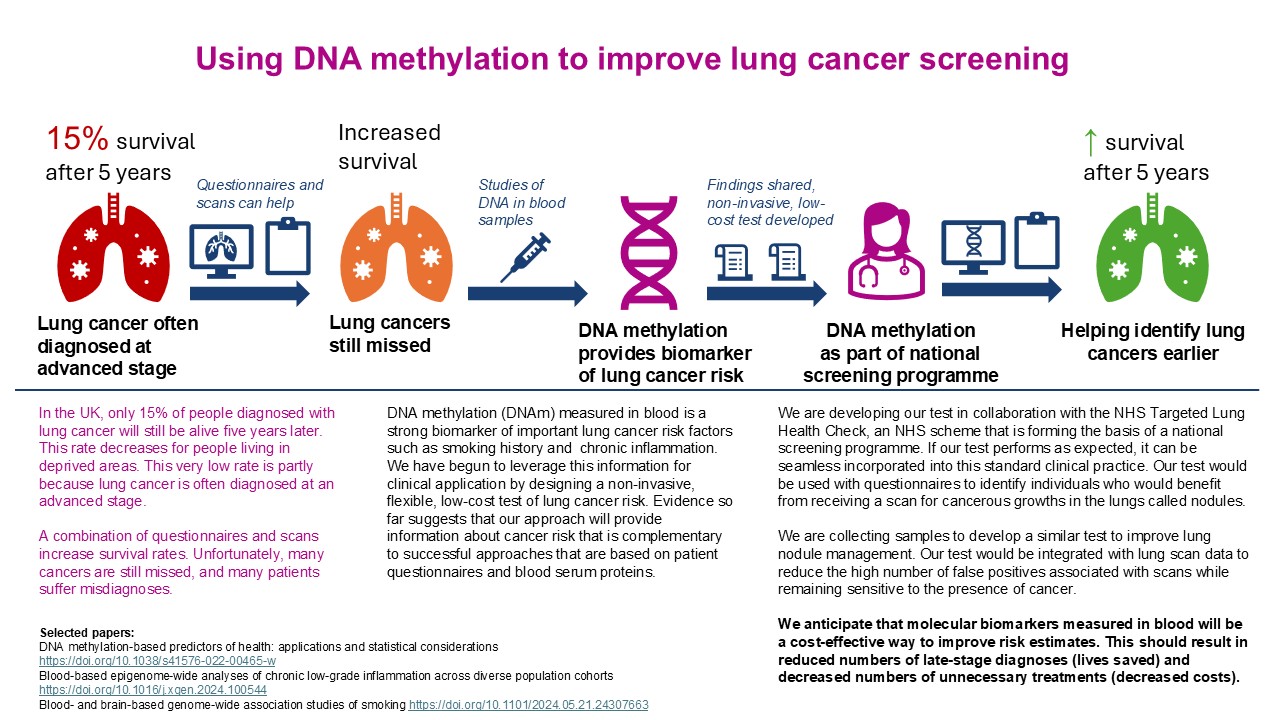
Lung cancer is the leading cause of cancer-related death in the UK and worldwide. Screening using low-dose computed tomography scans reduces mortality by detecting early-stage cancers. However, current processes to identify people for these scans miss many cases of lung cancer while exposing many without cancer to potential harmful side effects of the screening. This project aims to use blood-based biomarkers to improve the identification of people at risk of lung cancer so the right people are screened and more lung cancers are caught early.
DNA methylation (DNAm) measured in blood is a strong biomarker of important lung cancer risk factors such as smoking history and chronic inflammation. We have begun to leverage this information for clinical application by designing a non-invasive, flexible, low-cost test of lung cancer risk. Evidence so far suggests that our approach will provide information about cancer risk that is complementary to successful approaches that are based on patient questionnaires and blood serum proteins.
We anticipate that molecular biomarkers measured in blood will be a cost-effective way to improve risk estimates. This should result in reduced numbers of late-stage diagnoses (lives saved) and decreased numbers of unnecessary treatments (decreased costs).
Selected publications
- DNA methylation-based predictors of health: applications and statistical considerations https://doi.org/10.1038/s41576-022-00465-w
- Blood-based epigenome-wide analyses of chronic low-grade inflammation across diverse population cohorts https://doi.org/10.1016/j.xgen.2024.100544
- Blood- and brain-based genome-wide association studies of smoking https://doi.org/10.1101/2024.05.21.24307663