
Responsible and sustainable innovation
Global connectivity, artificial intelligence, and automated systems are already part of our daily lives. Change is advancing at a rapid pace, and while solid data has yet to emerge quantifying the precise energy demands of AI, we do know enough about the environmental impact of rising emissions to take a responsible approach.
Aligned with our vision for a more inclusive, sustainable and prosperous future, we are committed to understanding more about the ecological consequences of digital innovation and how these can be addressed.
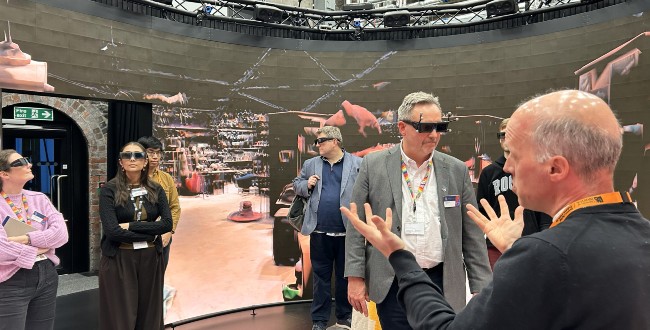
This commitment can be seen in the work we are doing to embed carbon reduction technologies and practices within the new home for the Bristol Digital Futures Institute, where the Reality Emulator is housed.
The renovated industrial building that is home to our research hub within the University’s Temple Quarter Enterprise Campus is certified to BREEAM excellent standard. Thanks to a £2.5m grant from the UK Research Partnership Investment Fund (UKRPIF), the 200-year-old building has been transformed to include a suite of net-zero facilities that make it more sustainable, while providing innovative research capabilities.
This Sustainable Campus Testbed includes a smart energy system to maximise the use of low carbon energy, sensors for real-time data monitoring of building use, heat metering to provide heat, temperature and flow rate data from the Datacentre, an AI-driven datacentre energy management system to reduce energy consumption, bio-walls and optimal planting mixes to improve air quality, and native tree species monitored and evaluated for levels of carbon sequestration.
It is estimated that these measures could ultimately save approximately 65 tonnes of CO2 a year. As well as significantly decarbonising our energy use, the real-time data we gather from testing and evaluating their efficacy could inform the development of more sustainable campuses here in Bristol and beyond, providing a model for responsible carbon management.