
About the Department of Anthropology and Archaeology
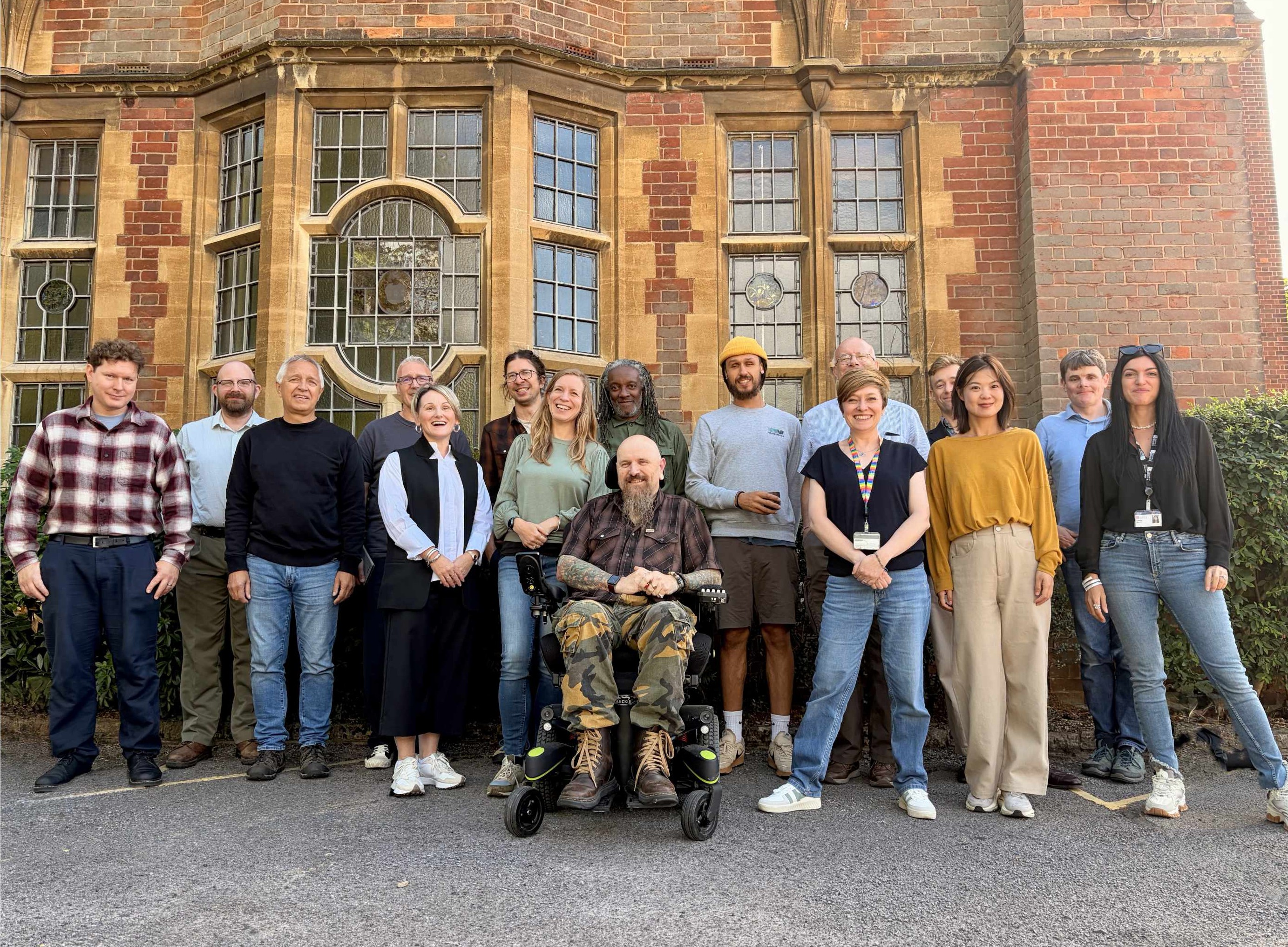
The Department of Anthropology and Archaeology is based in 43 Woodland Road at the heart of the Clifton Campus, in the former Baptist Theological College (Grade II listed).
The Baptist College was founded in Bristol in 1679 but the present building wasn't commissioned until 1914. The site of the building lies adjacent to the Civil War Fort, which now forms part of the University campus. The building remained in use by the Baptist College until 1999, when the Department moved into it.
The style of the building represents a very well preserved example of an Arts and Crafts Movement building with a three-story red brick exterior and stonework including gargoyles, strapwork, square-headed mullion and transom windows (with carved heads on many of the mullions). Inside, fine quarter-cut oak doors, skirting boards, panels and other fixtures throughout in keeping with the building's Arts and Crafts style. The building has amazing stain glass including:
- late 15th century Flanders yellow stain glass
- 17th century enamelled glass probably from North Germany
- late 18th century English glass made by the Pearson factory.
The staircase window was created in 1916 and shows scenes from the life of William Tyndall, who produced the first English translation of the New Testament in 1525.
Converted in 1999, the building remains the location of all Departmental teaching, with lecture theatres, dedicated work spaces and teaching and seminar rooms. The building's first and second floors house the offices of all the Department's administrative and academic staff. 43 Woodland Road provides a uniquely comfortable and historic atmosphere for this vibrant and contemporary centre for teaching and research in archaeology and anthropology.
Living in Bristol
The city boasts an extraordinary range of archaeological sites on its doorstep and a multitude of social and cultural groups.