News
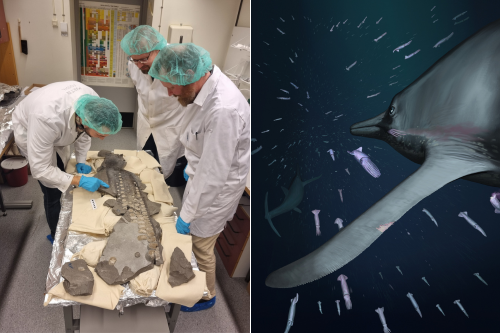
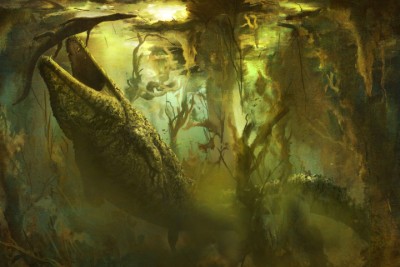
- Ancient giant marine reptile relied on stealth while hunting in darkness 16 July 2025 A new study has uncovered evidence that a giant marine reptile from the Early Jurassic period used stealth to hunt its prey in deep or dark waters – much like owls on land today.
- Moon’s mysterious wobbling atmosphere like gyroscope, new research suggests 22 May 2025 The puzzling behaviour of Titan’s atmosphere has been revealed by researchers at the University of Bristol for the first time.
- Pioneering research reveals Arctic matter pathways poised for major shifts amidst climate change 14 April 2025 A new study has shed unprecedented light on the highly variable and climate-sensitive routes that substances from Siberian rivers use to travel across the Arctic Ocean. The findings raise fresh concerns about the increasing spread of pollutants and the potential consequences for fragile polar ecosystems as climate change accelerates.
- Island life 200 million years ago 2 April 2025 Two Palaeontology and Evolution students from the University of Bristol have undertaken the first ever study which describes the incredible range of fossils which were sucked into a Neptunian dyke, a deep, fissure like cave on the ancient coastline.
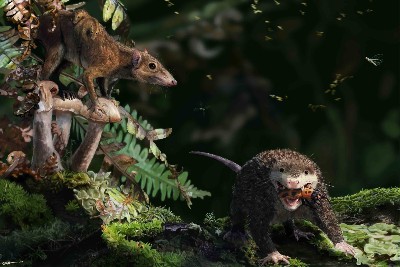
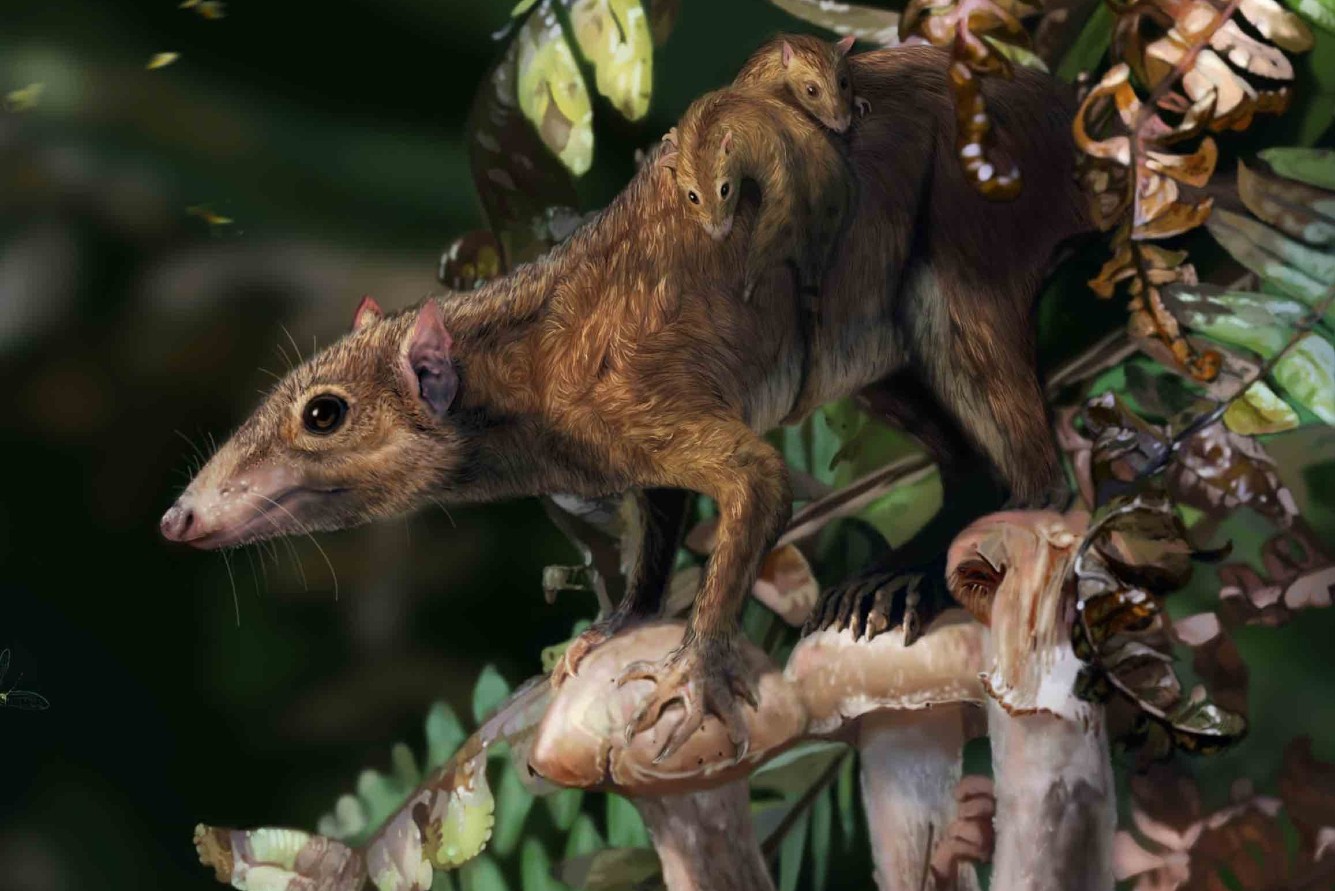
- Mammals were adapting from life in the trees to living on the ground before dinosaur-killing asteroid 2 April 2025 More mammals were living on the ground several million years before the mass extinction event that wiped out the dinosaurs, new research led by the University of Bristol has revealed.
- Amphibians bounce-back from Earth’s greatest mass extinction 5 March 2025 Ancient frog relatives survived the aftermath of the largest mass extinction of species by feeding on freshwater prey that evaded terrestrial predators, University of Bristol academics have found.
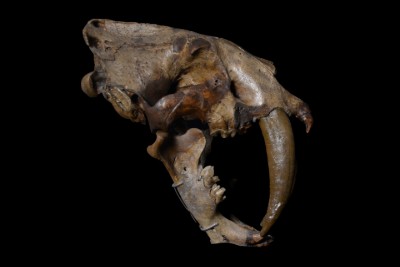
- The extreme teeth of sabre-toothed predators were ‘optimal’ for puncturing prey, new study reveals 9 January 2025 Sabre-toothed predators – best know from the infamous Smilodon – evolved multiple times across different mammal groups. A new study, published today in Current Biology reveals why: these teeth were ‘functionally optimal’ and highly effective at biting into prey.
- “Brilliant” University professors scoop major palaeontology prizes 19 December 2024 Two University of Bristol professors have been presented awards by the Palaeontological Association for their contributions to academia, outreach and human knowledge.
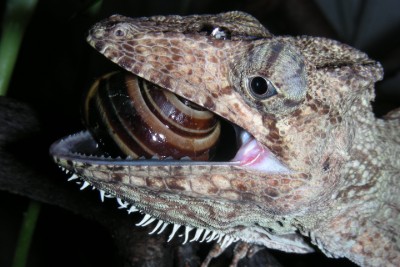
- New research unlocks jaw-dropping evolution of lizards and snakes 11 December 2024 A ground-breaking University of Bristol study has shed light on how lizards and snakes -the most diverse group of land vertebrates with nearly 12,000 species - have evolved remarkably varied jaw shapes, driving their extraordinary ecological success.
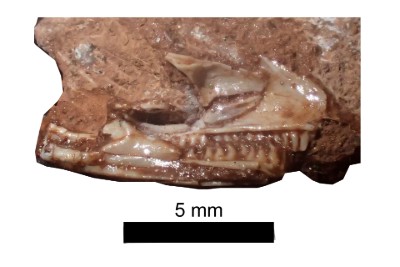
- World’s oldest lizard wins fossil fight 27 November 2024 A storeroom specimen that changed the origins of modern lizards by millions of years has had its identity confirmed.
- Pioneering research shows sea life will struggle to survive future global warming 13 November 2024 A new study highlights how some marine life could face extinction over the next century, if human-induced global warming worsens.
- Scientist on personal mission to improve global water safety makes groundbreaking discovery 29 October 2024 Research led by the University of Bristol shedding new light on how arsenic can be made less dangerous to humans has the potential to dramatically improve water and food safety, especially in the Global South.
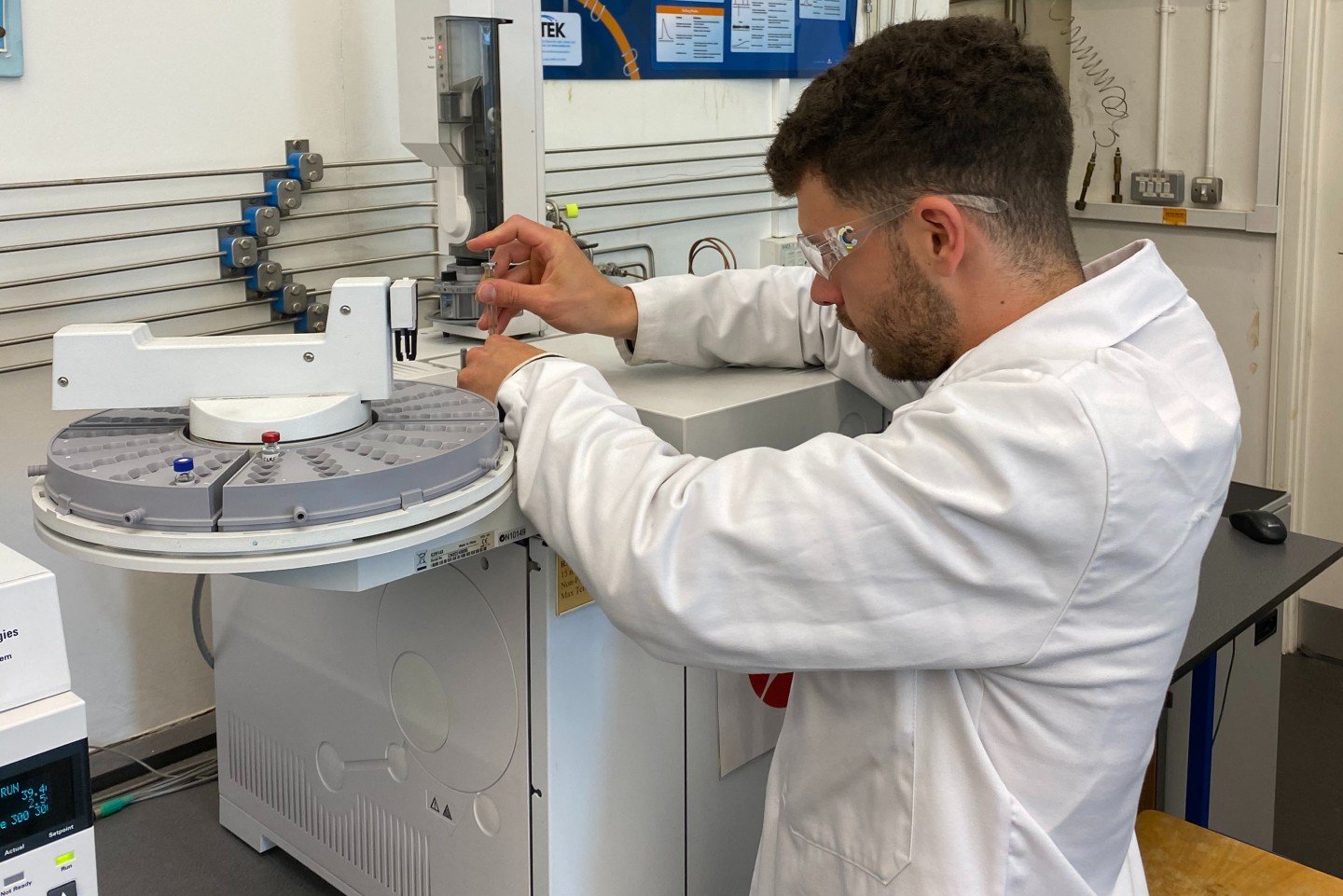
- New UKRI national facility for heritage science and conservation at the University of Bristol 1 October 2024 The University of Bristol has received a £1million grant from the UKRI Arts and Humanities Research Council (AHRC) to establish a new Centre for Chemical Characterisation in Heritage Sciences – an initiative that will span Arts, Chemistry and Earth Sciences.
- Brazilian fossils reveal jaw-dropping discovery in mammal evolution 25 September 2024 The discovery of new cynodont fossils from southern Brazil by a team of palaeontologists from the University of Bristol, alongside colleagues from Argentina and Brazil, has led to a significant breakthrough in understanding the evolution of mammals.
- Bristol palaeontologist awarded prestigious Royal Society medal 28 August 2024 A University of Bristol palaeontologist is among 25 medal and award winners announced by the Royal Society today [Wednesday 28 August].
- Dental growth rings fill in life history gaps of Jurassic mammals 7 August 2024 A new study published in Science Advances reveals how early mammals grew and developed during their pivotal Jurassic radiation. Using a technique called synchrotron X-ray tomography to image growth rings in fossilised tooth roots, the researchers were able to estimate lifespans, growth rates, and even the timing of sexual maturity in these ancient creatures.
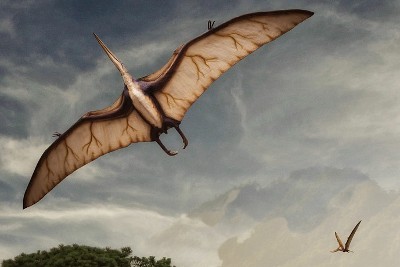
- Giant prehistoric flying reptile took off using similar method to bats, study finds 7 August 2024 The pterosaur likely used all four limbs to propel itself in the air, as seen in bats today, researchers have found.
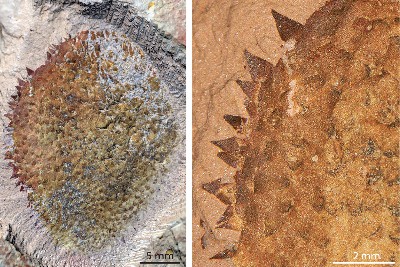
- Half a billion-year-old spiny slug reveals the origins of molluscs 2 August 2024 A team of researchers including scientists from the University of Oxford and the University of Bristol have made an astonishing discovery of a new species of mollusc that lived 500 million years ago. The new fossil, called Shishania aculeata*, reveals that the most primitive molluscs were flat, shell-less slugs covered in a protective spiny armour. The findings have been published today in the journal Science.
- Ancient marine animal had inventive past despite being represented by few species, new study finds 25 July 2024 Brachiopods were evolving in new directions but this did not turn into evolutionary success in terms of the numbers of species, researchers at the University of Bristol, the Open University, and the China University of Geosciences have found.
- Insight into one of life’s earliest ancestors revealed in new study 12 July 2024 An international team of researchers led by the University of Bristol has shed light on Earth’s earliest ecosystem, showing that within a few hundred million years of planetary formation, life on Earth was already flourishing.


.png)