
The WSI Journey
Audio transcript:
John Fox and Sue Gill first met as teenagers in Hull. By the late 1960s they were married, with a young son, and well into their respective careers. Welfare State was co-founded in 1968 by a vast collective of people: artists, performers, poets, and makers who shared a belief that art didn’t belong only in theatres and galleries. It belonged on the street, in parks, in the everyday places where ordinary people spent their lives. Over nearly forty years, they would go on to stage more than five hundred productions. Their work was political, but the group did not subscribe to partisan politics. It was political in an understated way, one that advocated for art and culture to belong to everyone, regardless of skill, training, or ability.
Through the 1970s, the company toured extensively, performing across the north of England and beyond, making work in communities, parks, and public spaces wherever they went. In the late 1970s, they added International to their name, becoming Welfare State International, reflecting a practice that was now stretching across Europe, America, and beyond. They described themselves in many ways: “Engineers of the Imagination”, “Civic Magicians”, “Dream Weavers”, “Guardians of Chaos”, “Pathological Optimists”. These weren’t just slogans; they captured something real about the spirit of the work. The idea that making art required the same discipline and craft as building something physical. That creativity and community could be genuinely transformative.
By the 1980s, John and Sue had settled in Ulverston, south west of the Lake District, and in 1987 the company moved into The Ellers, a Victorian school building that became WSI’s creative base in the town. In 1996, they were awarded £1.6 million from the National Lottery to transform The Ellers into a dedicated arts centre, working with architect Francis Roberts. The resulting building, Lanternhouse, contained accommodation for artists, a library, studios, and workshops, and was nominated for the Royal Institute of British Architects’ Building of the Year in 2000. From this small Cumbrian town, WSI went on producing work of real ambition, deeply woven into the life of the community around them. When Welfare State International finally came to an end in 2006, after nearly forty years, they left behind not just a vast body of work but something living: the Ulverston Lantern Festival, which still lights up the town each year.
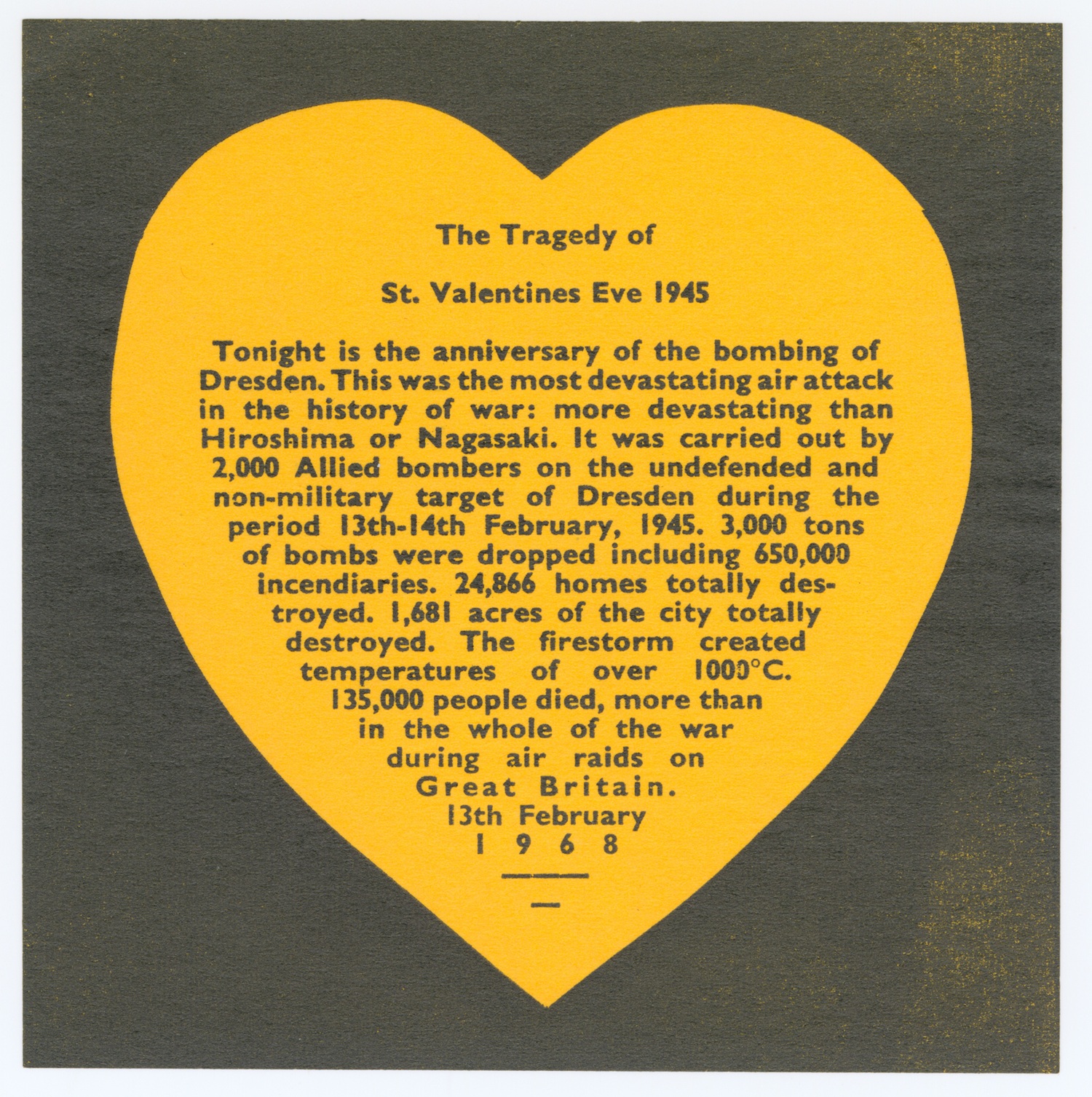
Paper “heart” for the Tragedy of St. Valentine’s Eve
This is the earliest material in the WSI production record. The group had organised a public dance, which they then interrupted with a surprise re-creation of the bombing of Dresden, a tragic event that occurred 24 years before, during the World War II. Paper hearts fell from the ceiling alongside sirens and smoke. The audience were thrown into such panic that the Welfare State never worked in this way again.
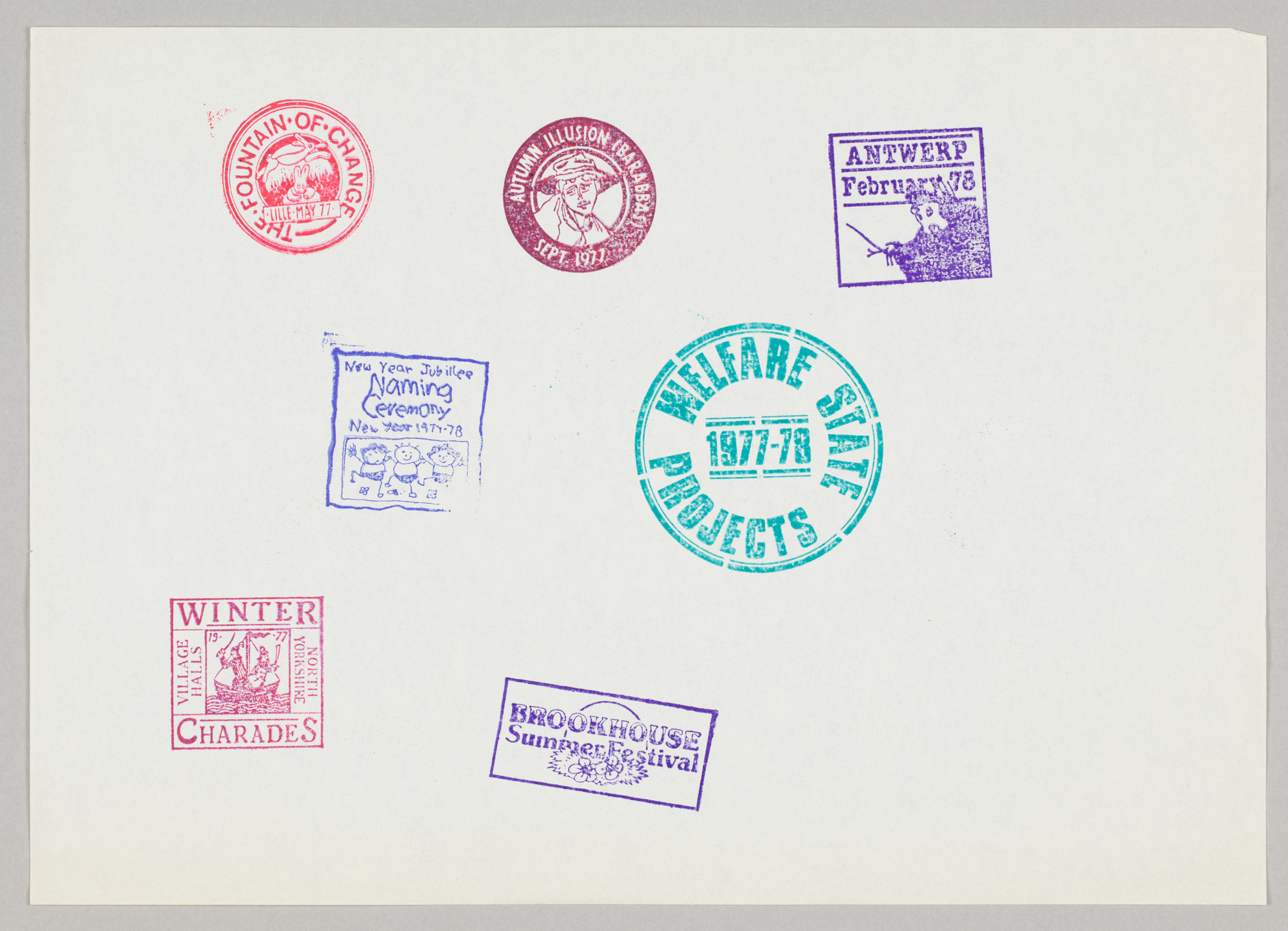
Imprints of stamps from WSI performances
Seven stamps from different performances are haphazardly placed together on this piece of card, including stamps for the Fountain of Change and Barabbas productions in 1977. These stamps give a glimpse into the way that WSI saw themselves and how they wished others to interpret their professional identity.
‘Some guidelines for fast posters and designs’
This guide includes directives on how to apply fonts to posters and marketing material. Although WSI had many diverse artists with their own styles and influences as members, the organisation pulled these creative sources together into a coherent and recognisable brand.