
The Legacy
Audio transcript:
Welfare State International closed in 2006, after nearly forty years of work. But the influence of what they made has lasted well beyond that. In outdoor arts, participatory practice, and community theatre, their ideas and methods are still shaping the work of artists and organisations around the world. Perhaps no single thing captures that legacy better than Engineers of the Imagination, the handbook WSI published with Methuen in 1983, revised in 1990, edited by Tony Coult and Baz Kershaw. It was a comprehensive guide to everything WSI had learned: how to make lanterns, write community performances, work with fire, build spectacle. They gave it away. The point was that anyone, artist or not, could use it to create like them. Its influence on practitioners working today is profound. They proved something important: that genuine community involvement and genuine artistic ambition aren’t opposites. That you can make work of real power and depth precisely because it was made with and for the people who experienced it.
In Ulverston, you can see that legacy directly. The annual Ulverston Lantern Festival, which grew out of WSI’s procession work, first started in 1983, still fills the town with handmade light each year. It’s now run by the Lantern Supporters’ Group, a community organisation that carries the tradition forward. Thousands of people come for it. Ulverston is now known as Festival Town, and that is in large part because of everything WSI built there.
WSI were also recognised in their own time as pioneers: artists, academics, and cultural commentators took their work seriously and understood it as something genuinely new. The archive at the University of Bristol, which this exhibition draws on, captures the full scale of what they achieved: films, photographs, scripts, designs, objects. A record of their work preserved for everyone who comes after.
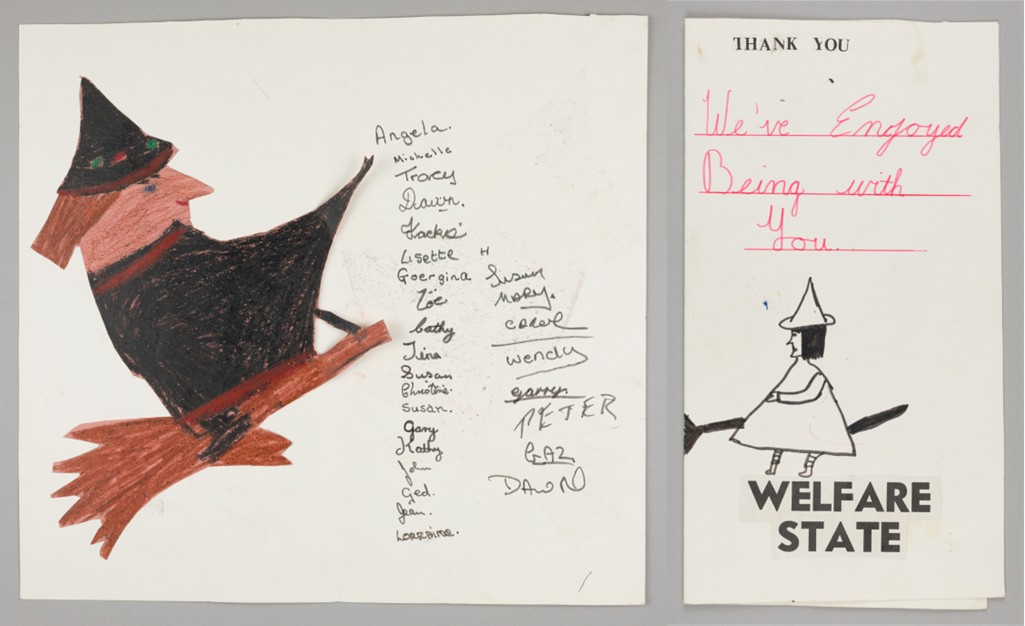
Handmade thank you card
Created in response to WSI’s Halloween and Civic Fire event in October 1974, these two handmade cards epitomise not merely the extent of WSI’s inclusivity, but the positive effect that it had on younger children. As an imperative part of their ethos, WSI evidently took considerable efforts into creating a safe space for children of all ages to explore their creativity and imagination. Nurturing artistic expression within this demographic, WSI sought to imbue deeper connection to community in the next generation.
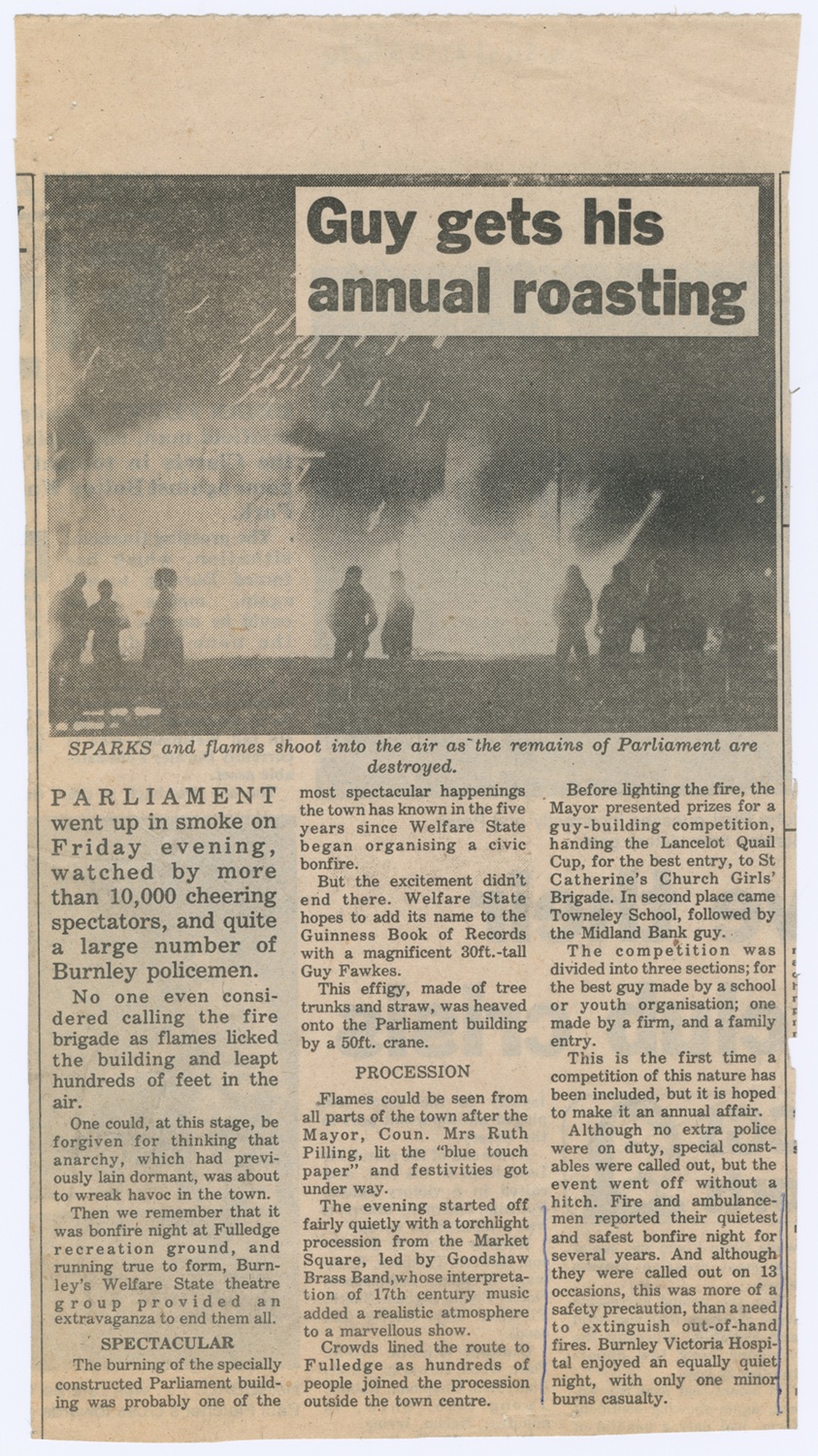
‘Guy gets his annual roasting’
Published after the fourth annual bonfire organised by WSI, this extract shows the town’s response to their dramatic performances. The paper emphasises the size of the spectacle and the joy of the audience. They borrowed from the existing English tradition of Bonfire Night to create a community event and a political statement. WSI went on to take Parliament in Flames, as they called the event, to Ackworth, Tamworth, Milton Keynes and finally Catford, in London, with the event getting bigger each time. The vast number of people and places they reached shows their national impact, which generated a lasting legacy.
‘Cultural Guerillas’: John Fox interviewed by Cilla Baynes and Anne Tucker
This interview explores the implicit politics of John Fox’s approach that are still relevant today. He reveals the impact WSI’s art has on its audience: “People come up to me years afterwards and say they’ve seen certain images in a show that they will never forget.”