
Civil Engineering
Civil engineers shape the world. From the supply of clean water and transport systems to earthquake-resilient schools and smart cities, they design, build and maintain the infrastructure that supports our economies and quality of life.
Ranked 2nd in the UK
Bristol is ranked 2nd in the UK for Civil Engineering (Guardian University Guide 2027).
Specialist earthquake engineering facilities
Access one of the most advanced earthquake shaking tables in Europe and explore how engineers design resilient infrastructure.
Industry mentoring and placements
Every first-year Civil Engineering student is matched with an industrial mentor, with opportunities for internships and placements.
Civil Engineering at Bristol
Why study Civil Engineering?
Civil engineers help tackle global challenges by adapting infrastructure to climate change, improving water security, developing sustainable transport systems and designing resilient cities.
At the University of Bristol, you'll learn how engineering, science and design combine to create practical solutions to real-world problems. Our fully accredited Civil Engineering degrees will help you develop the skills to design and manage infrastructure including major structures, transport networks, renewable energy projects and water systems.
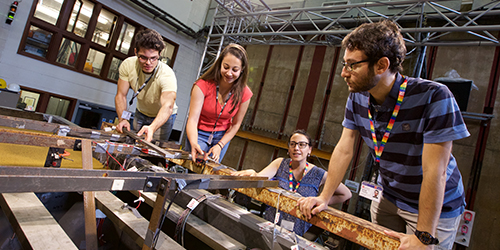
Bristol has particular expertise in water and environmental engineering, resilient infrastructure and earthquake engineering, taught by academics researching sustainability and infrastructure design. Students have access to specialist facilities including the Geomechanics Laboratories, structural and materials testing laboratories, and the Earthquake and Large Structures (EQUALS) Laboratory, home to a large-scale earthquake shaking table.
Through research-led teaching, practical projects and industry engagement, you'll develop the technical knowledge and professional skills needed for a career in civil engineering.
Before my third year even began, I spent the summer between my second and third year on a six-week internship at Conisbee in London... The placement gave me hands-on experience in structural design, sustainable drainage, site inspections, and technical reporting, and the chance to build my skills in industry-standard software including Tekla, Tedds, AutoCAD, and Bluebeam Revu.
Saskia
MEng Civil Engineering
Career prospects
What could you do with a Civil Engineering degree?
Civil engineers design the infrastructure people rely on every day, from transport networks and flood defences to sustainable energy systems and water supplies. Their work will tackle some of the biggest challenges of the coming decades, including climate change, infrastructure renewal and sustainable development.
Career pathways include:
- structural engineering
- environmental engineering
- transport engineering
- water engineering
- infrastructure planning
- construction and project management
- engineering consultancy
As a Bristol graduate, you could help design bridges, transport networks, flood defences, renewable energy infrastructure and water systems in the UK and around the world.
Our graduates are highly sought after by top employers, including civil engineering consultancies, utility companies, the army, public transport, power generation and supply companies. Recent graduates have gone on to employers including Arup, Mott MacDonald and Arcadis.
Is this course professionally accredited?
Yes. Our Civil Engineering degrees are accredited by the Institution of Civil Engineers (ICE), the Institution of Structural Engineers (IStructE), the Chartered Institution of Highways and Transportation (CIHT), the Institute of Highway Engineers (IHE) and the Permanent Way Institution (PWI). These institutions are members of the Joint Board of Moderators (JBM), which accredits civil engineering degree programmes on behalf of the Engineering Council.
Course structures
What will you learn on a Civil Engineering degree at Bristol?
You'll build knowledge in a range of civil engineering disciplines, including:
- environmental and sustainable engineering
- earthquake engineering
- engineering hydrology and water resources
- structural design and analysis
- project management
- disaster risk management
- design and planning of urban infrastructure and smart cities.
Design is a core part of the course, from first-year projects to the design of buildings, bridges, highways and water infrastructure. The first two years cover the fundamentals of structural engineering, mathematics, soil and fluid mechanics, materials and surveying.
You'll develop coding, data analysis and computational modelling skills and gain practical experience of surveying fieldwork, laboratory testing and engineering investigations. You'll learn Python and gain experience using Autodesk Revit. You'll explore how engineers investigate ground conditions, create ground models and apply geotechnical engineering principles when designing infrastructure.
How will you develop specialist engineering skills?
During the later stages of your Civil Engineering degree, you'll develop advanced skills in areas such as structural analysis, geotechnical design, water design and transport infrastructure. You'll gain design skills for structures such as dams, buildings, bridges and road intersections. You'll widen your knowledge of the business, management, ethics and legal sides of the construction industry.
You'll undertake a major research project with supervision from a relevant academic expert, giving you the opportunity to explore a specialist area in depth.
MEng Civil Engineering students can develop specialist knowledge through optional units which may include Smart Cities, Advanced Structural Design, Water Resources Management, Renewable Energy, Disaster Resilience and Sustainable Development, and Earthquake Engineering.
The MEng culminates in a design project based on real design problems that have often emerged through our links with industry.

Industry experience and professional development
The University of Bristol's close links with industry and research partners help ensure our Civil Engineering courses reflect current professional practice and the future needs of the engineering sector.
How will you gain industry experience?
Our Industrial Liaison Office (ILO) matches every first-year Civil Engineering student with an industrial mentor and assists with Year in Industry placements.
Through the Engineering Industrial Mentoring Scheme, you'll meet regularly with your industrial mentor and, in some cases, take part in workplace visits, gaining first-hand insight into professional engineering practice and how civil engineers apply their skills in industry. Engineers from industry partners also provide in-depth technical input and support for the group design project.
If you're interested in a Year in Industry, the ILO can also support you with placement applications, employer connections and securing professional experience as part of your degree.
How can you get involved beyond your studies?
Beyond your studies, you can participate in student-led activities and societies, including Bristol CivSoc and Engineers Without Borders. These opportunities can help you broaden your experience, build professional networks and connect with Bristol's engineering community.
Civil Engineering in practice
Discover how Bristol students apply their learning through design projects, industry experiences and hands-on engineering challenges.
FAQs
FAQs
Is Civil Engineering mostly maths?
Maths plays an important role in Civil Engineering, but the course is about much more than calculations. You'll use mathematics to help solve real engineering challenges, alongside design projects, surveying fieldwork, data analysis and problem-solving.
In your first year of Civil Engineering, you'll take Engineering Mathematics, which is designed to help students from different educational backgrounds develop a strong foundation for the rest of their degree.
Do I need coding experience for a Civil Engineering degree at Bristol?
No. You do not need prior coding experience. During your degree, you'll be introduced to coding and computer programming and develop skills in data analysis and computational modelling. You'll use these skills to help collect, analyse and interpret engineering data, as well as support engineering design and investigation projects.
Is Civil Engineering in demand?
Yes. Civil engineers are needed to help design, maintain and improve infrastructure including transport networks, water systems, buildings and flood defences. Their expertise is increasingly important in areas such as climate adaptation, sustainable development and resilient infrastructure.
At Bristol, you'll explore these challenges through topics including water engineering, transport infrastructure, earthquake engineering and environmental engineering.
How will AI change the way Civil Engineers work?
AI is becoming an important tool in civil engineering, supporting tasks such as modelling, data analysis and infrastructure monitoring. However, it does not replace the expertise and judgement needed to solve complex engineering challenges and design safe, resilient infrastructure.
At Bristol, you'll develop coding, data analysis and computational modelling skills, while learning about the appropriate use of AI and how digital tools can support engineering decision-making.