
Free bus for brighter futures: children and young people’s experience of Bristol’s free summer bus scheme
In the summer of 2025, the West of England Combined Authority (WECA)’s free bus travel scheme, Kids Go Free (KGF) was launched. We investigated how this was experienced by children and families in Hartcliffe and Barton Hill, Bristol: two of the areas with the poorest outcomes for social mobility for young people from less advantaged backgrounds in the UK. It builds on earlier research conducted with Room13 Hareclive and partners in 2018, which highlighted the importance of bus access for children and young people in these areas and identified barriers to everyday mobility.
About the research
This study explores the social, financial, cultural, geographical, or practical barriers that continue to limit bus use, and the impacts of the scheme on children’s opportunities, independence, and perceptions of public transport. Conducted between October and December 2025, this mixed methods study combined surveys, creative workshops, and focus groups with children, young people, and parents in the two communities.
In total, 616 people completed surveys and 73 participated in focus groups or interviews. Participants included children and young people across all school year groups, alongside 51 parents, most of whom were female and from White and Black ethnic backgrounds. Informal conversations with community partners and 7 local bus drivers also helped contextualise the findings.
Evidence suggests that free bus travel had a significantly positive impact on children, young people and families. The offer was actively taken up by children and young people. They found it easy to use, and it was easier for them to do things they wanted to do because of it. Parents agreed that free bus travel increased children’s mobility and independence and relieved their financial burdens. Nonetheless, there are multiple barriers preventing children from participating in the scheme more fully. These include concerns over safety on the buses and route reliability.
Policy recommendations
Repeating the Kids Go Free (KGF) scheme during all school holidays would maximise its benefits for children and families. Regular implementation would support awareness, allow bus operators to plan more effectively, and ensure children can still rely on bus travel when they are not using school transport.
Extending eligibility to at least 18 years of age would better reflect young people’s educational needs - particularly for those attending sixth forms, apprenticeships or work placements - as well as key independent social mobility needs.
Earlier communication and promotion of the scheme would help families, schools, youth/ community organisations and bus companies prepare and increase take-up.
More training and support for bus drivers to ensure understanding of the bigger purpose of KGF and address age identification, safeguarding and equitable access for all.
Partnership work with schools to promote inclusive, appropriate and safe bus use.
In the longer term, policymakers should consider making free bus travel for children a permanent provision, alongside further research into its effects on educational opportunity, social mobility, and wellbeing.
Explore the relative benefits and barriers of a simple identification scheme versus free use and driver decision-making, with inclusion the key factor.
Research findings
Impact of the scheme
The vast majority of respondents benefited from the KGF scheme. 65.6% of children, 72.2% of young people and 88.2% of parents surveyed said they or their children have used the free bus offer during the summer. Compared to the average increase in bus use across the region of 32%, Hartcliffe saw a 130% increase in under-16s taking the bus over the school summer holidays thanks to the KGF scheme. Similarly, Lawrence Hill, which Barton Hill is part of, had a 56% increase in the summer.
A majority of participants were aware of the scheme before the summer. 66.7% of children and 61.8% of young people knew the bus was going to be free for them before it started. Social media, schools and word of mouth are some of the main channels through which they found out about the offer.
The KGF scheme played a significant role in supporting children’s and young people’s wellbeing, opportunities, and independence. Approximately three-quarters (73.3%) of the young people said that free bus travel made it easier for them to do the things they wanted to do. 48 out of 51 (94.1%) parents agreed that free travel increased their children’s opportunities and independence level.
“They went to places they’d never been… museums, parks, different parts of Bristol (Hartcliffe Youth Worker)
The scheme was an important financial relief for families. 44.4% of parents said that money was the number one factor stopping their children from using buses more frequently.
“Normally we have to wait ages to do anything because of money. But the free bus travel meant we could just go.” (Hartcliffe Parent)
Experiences of using buses
Children and young people enjoyed taking the bus. Half of the children surveyed rated their experiences on buses as 5 out of 5. When asked what made bus travel exciting, one child explained:
“Because like the top deck — the top deck.” (Hartcliffe Child))
Children and young people used the KGF scheme to go to diverse destinations. Respondents described visiting parks, green spaces, shopping areas, and the city centre, as well as travelling beyond their immediate neighbourhoods, sometimes to places they had not visited before (See Figure 1).
“I went to the city centre… I went to Weston… just went on the bus with friends.” (Hartcliffe Child)
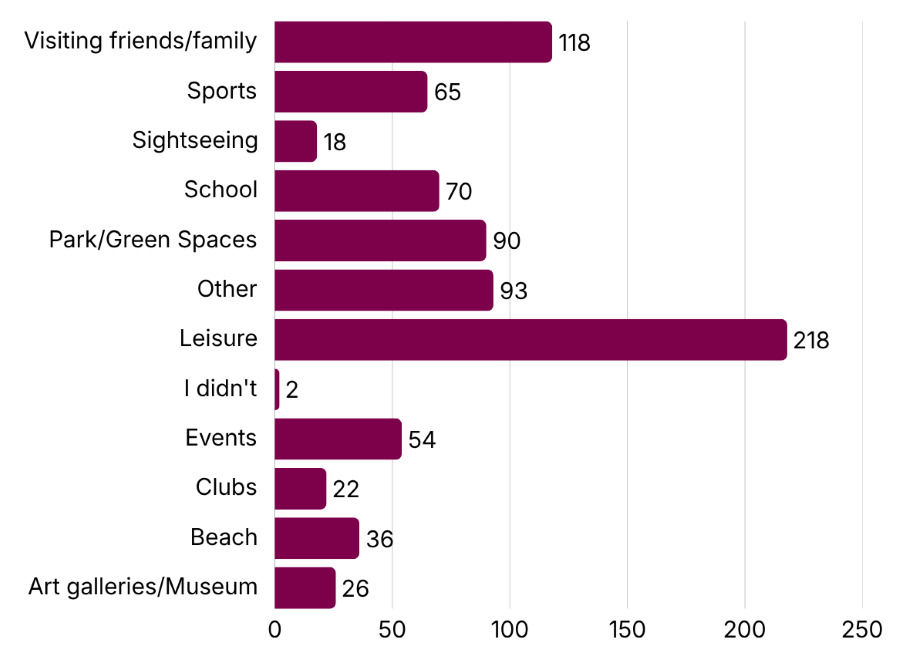
Figure 1 Where did you travel? Young people aged 12-15
Free bus travel enabled important social connections, allowing children and young people to spend time with family and friends, sometimes in different parts of the city, while others valued spending time together while travelling.
“I was happy because when I was bus-hopping I got to spend a lot more time with my mum, because I don’t live with her.” (Hartcliffe Child)
Travel frequencies vary. Most respondents take the bus “sometimes”, or on a weekly basis, but with a considerable number (30.2% of children and 21.8% of young people) never or rarely taking the bus. However, qualitative data shows buses remain integral to their life, as it is often the only viable means of transport for families living in deprived neighbourhoods:
“For refugee families, buses are everything… Some of us don’t drive, don’t have cars.” (Hartcliffe Parent)
“Because school’s quite far. If I walk, it takes ages, and I can’t take the car because my brother takes it to work.” (Barton Hill Young Person)
Buses were easy for children and young people to use. 1 in 2 young people found it easy to use the bus, with a further 32.9% of them finding it relatively easy.
The overwhelming majority of children and young people travelled with family and friends; lone travel was very rare. Only 1 in 10 (10.6%) young people travelled on their own.
Barriers
A concerning proportion of young people do not feel safe on the bus. 1 in 4 (25.7%) of young people participants said they do not feel safe on the bus. Many of them attribute this to the presence of “weird people” on the bus and general crowdedness.
“I don’t like using the bus because it’s sketchy and unhygienic, dirty and I just don’t trust it. That’s why I don’t use it.” (Barton Hill Young Person)
Bus stops were also a major point of safety concern. Bus stops were consistently described by all groups as less safe than buses themselves. Parents described bus stops as exposed environments, particularly when waiting with children and during darker hours.
“The stops are worse. Yeah. Waiting around, especially in the dark. There’s not always lighting or shelters. You’re just standing there exposed.” (Hartcliffe Young Person)
Reliability (26.4%) of the buses was a major barrier. Participants consistently described organising their lives around bus timetables, often leaving far earlier than necessary in anticipation of delays. This was framed as exhausting and emotionally draining, particularly for parents managing multiple responsibilities.
“If you’re going to an appointment, that’s stressful. You can’t be late, but you can’t control it. I always leave ridiculously early now, just in case.” (Barton Hill Parent)
Drivers can have a make-or-break effect on children and young people’s experiences. Drivers’ discretion and kindness made travelling by bus easy and enjoyable, erased stress and restored a sense of dignity. While some parents and children reported that some bus drivers questioned their eligibility, refused boarding, or appeared unsure about rules which created anxiety.
“Some drivers didn’t seem sure either, which is awkward when you’re standing there with kids and they’re questioning it.” (Barton Hill Parent)
“The drivers were absolutely lovely. They just waved us on. We never had one negative experience with a bus driver.” (Hartcliffe Youth Worker)
Bus drivers reported a lack of guidance and support system due to quick rollout of the scheme.
“That’s always tricky. You just have to take a wild guess and... I mean, apart from the one that got on with all his tattoos and said, ‘Child ticket, please’. I mean, the company says, use your own judgment.” (Driver)
“I get the initiative behind it. I understand. And it is a good -... like, a good concept, but it just seems like it was something that was done on a whim. “Oh, let’s try and get more people on the bus then let kids go free. With no further planning behind it. (Driver)
Further information
The study is a collaboration between the University of Bristol (Brigstow Institute), Ingrid Skeels, Room 13 Hareclive, Hareclive Primary School, Merchant’s Academy and Barton Hill Activity Club.
Find out more about the project: http://www.bristol.ac.uk/brigstow/free-bus
2018 Brigstow Research: The Bus Project
The researchers
Professor Debbie Watson, Principal Investigator, Professor in Child and Family Welfare, Director of the Brigstow Institute,
Yuyue Sun, PhD researcher in Human Geography,
Temilola Adeniyi, PhD researcher in Bristol Medical School,
Dr Gail Lambourne, Manager of the Brigstow Institute,
Ingrid Skeels, Co-founder Playing Out CIC + Room 13 Hareclive collective,
Samira Musse, Founder of Barton Hill Activity Club