
Whale like filter-feeding discovered in prehistoric marine reptile
A remarkable new fossil from China reveals for the first time that a group of reptiles were already using whale-like filter feeding 250 million years ago.

A remarkable new fossil from China reveals for the first time that a group of reptiles were already using whale-like filter feeding 250 million years ago.

Students from as far afield as East Africa, China and Greece have become the first part-time candidates to graduate from Bristol University's new postgraduate Masters course in human reproduction and fetal development.

Six Chinese students, who won the 2011 Dynamic Designs China competition, will visit the University of Bristol this week [18-22 July] for a week-long masterclass on sustainable engineering.

A Bristol student has been named as President of a Chinese Students and Scholars Association [CSSA], an international organisation which enables students and researchers outside of China who are interested in Chinese culture to experience a fuller life in the UK.

The Bristol-Mekong Project aims is to provide a focal point for cutting-edge research into the states associated with the Mekong River, which includes parts of Vietnam, Cambodia, Laos, Burma and south-west China.

Ray Forrest, Misa Izuhara and Xiaouhui Zhong from the Centre for East Asian Studies and the School for Policy Studies explore the changing housing landscape in three East Asian regions – Japan, China and Hong Kong.

A remarkable collection of photographs of China in the late nineteenth and early twentieth century, brought together by researchers from the University of Bristol, will go on display at the School of Oriental and African Studies (SOAS) in London next week.
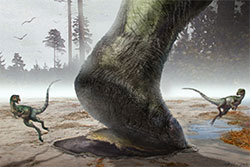
An international team of scientists, led by the China University of Geosciences in Beijing and including palaeontologists from the University of Bristol, has shed new light on some unusual dinosaur tracks from northern China. The tracks appear to have been made by four-legged sauropod dinosaurs yet only two of their feet have left prints behind.

Scientists from the University’s School of Physiology and Pharmacology have discovered a new way to target cancer through manipulating a master switch responsible for cancer cell growth. The findings, which reveal how cancer cells grow faster by producing their own blood vessels, have been covered by ITV Westcountry, People Daily (China), China Daily, The Mirror, Daily Mail, Bristol Evening Post, BBC Radio Bristol.
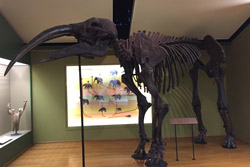
A new study, led by scientists at the Institute of Vertebrate Paleontology and Paleoanthropology (IVPP) in Beijing, China, including University of Bristol PhD student Zhang Hanwen, examined the feeding habits of ancient elephant relatives that inhabited Central Asia some 17 million years ago.