
Scientists meet to review climate change
A group of scientists will meet in Bristol this week to discuss the key factors affecting melting of the ice sheets in the Arctic, and other issues related to climate change.

A group of scientists will meet in Bristol this week to discuss the key factors affecting melting of the ice sheets in the Arctic, and other issues related to climate change.

A new centre that is expected to break new ground in the development and application of advanced composites and intelligent structures opens today [Monday, April 16].

It is predicted that wind energy could provide as much as 13 per cent of global electricity demand in 2020 and as much as 25 per cent in 2030. A partnership announced today [Wednesday 22 July] aims to advance wind-power technology using composite materials.

Echolocation may have evolved more than once in bats, according to new research from the University of Bristol published this week in Proceedings of the National Academy of Sciences (PNAS).

Edward Moline, a final-year Politics and Social Policy student at Bristol, was a finalist in the recent International Student Awards 2007.

Bristol University is awarding 14 honorary degrees at ceremonies in July 2003.
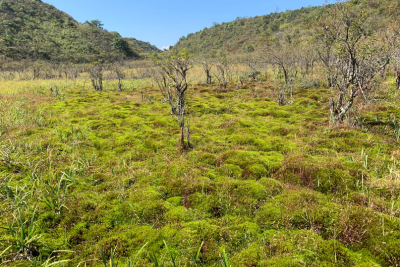
As the climate warms and regional drying becomes more frequent, peatlands – some of the planet’s most important carbon sinks – are increasingly under threat. But a study, led by an international team including scientists from the University of Bristol, has shown peatland ecosystems may have a natural defence through the combined forces of plant changes and microbes.
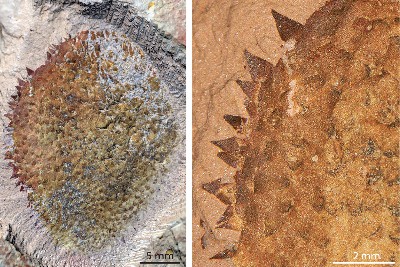
A team of researchers including scientists from the University of Oxford and the University of Bristol have made an astonishing discovery of a new species of mollusc that lived 500 million years ago. The new fossil, called Shishania aculeata*, reveals that the most primitive molluscs were flat, shell-less slugs covered in a protective spiny armour. The findings have been published today in the journal Science.
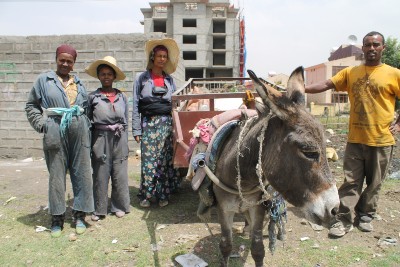
Donkeys are vital to the lives of women in Ethiopia and could be the difference between destitution and modest survival, new research has found. The study also revealed that societal perception of donkeys as low-status animals has an impact on both the owners’ lives and the wellbeing of the donkeys.

An international network of scientists collaborating through groundbreaking technology is aiming to shed new light on climate change.