
Towards better metallic glasses
Researchers from the University of Bristol have used state-of-the-art computer simulation to test a theory from the 1950s that when atoms organise themselves into 3D pentagons they suppress crystallisation.

Researchers from the University of Bristol have used state-of-the-art computer simulation to test a theory from the 1950s that when atoms organise themselves into 3D pentagons they suppress crystallisation.

James Foulds, former Chair of University Council, passed away in February at the age of 88. We offer this tribute to a devoted and stalwart supporter, advisor and friend of the University.

The winners of this year’s University Research Committee (URC) interdisciplinary research internships for undergraduates presented the results of their work this week to an audience that included Vice-Chancellor Professor Hugh Brady and the faculty Deans.
A pioneering technique which captures precisely how mountains bend to the will of raindrops has helped to solve a long-standing scientific enigma.

PhD researcher Sam Briggs successfully summed up his research into the chemical origins of life to win the University of Bristol’s Three Minute Thesis competition, which challenges postgraduate students to present years of work that go into a PhD thesis in just three minutes.

Scientists have been able to track the flow of water created by Greenland's melting glaciers, revealing that it's currently having a less significant impact on the Gulf Stream than previously thought.
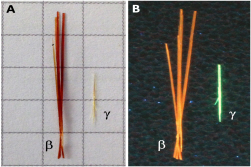
A new way to grow crystals has been discovered by researchers at the University of Bristol. The work is described in an article published in Nature Communications this week.
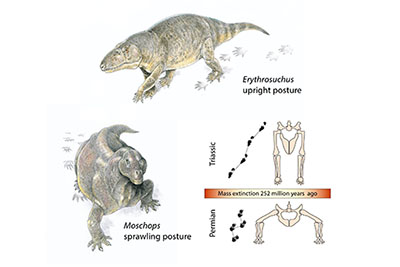
Mammals and birds today are warm-blooded, and this is often taken as the reason for their great success.

Genetic differences could help to explain why some babies are born bigger or smaller than others, according to new research from the Early Growth Genetics (EGG) Consortium.
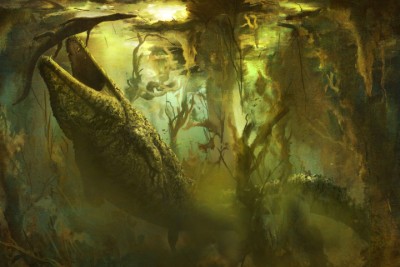
Ancient frog relatives survived the aftermath of the largest mass extinction of species by feeding on freshwater prey that evaded terrestrial predators, University of Bristol academics have found.