
Focus on post-traumatic stress disorder
On Monday 16 November, the University of Bristol will host the 2015 Colston Research Society Public Lecture, which this year addresses innovations in the treatment of post-traumatic stress disorder (PTSD).

On Monday 16 November, the University of Bristol will host the 2015 Colston Research Society Public Lecture, which this year addresses innovations in the treatment of post-traumatic stress disorder (PTSD).

The new Bristol Brain Centre, which brings together expertise from North Bristol NHS Trust and the University of Bristol, opened at Southmead Hospital on November 25. The centre is the first of its kind in the country to bring together research teams in the areas of multiple sclerosis, dementia and movement disorders, such as Parkinson’s.

People over the age of 50 and without a diagnosis of dementia are being asked to consider taking part in dementia prevention research. Members of the public can find out more at the first Bristol Dementia Research Showcase next week [Tuesday 27 February].

At any one time, nearly 1 in 5 emergency department patients in the UK is being cared for in corridors, waiting rooms, and other non-standard ‘overflow’ spaces—an approach known as escalation area care—suggest the results of a large observational study. The research, led by the universities of Bristol and Edinburgh, North Bristol NHS Trust and NHS Lothian, is published online in Emergency Medicine Journal.

It has been known for more than 50 years that a mother who smokes whilst pregnant is more likely to give birth to her baby prematurely. But what if a mother doesn’t smoke but lives with someone who does? New research by academics from the University of Bristol has found women exposed to passive smoking, on average, deliver their babies earlier and with lower birth weights compared to unexposed women.

Thousands of NHS knee replacement operations are cancelled at short notice every year, many for avoidable reasons, according to a new study published today [1 December]. This costs the NHS millions of pounds and increases waiting times for patients, many of whom are in severe pain.
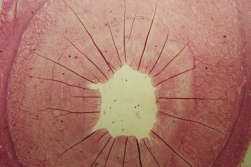
Scientists at the University of Bristol are to study how stopping Porcupine – a protein named after the spiky rodent - could improve heart surgery.

The latest national data on child deaths in England show that while overall deaths have slightly decreased, stark inequalities remain by region, ethnicity and deprivation level. The National Child Mortality Database (NCMD) at the University of Bristol, has released its annual Child Death Review Data Release for the year ending 31 March 2025.

The Research Excellence Framework (REF) 2014 has ranked Bristol among the UK’s top research universities.

The Research Excellence Framework (REF) 2014 has ranked Bristol among the UK’s top research universities. Our research is shown to have top quality and major impact on society and the economy, according to this assessment of research at every UK university. REF2014 will decide how around £2 billion in research funding will be allocated each year from 2015-16.