
New genome reveals how Arctic microbes survive in cold extreme habitats
Scientists at the University of Bristol have revealed how a tiny Arctic microbe, crucial to shaping the surface of glaciers, survives in such extreme conditions.
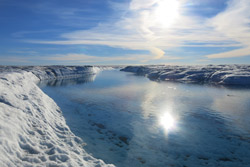
Scientists at the University of Bristol have revealed how a tiny Arctic microbe, crucial to shaping the surface of glaciers, survives in such extreme conditions.

A Bristol man has run at least 5km everyday throughout 2015, fulfilling a personal challenge and raising over £2,500 for charity. Richard Harris, a Professor of Quantitative Social Geography at the University of Bristol, has not only completed the challenge but he’s averaged 11km a day thanks to completing a number of marathons and ultra-marathons.
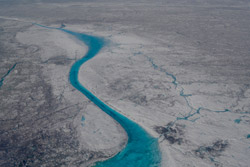
Glaciers and ice sheets have recently been considered significant sources of organic carbon and provide nutrients to downstream marine ecosystems.
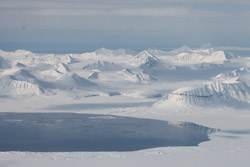
A team of researchers from the University of Bristol have recently shown that ecosystems created by melting glaciers in the Arctic are sensitive to climate change and human activity.

A report on the UK rules for Parliamentary constituency distributions by Professor Ron Johnston of Bristol's School of Geographical Sciences, and colleagues David Rossiter and Charles Pattie, was launched at the Houses of Parliament this week.
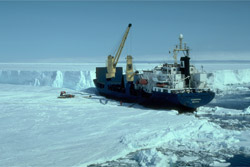
Scientists have known for over a decade that the West Antarctic Ice Sheet has been losing mass and contributing to sea level rise.

Natural measures to manage flooding from rivers can play a valuable role in flood prevention, but a lack of monitoring means their true potential remains unclear, researchers say.
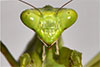
To watch a young, wingless praying mantis jump is a remarkable thing. The jump from take-off to landing lasts less than a tenth of second – faster than the blink of a human eye. During a jump, the insect’s body rotates in mid-air at a rate of about 2.5 times per second and yet, according to new research from the Universities of Bristol and Cambridge, when mantises jump, they land on target every time.
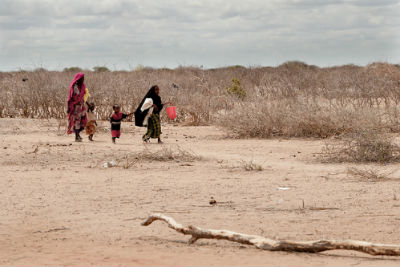
An international research partnership, led by the University of Bristol, is one of 15 awarded a total of £7million from the UK Government-funded Challenge-led Grants to help address resilience challenges facing developing countries
The National Soapbox Science Festival comes to Bristol this Sunday [7 June], bringing 12 inspirational local female scientists to the streets to share their research, engage the public and inspire the next generation of scientists.